My confession is that it felt vulnerable to write the opening paragraph. It begins with me crying on the bow in Cefalù, Sicily, four months into living aboard full-time, and searching for plane tickets home.
Cruising is often portrayed as the dream life, and in many ways it truly is. But it felt a little raw to share the struggles John and I had during our first year with the world. Still, it all happened, and it was real, so I decided to be brave and share it.
What surprised me most has been the response. I’ve had touching notes from other sailors. Many have written to say that reading this helped them feel less alone with the bickering and similar arguments they’ve had onboard. I’ve also been surprised to hear from friends who don’t sail but have recently retired or had babies, sharing that parts of the story resonated with them, too.
The truth is that when life changes in a big way, even when it’s something we deeply wanted, there are growing pains. But those growing pains are also part of the adventure.
Cruising is one of the most extraordinary chapters of our lives, even with the challenges. I’ll keep sharing both the beautiful moments and the hard ones along the way. When we open up, we give others permission to do the same, and that helps all of us.
Right now, we’re in Panama preparing for our Pacific crossing, then sailing to French Polynesia and the South Pacific. The last four years and 22,000 NM have been extraordinary, and somehow it feels like the next part of the journey might be even better.
We are at the Annapolis Boat Show and I’m holding my article in SAIL Magazine. 😊 The October 2024 edition of SAIL includes my article “Into the Deep End,” chronicling our shakedown voyage in 2022 across the Bay of Biscay. When SAIL Editor-In-Chief Wendy Mitman Clarke sent me the layout copy to approve, I felt so emotional that I caught my breath, and tears welled up in my eyes. I’ve written many things in my career, but I don’t know if I’ve ever felt as proud as I am of this article.
Coronado in SAIL Magazine
I met Wendy in 2023 at the Annapolis Boat Show. She is a kindred spirit, and we connected immediately over cruising and writing. When I shared my background in communications, she asked if I had a blog. I sheepishly admitted I did, but I hadn’t been writing much and couldn’t explain why. When I quit my job to go sailing, everyone said, “You are going to blog, right?” Of course, I said! But then I just didn’t want to.
For all of you following the blog here, you know things have been very, very quiet. The truth is that my desire and motivation to write disappeared entirely during the first year of cruising. I wrote a few pieces but mostly struggled with feeling guilty for not writing more.
Surprisingly, Wendy said she understood. She shared that she didn’t write much during the first year of cruising with her husband and their two children. She also shared an insightful article by Alicia Mountain with me, “To the Writer Who is Not Writing.” This article is for anyone creative who is struggling and feeling like their words or art are lost at moments. Reading it and letting go of the guilt I felt was a pivotal moment for me in my writing journey.
“There are moments that can, and maybe should, exist only in experience, not to be rewound, not to serve any other purpose.
Writer, know that you will write when it’s right for you. Know that if you aren’t writing now, you might be doing the better thing—living.” – Alicia Mountain
Wendy assured me that all the experiences I was living would still be there when I was ready to write about them, and her words comforted me. She also validated how the first year of cruising is overwhelming in many ways. It was true. I needed to be focused on purely living it all the first year, not writing about it.
Anna’s article in SAIL Magazine: “Into the Deep End”
We parted ways, and a few days later, Wendy sent me an email saying she had read my blog and enjoyed my story about the Bay of Biscay crossing. She said she knew we were just talking about how I was struggling with writing but asked if I would consider reworking it for the magazine. Yes. Of course, I said yes!
I feel renewed excitement about writing and blogging about our adventures. People and moments come to us when we need them. Wendy gave me permission to let go of feeling guilty for taking time off from writing and encouraged me to find my way back to my words. What a gift. ❤️
Passage planning is a crucial aspect of any sailing journey, requiring careful consideration of weather conditions, route optimization, and boat performance. In this blog post, I will share my approach to weather passage planning using the Professional version of PredictWind, which has become an integral part of my workflow. While I am not a meteorologist and have no formal training beyond books and personal experience, I have developed a method that has proven effective over numerous voyages. This method combines pre-departure planning, real-time adjustments, and post-passage analysis to continually refine my technique. I have no affiliation with PredictWind, it is just the best tool I have found.
A squall in the middle of the Atlantic Ocean
Weather Models
One misunderstanding I see many sailors make is the belief that one app or website provides a better forecast than another. This belief is usually untrue since most weather apps use the same weather data provided by the ECMWF (European Centre for Medium-Range Weather Forecasts) or the United States National Weather Service (GFS). The difference between the apps is only how the data is presented. Saying one app has a better forecast than another is like saying Taylor Swift’s Shake It Off is better on Apple Music than Spotify when it’s the same song provided by two different services. The weather apps I prefer to use are Windy and PredictWind. I like Windy’s user interface and how the weather data is organized. I use Windy daily to check the weather and to look at the weather on a macro scale to see the movement of high and low-pressure systems, fronts, etc. On the other hand, the Professional version of PredictWind is the app I use for passage planning. In my opinion, PredictWind is hard to beat when determining when to depart, the route to take, and the conditions expected along the way. Since this post is about passage planning and not an overview of the weather, I’ll talk about how I use PredictWind and show screenshots from their website.
Setting Up PredictWind
One of the powerful features of PredictWind is that it suggests a route optimized for your boat. I have heard people complain that PredictWind’s weather routing doesn’t work well, but that is usually because they don’t have their boat polars set correctly in the application. I admit this is frustrating at first and takes some time to get right, but it’s critical for the application to produce an optimized route. As I mentioned, I save my initial routing information and reflect on it at the end of the passage. This is when I end up tweaking my polars so future routing will match more closely to what I sailed. For example, we sail to about 80% of the factory polar provided by PredictWind for the Lagoon 450. We are a bit faster than the 80% numbers, but I want to error on the side of being conservative. It also doesn’t consider that we have a Code 0 and a spinnaker, so our light air performance is much better than they predicted. We rarely follow their suggested route exactly, choosing to sail dead downwind instead of gybing back and forth. We also motor less than they predict over long distances and motor more over short distances. With all this said, PredictWind’s routing gets me about 85% of the way there, and I use my expert knowledge about how we sail compared to their recommended route to fill in the rest. The takeaway is to invest some time into getting the boat’s polar data close to reality. Otherwise, PredictWind’s recommended route will be way off.
(Side note: I’m currently logging all our NMEA 2000 passage data to a database with the plan to build a custom boat polar instead of using the predefined polar in PredictWind. PredictWind has a product called the DataHub, which is supposed to do this for you, but I’m skeptical it will work well.)
Boat Polar Input Screen
Departure Planning
For this blog post, I will use a real-world passage we completed when we sailed from Green Turtle Cay in the Abacos to the Chesapeake. We planned to haul out Coronado at Zimmerman’s in Matthews, VA, at the end of May. We planned to be able to leave from The Bahamas to the Chesapeake starting at the beginning of May. That gave us four weeks to find a suitable weather window. Experience has taught us that the higher the latitude, the harder it is to find good weather for a time period long enough to make a journey more than a few days. We wanted to make the 750 nautical mile trip in one shot but knew we would likely have to sail north part of the way, anchor for a while, and wait for good weather to finish the trip. To spoil the end of the story, in this particular passage, we made it to Mathews, Virginia, on the Chesapeake Bay in one trip.
Once we arrived in the Abacos, I started looking for a weather window using the Departure Planning feature in PredictWind. This feature runs four iterations of the passage over a user-specified period of time. When I started looking for a suitable date to depart, I set the time period to be 24 hours, producing four passages separated by one day. I can compare the days to see if day one, two, three or four is preferrable for departing. Remember that I rarely find a perfect departure day, especially the longer the distance. It’s always a compromise between wind speed, wind angle, sea state, and the general state of the weather (usually thunderstorms). Experience has taught us to take the first decent weather window. If you wait for the weather to be perfect, you risk wasting a lot of time. We typically don’t compromise on rough seas on the quarter, sailing upwind (unless the air is light) and if there are severe thunderstorms. High wind and large following seas aren’t our favorite sailing conditions, but they’re manageable. Anna gets seasick when the seas hit us on the quarter, and the boat sloshes around like a washing machine. It’s worse when it occurs on the first or second day before she has her sea legs. Time and experience will help you understand which conditions you and your crew can tolerate and which you can’t.
Depart Data 24 hours Apart
Don’t pick a start date too far into the future when using Departure Planning. The weather forecast is usually only accurate for about 72 hours from the last forecast; after that, it becomes a guess. When looking at forecasts, know that weather models are better at predicting how an already established pressure system or front will evolve than predicting where and when a new pressure system or front will form. The further into the future you look at the weather, the more likely you’re looking at the latter prediction than the former, which becomes more of an issue when you’re looking at longer passages. The weather at the end of your passage is a big unknown if you’re looking at departing four days from today to do a five-day passage. The weather on the final day of the passage is now nine days into the future! This is why even when it appears I have a great weather window; I keep running the Departure Planning models every day to see the trend. There have been numerous times I’ve told Anna, “We’re leaving on Friday, be prepared…” only to say on Thursday night, “I’ve changed my mind, we’re leaving on Sunday instead…” This brings up an important point: a good sailor will change their mind on the departure date if the forecast starts trending negatively; a bad sailor will leave anyway just because they’re committed.
When you run Departure Planning, you must select four weather models out of six to calculate the route. The models are ECMWF, GFS, Spire, UKMO, PWE and PWG. (For more information on each weather model, click here.) I find the ECMWF to be the best all-around and consistently good. If I’m sailing short distances near land, I use the PWE and PWG models since they include the effects of land on wind speed and direction. Offshore, I find Spire to be good, and GFS is excellent at predicting tropical storms, so I’ll include them instead of PWE and PWG. If I see one model way off compared to the other three, I’ll likely swap it out for another. Keep in mind that the four model limitation is only for Departure Planning. The Weather Routing feature uses all six models.
Looking at my output from Departure Planning for the Abacos to the Chesapeake Bay, Departure 2 is a good day to leave. I’m making this conclusion based on several factors. The Motoring Time is only 1.5 days (on average). About 94% of the time, the wind will be greater than 8 knots. The CAPE (Convective Available Potential Energy) value measures the energy available for convection, indicating the potential severity of thunderstorms. The CAPE value is a bit high per the GFS model, which is typically pretty good at predicting thunderstorms. You usually need a high CAPE value (over 1,000) with rain to have thunderstorms. I would keep my eye on this one since it’s getting close.
Depart Data Details – Top of Screen
The waves will be less than 2 meters, which is very important to us, but more important is the effect of the sea state on the boat. That’s where the four lower sections in the screenshot come into play. This is where PredictWind excels, in my opinion. The amount of roll will be less than 4° for the entire passage. This is important for us because anything over that is where Anna gets seasick. Vertical Acceleration is caused by the boat bashing into waves, which is usually over 0.2g’s when sailing upwind in rough seas. The final section has a lot packed into one number: the sea state’s impact on the boat’s performance. Less than 100% of boat polar means the seas are rough enough to slow the boat. Overall, Departure 2 looks reasonable.
Depart Data Details – Bottom of Screen
Once I narrow down the day I want to leave, I rerun the Departure Planning to see if there is a preferred time to go. In this case, we’re sailing such a long distance that our departure time doesn’t matter much. But if it was a shorter journey, I may have better weather if I leave in the afternoon versus the morning. Of course, with shorter sailing distances, we also have to consider our arrival time, so we may not pick the most optimal departure time because it would cause us to arrive in the middle of the night (something we avoid).
Departure Data 3 hours Apart
Weather Routing
Now that I have my departure date, I’ll switch to the Weather Routing feature in PredictWind. In this case, I chose to leave at 1100 to time our departure with slack tide at the Nunjack Channel, the point where we plan to exit the Abacos into the Atlantic Ocean. The following image shows the suggested routes based on each model’s prediction of the weather (using my boat’s polar as explained above). All six models suggest we head northwest and follow the wind as it veers around.
Each Model’s Recommended Route
The combined wave and swell look good to us. Since we’re sailing offshore, I would consider this sea state fine.
Wind Wave and Swell Over the Route
The Roll and Vertical Acceleration are approaching the uncomfortable zone, but when I reconciled this with the route, it was apparent this is caused by the Gulf Stream. We expect the ride to be rough getting into and out of the Gulf Stream. We also downloaded the forecast for ocean currents and tracked our location relative to the forecasted location of the Gulf Stream. The PredictWind routing model considers the effects of currents on your route. If there is a benefit to sailing into a favorable current, it will route you in that direction.
Sea State Over the Route
I mentioned before that the high CAPE value caught my eye. We might have some thunderstorm activity on May 5th and 7th. We need to continue monitoring this, especially in lighter air, where we don’t want to get caught with our spinnaker or Code 0 up in a squall. You cannot do much to avoid lightning, but we try.
Thunderstorm Potential Over the Route
Once we are on our way, I will download the weather twice daily using the PredictWind Offshore app. This version of the app saves all the data offline, which is handy for analysts after the passage and for safety in case we lose communications while en route. Since the weather is constantly changing, so will your route, so it’s essential to rerun the weather router based on your current position. I typically calculate a new route in the morning and the evening before sunset, which coincides with when all six models PredictWind offers are updated. It also allows us to discuss our strategy for night sailing before we start our sleep rotation.
The Passage to the Chesapeake
Since I took these screenshots before we completed the passage, you may be curious how it matched reality. We departed Green Turtle Cay at our planned time of 1100, getting through Nunjack Channel around 1200. Once out of the channel, the wind was light(ish), around 10 knots, so we decided to sail with the Code 0, which put us on a route similar to the red line. As the wind speed picked up and veered around, we furled in the Code 0 and pointed higher with the genoa, heading towards our rhumb line. By the middle of the next day, we had to turn on one engine and motor-sail for part of the day. By the end of that day, we had the engine off and were sailing again. The sea state during this time was on the beam, but not uncomfortable. Sunday (day three) we encounter squalls with a few thunderstorms. None of the squalls hit us, but flashes of lightning in the distance certainly kept us worried. The thunderstorms were to our west, along the coast of Georgia, and only made their way east after we had sailed past. Approaching the Gulf Stream, the seas were rough. It was rougher than both the data and I had anticipated. However, once we were firmly in the Gulf Stream, the seas flattened out, and the 2 to 3 knots of current put a smile on our faces. It wasn’t until the fourth day, May 7th, when we were past Cape Hatteras, sailing along the Virginia coast, that we experienced the second round of thunderstorms. This time, the rain and lightning were offshore, to our east, and once again, didn’t impact us other than make us worry.
The PredictWind forecasted route and sea state were about 90% accurate in my estimation. The rough sea state approaching the Gulf Stream was worse than they predicted, but not a surprise. The two times we encountered thunderstorms were in the data, but only the GFS accurately predicted it. Our conservative boat polar predicted us to arrive Tuesday night, but we dropped the anchor Tuesday afternoon. This was expected since we sailed faster. We also motored around 20 hours, less than the 38 hours they predicted. Faster sailing and less motoring are shortcomings caused by the boat polar used by the PredictWind models, and we are aware of this and will consider this on any passage. The wind speed and direction were pretty close to what was forecasted.
Conclusion
In summary, successful passage planning requires a combination of reliable tools, practical experience, and continuous learning. PredictWind has proven invaluable in optimizing our routes and ensuring safer, more efficient passages. However, it is essential to recognize that no tool is perfect. The key to maximizing the benefits of PredictWind lies in understanding its capabilities and limitations, accurately configuring your boat’s polar data, and interpreting the forecast data with a critical eye.
By regularly reviewing past voyages and adjusting our strategies based on what we learn, we continue to refine our approach and improve our passage planning skills. Remember, while technology can significantly aid in planning, the skipper’s judgment and experience are irreplaceable. With a thoughtful, informed approach, you can make the most of the resources available and enhance the safety and enjoyment of your sailing adventures.
Since Coronado is our floating home, we do not have access to unlimited electricity and water like our friends on land. The following is a summery of how we make and use electricity on Coronado.
Coronado’s six-panel solar arch.
Solar
For electricity, we primarily generate our power from the sun via our 2,400-watt solar array. All our solar panels are mounted on an arch off the back of the boat. This puts the panels in an area of the boat where they are least likely to be shaded by the mast or sails. When at anchor, we typically pull the boom to one side to help ensure there are few shadows on the panels. On the solar arch, we have mounted six 400-watt panels. Our panels are bifacial, which means they have solar cells on both sides of the panel. Since the panels reside above the water, they can capture the reflection of the sun off of the water. We see the best benefit of this in the morning and evening when the sun is low and the glare off of the water is high. This allows us to generate solar power for a longer period during the day.
Solar cells on the bottom of our bifacial panels
The solar panels are wired to three solar controls (two panels per controller), which regulate the power produced versus consumed. If the batteries are fully charged and we are not using any power, the controllers will turn the power off. However, if the batteries are fully charged and we continue to need power, the controllers will divert the power where it’s needed. This is one reason we save high power-consuming activities, like running the washing machine, dishwasher, or watermaker, for the day. We are basically washing our clothes with power directly from the sun!
Generator
We have a 13,000 Watt diesel generator when there isn’t enough sun to keep pace with our power demands, like when it’s been raining for several days and we are stuck on the boat. We also use the generator to power our dive compressor and air conditioning. Our battery bank could power both of these, but they use a lot of power over a long period of time. We primarily use our air conditioning only when we’re in marinas – at anchor, the boat points into the wind, so we usually have a nice breeze with the hatches open. When we purchased Coronado, we had the option of two generators, one that was too big for our needs or one that was too small. We opted to go “too big”. The upside to the larger generator is that we can literally turn on everything electrical in the boat, and the generator could handle it. The downside is the additional weight of the larger generator.
Engine Alternators
When Coronado is motoring, we also get power from our two 125 amp alternators on our diesel engines. This gives us a third option for generating power. The more redundancy you have, the more self-reliant you can be.
Shore Power
Occasionally, we are in marinas and can plug directly into shore power. Since we travel the world, and electricity standards vary from country to country, I have configured Coronado to accept 120 and 230-volt power sources. Rather than use adapters for each region, I installed an EU-style plug for 230 V and kept our US-style plug for 120 V shore power. This makes it very clear which type of power is being used.
Since Coronado is a 120 V (US spec) boat, plugging into shore power in the US means all the electricity on the boat is coming from the local power grid. I plan to enable an option allowing our solar to provide power and only augment power from shore when needed, but I haven’t implemented it yet. Coronado consumes shore power a little differently when we’re in parts of the world with a 230 V power grid. On 230 V, power is used only for charging our batteries and running the air conditioning. Since we’re a 120 V boat, we don’t want power going straight to the outlets in the boat.
There is also a frequency difference between the 120 V US power, which runs at 60 Hz, and most of the 230 V world, which runs at 50 Hz. We can easily step down the voltage from 230 V to 120 V, but changing the frequency is more complex. We have many items on Coronado that will not run at 50 Hz, our oven and cooktop being the most critical. So, to get around the frequency mess, we just run everything off the batteries, like we would at anchor, and use a battery charger that supports 230V/50Hz power to replenish the power we drain from the batteries. As mentioned, the air conditioning only runs off the generator or shore power. When plugged into 230 V shore power, we have a transformer that steps down the voltage to the air conditioner. But what about that frequency problem I mentioned? Luckily, the air conditioners are one the items on Coronado that will run at either 50 Hz or 60 Hz.
Batteries
So far, I’ve written about how we generate power. Now, I’ll talk about how we store power. At home, you don’t need to store power. You take what you need from the power grid. On Coronado, we need to store the power we generate during the day so we can turn on our lights at night. We store the power we generate in a 1,600 Ah lithium battery bank (Lithium-Iron-Phosphate (LiFePO4) to be exact). The reasons we use lithium batteries are many, but one of the biggest reasons is that lithium batteries can absorb a lot of energy in a short period of time compared to the lead acid-type batteries you use in something like your car. This makes lithium batteries a great companion with solar power. Our solar array puts out a lot of power during the peak of the day. If we used lead-acid batteries, we would not be able to capture nearly as much of the sun’s energy. Even with our generator, it can run for a significantly shorter period of time before the batteries are fully charged.
Another big advantage of lithium batteries is their usable capacity. In practice, you should only discharge a lead acid battery to about 50% of the capacity; going lower regularly will damage the batteries. (Have you ever run down a car battery and noticed a month later it needed to be replaced?) Lithium batteries do not have this limitation. You can drain a lithium battery to near zero and it’s fine. I’m sure many of you have done this with your phone! All said, that means a 1,600 Ah lead acid battery bank is only 800 Ah of usable capacity. It’s not uncommon on Coronado for our lithium battery bank to get down to 30% after a couple of days of clouds and rain, only to have the sun come out again and fully recharge our battery bank by 2:00 PM.
Inverter
Finally, I’ll touch a bit on using power. On Coronado, we have a 5,000 W inverter/charger. The inverter/charger’s role on board is to turn AC electricity into DC electricity and vice versa. If you don’t know the difference between the two, AC typically comes out of the socket in the wall and DC typically comes from a battery. On Coronado, we have power stored in batteries (DC) but need AC power for the outlets and to run appliances. On the other hand, we get power from the generator and shore power, which comes into the boat as AC power, but we need to store it in our batteries as DC power. With a 5,000 W inverter, we can produce a lot of AC power. This is how we can run large household appliances like our electric oven, induction cooktop, washing machine, dishwasher, and water heater from our batteries.
If you want to see how this all comes together, check out our Victron Remote Monitoring portal. Here, you will get a real-time view of the power produced and consumed on Coronado.
“It’s a simple life. It’s peaceful. It’s exciting. It’s you, the ocean and your mates. All the other stuff, you leave behind. Out here is one of the last great unspoiled wildernesses on the planet. Here, it’s us and nature.”
“Sailing with Scoundrels and Kings” – John Jordane
Our first big squall of the crossing hit us in the middle of the night. Squalls are most common on the Atlantic Ocean as you start to get closer to the warm, tropical air of the Caribbean. You can easily see them coming during the day. They are huge puffs of dark clouds, and they bring unpredictable high winds and rain. They can be somewhat fierce, especially on their leading edge. At night you have to carefully watch the radar to spot them. You don’t want to be caught with too much sail up when they hit you.
We knew they would be coming, and we had been on the lookout. We had seen a few cloud formations that day that looked like they could turn into squalls, so before bed, we had put a second reef in the main. (Side note: We actually tried something new during this voyage and reefed while being downwind, instead of turning into the high wind and swell, and it worked well! John Kretschmer has a great article for this in Cruising World: Reefing Off the Wind.)
We also put two reefs in the genoa when we saw the first squall on radar… and then it passed behind us without us ever feeling a thing! That one was good practice for us because we had many more squalls show up over the next week. By the end of the crossing, we all felt fairly proficient at spotting them on the radar and anticipating which ones would hit us and which ones would miss us.
Sail Plans and Course Changes
If you look at our track and wonder why we zig-zag all over the ocean and didn’t just sail in a direct path from Las Palmas to St. Lucia, it’s because we were either trying to stay in the wind or avoid areas with no wind.
Coronado’s path across the Atlantic.
During our third week at sea, the wonderful tradewinds we had been enjoying for over two weeks started to fade. There was a large storm far North of our location, but it was pulling all of our beautiful wind away from us, creating a high-pressure area with no wind. We had sailed South to try to avoid it, but it was finally pushing down onto our path. We started to have days of less than 10 knots of wind. The good news is that our parasailor did great in these conditions. Even in 8 knots of wind, we were able to maintain a boat speed of 4.5 knots… only slightly slower than we can motor!
We had lots of practice as a crew taking the parasailor down and putting her back up (which we have to do each time we gybe back and forth to stay on course), but the four of us got it down to a pretty smooth process, and it got easier each time. We also had to be careful about squalls – but we were watching diligently for them and ready to act fast in case we needed to pull the large parasailor down before a squall hit. We let it go a little too long one night, and it was very challenging to pull down once the wind increased. You live, and you learn!
Captain John wrote a nice outline below on our tracking updates about the different sail configurations we used on the ocean crossing. We have a variety of sails, and they each can be set up for different conditions:
Wing-on-wing: This is where we leave the mainsail on the leeward side (where it normally belongs) and pull the headsail over to the windward side. This sail configuration only works when the wind is close behind the boat. With this set-up we typically sail about 168° off the wind. The advantage of this configuration is that it allows us to sail close to dead downwind, which is also the usual direction of the swell. Since we’re running with the trade winds, being able to sail efficiently downwind is critical. We can also sail wing-on-wing safely when the wind speed is high because we can easily reduce the size of the sails, so the boat isn’t overpowered. The downside to this configuration is that it needs a fair amount of wind to keep the sails on each side of the boat – it doesn’t work well in light air. It also doesn’t work well when the seas are rolling the boat, which usually happens when the swell is on the quarter or beam (side).
Parasail (Spinnaker): This is a very large sail made of a lightweight material. This sail is ideal for light to medium wind speeds and allows us to sail at about 172° off the wind. We can keep this sail up until the wind speed is about 16 knots, then it’s too big for the greater wind speeds and very difficult to bring down. However, this is our fastest, and the Captain’s favorite, sail we have. The biggest disadvantage to the parasail is its size, making it more difficult to deploy and retrieve. It is also very delicate, so great care must be used when handling the sail.
Code 0: Very similar to our standard headsail, only significantly larger and made out of a lighter weight sailcloth. The Code 0 is the sail we use when the wind is about 80° to 120° behind the boat. Similar to the parasail, the Code 0 can only be used in light to medium winds and is a very fast sail. However, unlike the parasail, it’s permanently deployed on the front of the boat and can be furled in and out with ease. Its disadvantage is the narrow wind angle where it’s effective, and you have to be mindful of the windspeed, so it doesn’t overpower the boat.
As you follow our track across the Atlantic, we used all of the sail plans above at different points. Generally, we flew the parasail or Code 0 during the day, depending on the wind angle. At night we would usually switch to wing-on-wing or our standard sail configuration. Our approach is to typically be more conservative at night, so if the weather turns nasty, we don’t have to wake up the rest of the crew and do a sail change in the dark – it’s not as fast, but its much safer.
Our Oxley Parasail
Swimming in the Middle of the Atlantic Ocean
Can you imagine being in a swimming pool with 5,400 meters – that’s over 16,000 feet – of water underneath you? During week three at sea, we got to experience just that when we took advantage of the lack of wind, stopped in the middle of the ocean, and went swimming! The seas were calm and flat, so it was a perfect time to make a stop. I pulled out Mediterranean Barry, our inflatable unicorn, and in we went!
We were getting closer to the Caribbean, so the water temperature was warm and wonderful at 29.5°C/85°F. We also made sure that everything was safe. Not only were the conditions perfect, with flat seas and no wind, but we had a long, floating line that extended over 10 meters behind the boat. John and I took turns making sure either he or I was on Coronado at any given time as well.
It was always one of my biggest dreams to swim in the middle of the ocean. I feel so at peace when we are sailing out of the sight of land. The only thing I could ever imagine that could be better would be to actually be out there, surrounded by only sea and sky, and then be IN the water with nothing but thousands of feet of expanse below you. I realize this is not everyone’s idea of heaven, but it was definitely mine.
That day, I dove down as far as I could go on one breath, and the water was warm and so clear. The rays of sunlight filtered deep into the depths, creating a kaleidoscope of blues and greens. We could feel the vastness of the ocean all around us. It was every bit as phenomenal as I always imagined it could be. If you are ever sailing in the ocean in the right conditions to safely take a swim, I highly recommend it!
Land Ho!
On the morning of December 10, 2022, after sailing over 3,050 NM and 20 days at sea… we spotted land. It was an emotional and exhilarating moment to see the island of St. Lucia on the horizon.
Life at sea is a full mixture of just about every emotion you can have. Being on a boat and crossing an ocean is an interesting combination of stress and boredom. By the third week, some people are feeling very restless and can’t wait to get to land, and some people just have the desire to keep sailing forever. It really varies for each individual. But one thing is for certain, the entire experience of being on the open ocean is filled with a lot of emotion.
Sail changes can be stressful, and bad weather and big swells throwing you around for days on end can be challenging for even the most experienced crews. The boat can also get hot and uncomfortable on passage, especially at night when you are trying to sleep. You can’t leave hatches open for air because you risk a saltwater wash all over your bed – as we learned!
But being on long passages can also be deeply peaceful and beautifully contemplative. There is a calm that settles in when you are away from the rush of day-to-day life. There is no social media. No cell phones. Just breathtaking sunsets, stunning sunrises, and sometimes emotion overwhelming you as you look out at all the blue and realize you are just one little human looking out to an endless sea. You are also frequently alone with only your own thoughts on long passages, which isn’t something most of us do on a regular basis. It can be very humbling to sit on night watch and look up with nothing around you but a sky filled with more stars than you have ever seen before. I think all of us would agree that there were many moments of being at sea that left us feeling the truth of being a little speck, on a small planet, in a very, very big universe.
As John and I look back on the experience as a whole, the biggest emotion is that we are thrilled to have achieved such a huge accomplishment of crossing an ocean on our own boat. We also made wonderful new friends on the ARC, and we keep running into many of them as we sail around the islands here in the Caribbean, which is so fun! Sailing across an ocean is truly an experience like no other, and this first time for us is one that we will always feel proud of. Cheers to many more ocean crossings ahead of us!
It is an interesting experience to be woken up from a deep sleep by what feels like a bucket of salt water splashing on your face, but that is exactly what happened the first night of our ocean crossing!
Our departure day started calmer – and early. I think we were all awake well before sunrise. After so much thought and work, it felt a little bit surreal as we prepared to leave the dock. It was extreme excitement, anticipation, and nervousness all rolled into one. They coordinate the start of the rally like a sailboat race; you have to cross the start line, at a very specific location, under sail, not engines. There were three starts, but it is still a lot of boats leaving together under sail all at once. As a result, there was a bit of chaos that continued most of the afternoon and the first night, with boats calling to coordinate with each other and try to stay on their own bit of ocean. We also had very high winds and high waves.
Autopilot Fails
Back to that bucket of salt water… It was our first night of the crossing, and the autopilot went out with no warning. We were wing-on-wing, and we had a preventer on the main (thank goodness), but in 35 knots of wind, the boat really gets your attention fast when it goes off course suddenly. Cynthia was at the helm, and John was still awake and immediately felt the change in the sails and rushed to take over, calling for us all to get on deck. He hand-steered and stabilized Coronado while I shut down our electronics and rebooted them. Our bed is just below the helm, so I left a small hatch/window open in case the autopilot went out again, and John needed to call me quickly for help. That was a mistake because about two hours later, we took a huge wave to the beam, all the way into the cockpit… and I woke up to what felt like a bucket of seawater being dumped directly on my head! It is an alarming way to wake up, that is for sure! I kept that window closed for the rest of the journey.
The autopilot continued to be sporadic for the next day or so, and we decided to turn the entire system off once a day, usually right before sunset. John would hand steer for a bit, and we would power everything down and restart the electrical systems, charts, and autopilot. After the crossing we talked to several other boats with the same system, and many had similar issues with their autopilots. We were happy we found a relatively easy fix that solved the issue, and the daily reset is something we will do from now on during multi-day passages.
The winds were over 25 knots most of the first night, with gusts between 35 and 40 knots. Waves were the highest we had seen, too. Coronado and the crew were all champs. We doubled up for a few watches, and everyone really chipped in to help make sure people were able to rest. We hit a wind shadow from the islands around 0400, slowing us down. By the afternoon the next day, the wind had picked back up to a beautiful 20 knots with following seas. The fleet started to spread out, too, so there was less stress in avoiding traffic.
Settling In to Daily Life
We all slowly settled into life at sea. During the first two weeks, we had beautiful trade winds and downwind sailing. The wind was steady at around 20 knots. When the waves and wind are behind you, it is a pretty comfortable ride. We had a day or two where the swell was hitting us on the beam, which made it more challenging to move around and cook, but we all managed well.
Once we got our sea legs, everyone had their own personal schedules that they seemed to fall into each day. Since I was on from 0200 to 0500 each morning, I would go back to bed as soon as my shift ended. Some days I could sleep in until 0900 or so, and other days, I would get woken up earlier to help with sail changes that needed to be made right after sunrise. We all made our own breakfast each morning. I made homemade yogurt during the trip, which everyone loved.
Each morning we would talk about the weather for the day and visit as a crew as everyone else started waking up. I would try to take a nap at noon and wake up in time for lunch or make lunch if it was my day to cook. During free time we would all take turns relaxing or reading. I would occasionally do art projects or a word search. Then I would be back on watch from 1400 to 1700, and I would sit at the helm and listen to podcasts or music. My afternoon watches were usually quiet because this was the time when the rest of the crew was typically napping.
We would all have dinner together every night and mark our location on our paper charts – talking about the weather for the upcoming night watch and then putting Coronado “to bed,” which meant putting a reef in the sail if it looked like we would have squalls. I would go to sleep between 1930 and 2000, so I could get a good block of sleep before getting up at 0200.
Night watches can be challenging. If there are squalls or a lot of activity with other boats nearby, it can be easy for the time to fly by. But on nights when things are very calm, it can be really hard to stay awake and alert. Everyone had their own strategies for this. I got into a good schedule for my night watches where I would listen to music for 30 min, then make a cup of tea and listen to an audiobook for an hour, then a podcast for an hour, then music again for the last 30 min. This helped break it up and gave me a rhythm to follow. Some nights I just listened to music the entire time and just stared at the stars; they were so beautiful. There was no moon for 90% of my watches, but the plus side was how truly gorgeous the stars were against the dark night sky. I’ve never seen anything like it. We saw Mars and Orion the whole trip (John would watch them rise every night at the beginning of his shift). Sometimes we would see Jupiter and other planets, too. It was phenomenal.
Thanksgiving and Flying Fish
We celebrated Thanksgiving during the crossing. I had a small Christmas tree, some lights, and some ornaments. Cynthia made a delicious turkey breast and mashed potatoes (no small feat in a tiny galley and propane oven), and Shelley made some traditional green bread casserole. We put on Christmas music that we had downloaded to our phones and decorated the tree. It felt good to continue these small traditions at sea.
Sometime at the end of the first week, we had our first flying fish. They are a common occurrence on passages, and the poor things fly right up onto the deck of the boat, where they die and wait to be found at daylight. They make quite a mess, too. The crew strategically placed one on the bow, and he stayed there for a day or two!
In honor of the flying fish, I painted one with watercolors during my watch one afternoon and silently put him as our Christmas tree topper, which got lots of laughs as the rest of the crew noticed him. We named him Squallard, or Squally, to his friends.
Weather
A critical piece of safety equipment we have on Coronado is our Iridium Go. It is a satellite phone with a data plan that allows you to subscribe to weather services (we use PredictWind) and download weather at sea, even in the middle of the Atlantic. It is slow, think dial-up modem speeds, but it does allow us to send text messages or even make a short phone call using the satellite phone feature, which is good peace of mind for emergencies.
The Iridium Go also allowed John to consult several sources of weather information to figure out the path we want to take for the crossing. John would look at weather data in the morning he first woke up and then in the evening again before sunset.
The following is a high-level overview that John wrote of his weather routing process. There’s a lot more to it than this, but it will give you a sense of how we chose our course.
NOAA Synaptic Charts: In the morning, I download several synaptic charts from NOAA in the US. These charts look like the weather information you see on the evening news. They show areas of low and high pressure, major wind directions, storms, and fronts. This gives me a big picture of what is going on in the atmosphere. These charts are put together by a meteorologist at NOAA and represent how they interpret the weather.
ARC Weather/Chris Tibbs: The second piece of weather information I use is the forecast provided by meteorologist Chris Tibbs who works with the sailors in the ARC. Chris provides a written forecast broken down into the different regions of the Atlantic Ocean – he divides the ocean into a grid system. I typically read Chris’ forecast while looking at the synaptic charts from NOAA so I have a visual to go with the detailed text forecast.
PredictWind: The final source of weather data is the one I use the most, it’s the plethora of data I can download from PredictWind. I download the wind forecasts provided by six different weather models (the output is in GRIB format). The models are built and maintained by various weather agencies around the world, including some private companies. These models run on massive computers and compute what they think the weather will be like in the future. Their accuracy wanes as you go further out in time, but they’re fairly accurate for up to 72 hours. When looking at the model output, I compare the models to each other and look for consensus. If five of the six models show more wind in one area, then it’s more likely to be windy in that area. I also compare the model’s prediction to what I’m actually seeing. If one model is predicting rain and the others are predicting sunny skies, and it’s actually raining, then that’s the model I will put more weight on when making my decisions. This is ever changing since the model’s accuracy can be high one week and low the next, so every day I look to see which model is king.
With all this information, I make a decision on our course to sail for the next 12 hours or so. I also keep in mind the long-term forecast, so we don’t sail into a storm while chasing good wind, but I have to keep in mind the low accuracy of long-term forecasts.
Time Zones
One other small thing we did that worked very well was adjusting our clocks during the crossing. As we headed west from Las Palmas, we crossed four time zones. Rather than change our clocks when we arrived in St. Lucia, we decided to change them as we made the journey. This meant that every 15 degrees of longitude, we would gain an hour and reset our clocks at 1800 that evening. It worked well and made the four-hour time change more manageable once we arrived in the Caribbean.
Up Next: Part 3 – Squalls, Swimming, and Making Landfall in St. Lucia
(Note: This is the first in a three-part series we will be publishing about our Atlantic Ocean Crossing.)
All of our hearts were racing with excitement and anticipation as we raised Coronado’s sails and waited for the sound of the start horn for the ARC 2022 Atlantic Ocean crossing. Sailing across an ocean is a bucket list item for many sailors, and for us, it was one of our biggest dreams. An adventure unlike any other – and one that can be both extremely challenging and highly rewarding.
We were joining the ARC 2022, the annual Atlantic Rally for Cruisers. It is a rally of over 150 boats that cross the Atlantic Ocean together, sailing 2700 NM from Gran Canaria to St Lucia. We had arrived in Las Palmas, Gran Canaria, two weeks before the start. Our preparations for the ocean crossing had really begun months earlier. Spots fill up fast, so we submitted our registration at the beginning of 2022, before we ever left Fort Lauderdale, and we had been preparing safety gear and planning throughout the year.
ARC Rally – Social Events and Detailed Preparations
Meeting all the other sailors and boat owners in Las Palmas was one of the highlights of doing the ARC. It was exciting to meet so many people who were also taking off for a few years to explore the world on their sailboats. It really felt like we were in our tribe of like-minded friends. There were a few people who were going to sail double-handed, but most had invited crew aboard to help with the crossing as we had. John’s sister, Cynthia, had joined Coronado in October and sailed with us all the way from Italy, and our friend Shelly, whom we had sailed with from San Diego to Cabo San Lucas in the Baja Ha-Ha rally, flew into Las Palmas two weeks before departure.
The ARC events included really fun social activities like volunteer tree planting trips in the local mountains, happy hours, parades, and costume parties. The ARC team also held valuable informational seminars on provisioning, weather, safety, and rigging checks. They have strict safety requirements and come aboard for a thorough safety inspection before departure. We have extensive safety equipment on Coronado, but we found the inspection to be very reassuring that we had done a good job of thinking through it all and had what we needed (and then some!) in place.
During our two weeks of preparation, we had a lot of fun and learned a lot. I don’t think it was until after everything was finished and we were in St. Lucia that both John and I realized just how stressful the preparations for the ocean crossing really are for the boat owners. We always have to be self-sufficient on our boat, but preparing for three weeks of being so far offshore (and having crew you feel personally responsible for) is a different mindset and a very different kind of stress. John was checking and rechecking all of our equipment and systems. I was trying to sort through how much food and what to bring. We had thought through a detailed 90 min safety briefing for our crew and ensured we had a robust emergency medical kit on board.
Provisioning
Provisioning for an ocean crossing is no small feat. Happy hour conversation at all of the ARC events frequently turned to how much meat people planned to bring in freezers, what we were all doing for meal planning, and how much extra water everyone was planning to have on board. We had four people on board and estimated the crossing would take between two and three weeks, depending on wind. We allowed for at least an extra week of food as a safety net. (We had more than that on Coronado, but it’s because we have the storage space.) That totals out to 90 meals or over 300 individual servings of food!
We did several large store trips in Gibraltar (packing most of it back to the boat in our backpacks!) because I didn’t know if we would have trouble finding things in Gran Canaria, but that turned out to really be unnecessary. The stores in Las Palmas are all experts at helping boats provision for the ocean crossing. The local grocery store (Hyper Dino) will take all of your groceries (think three full carts!) and pack them into plastic bins that are then delivered to your boat. The local beer and wine store also takes orders, including large bottled water for spares, and will deliver as well. My favorite convenience was the local butcher. We were able to put in an order for over 5 Kg / 35 lbs of an assortment of meats (chicken, ground pork & beef, homemade sausage, pork tenderloin, and even meatballs) which they froze already portioned and individually packaged into 500g serving sizes. You could customize your entire order, and again, they delivered all the frozen packages directly to the boat. Then all we had to do was figure out how to fit it all into the freezer. (Shelly did a great job on this task and had some great Tetris-type packing skills!) I also have to say I’ve never been so grateful for Coronado’s large freezer. For context – there are boats who sailed with us on the ARC that only had a small icebox or no freezer at all! There was also a beautiful fruit and vegetable market in Las Palmas, and we were able to stock up on lots of fresh food to take with us as well.
Watch Schedule and Daily Roles
One of the important parts of any multiple-day passage is that we have someone on watch and at the helm 24 hours a day. The person on watch is responsible for monitoring the conditions, wind, speed, and course, watching for other boats who may get close to us, and checking radar as needed for squalls. (We always run radar at night to watch for other boat traffic and weather. Radar is truly our eyes in the dark.) For the majority of our passages, this is something John and I split between the two of us doing four hours on/four hours off, but having extra crew allowed us to have shorter watches and longer breaks in between. With four people on board we did a set schedule of 3 hours on/9 hours off. John was on from 0800 to 1100 each morning, and he would come back on at 2000 to 2300 at night. The set schedules worked well, for the most part. It is harder for the people who have the middle of the night shifts (Shelly had 2300 to 0200/ and I took the 0200 to 0500 shift) the entire time. Some boats do a rotating shift, so each person gets a chance to have a sunset shift and a sunrise shift over the course of a few days. We opted for the set schedule because it has the advantage of letting people get into a rhythm for sleep and awake time. (The downside is that I was wide awake every day at 2 AM for about 4 days after we reached St. Lucia!) You know when you have to be at the helm, and the rest of the time, all the crew can get into their own rhythms for relaxing or napping. It also makes sure everyone has plenty of sleep.
To help keep Coronado running smoothly, we also had four rotating jobs that we all shared. We posted a schedule of who was in what role each day.
Galley Guru: This was the cook for the day, responsible for making lunch and dinner for the entire crew, and washing all dishes/cleaning the galley. This worked very well. It meant once every four days you cooked, but the other three days you were served your meals and could relax. Everyone made delicious food, and we had lots of variety. Everything from tacos, to BBQ pork tenderloin, chicken curry, to homemade chili.
Deck/Bilge Check: This person checked the bilges for water each day – finding any leaks or issues early is a must. They also walked the deck, checking all the lines for any chaffing, looking at the rigging for any signs of wear, and making sure no pins or pieces might have come undone. Sailing 24 hours a day is hard on rigging and lines, so checking it once a day helps find any issues right away. (Side note – we had some chaffing on one of our mainsail reefing lines the first week – but we caught it right away and have been able to work around it!)
Assistant to the Secretary of the Interior: Cynthia was our official Secretary of the Interior for the passage. Coronado has never been so clean. She cleaned on her shift every morning, among other things, lovingly sweeping away all our crumbs left at the helm from snacking on night watch. But each day, she had an assistant, and this person picked one or two things to clean. It could be wiping out the cockpit, sweeping the salon floor, or wiping off countertops. Doing this daily helped keep Coronado clean and tidy, which felt good when you are all living in such close quarters for three weeks.
Resource Manager: This person helped check the batteries, monitored running the generator (which we had to do a few times a day to top up our electricity to run all our appliances, navigation equipment, autopilot, and the watermaker), as well as logging water levels in our tanks throughout the day. We didn’t have any problem keeping our tanks full, apart from a few days when we had to conserve because the sea state was too rough for the water maker to run well. (If the waves are too high and air gets in the intake lines, the watermaker shuts off.) John usually takes this role and manages the watermaker, but it was great to have everyone know what our energy and water usage look like each day.
(Note: This post was originally posted to our Facebook page on September 16, 2022. I’m including it here because it deserves to be in the blog, too. We’ve been updating our Facebook and Instagram pages regularly with stories and photos, but I’ve been negligent in writing blog posts. More to come soon, including a summary of our Atlantic Ocean crossing!)
Today was a hard day. TLDR: We got hit by a surprise, intense squall while tied to shore, fouled our shore tie in our propeller… and then to really make it all fun, I sliced my finger fairly significantly with my sailing knife underwater trying to cut the line free. We are all fine now, for the most part. I’m bandaged up and both engines are working. No scratches on Coronado!
The full story…
I had been telling a sailing friend recently that I wanted to be more transparent on our posts and share the challenges and not just the highlights of our adventures. It isn’t something we do intentionally – the good times and wonderful moments we have sailing full-time are often peaceful and incredibly picturesque. We take photos of those great moments to remember the beauty we see. When the shit hits the fan, there is no time to take photos of the chaos, nor do you want to sit and dwell on the experience later by making a long post about the stress of it all.
But I also realize showing only the beautiful pictures isn’t the whole story. So we are going to make more of an effort to share the good and the bad. And with that in mind, today was a real shit show my friends!
We are on the beautiful island of Mljet. We hiked the lake yesterday and visited the monastery. A significant storm is making its way down the Adriatic and we’ve been looking into spots on the island with good protection. There was a forecast for gusts and thunderstorms today, but we felt confident about our anchor holding and our shore ties, so we’re going to wait until tomorrow to move, just before the storm is scheduled to arrive. The rain in front of the storm did mean we were staying on the boat today, which was a blessing in disguise.
It was a calm morning. I was reading a book and enjoying the sound of the rain when I heard the wind pick up. It all happened so fast. We looked up and the boats that had been deeper in the bay were suddenly *very* close to us. We went outside to check if they were dragging their anchors and a huge, unanticipated gust blew us back forcefully. Our anchor held, but we were dangerously close to the rocks on shore.
John did the right thing and immediately started the engines. I jumped up to release our shore ties to give us more forward mobility. Port side came off fine – the lines float, and still being attached to shore I threw the boat end of the line into the water and knew we would come back for it later. (This was an emergency procedure we had actually talked through before it happened… again, thank goodness!)
But then we felt a thud and the starboard engine died. Complete stop. We were meters from shore, wind blowing hard, rain in our face…. and we had one engine.
John’s first thought was that we hit a rock. He yelled for me to quickly get the starboard line released. But when I tried, it was already detached from shore and it was stuck under our boat. I knew almost immediately the floating line had somehow gotten wedged *under* the boat in the wind and it was now fouled in our prop. Shit!
John did a great job getting us off the shore on one engine, and I threw on a bathing suit and grabbed my sailing knife to dive down and cut the line off the propellor. But as I jumped in the water and started maneuvering, the tip of my *very* sharp sailing knife grazed the finger on my other hand. And that tiny motion left a huge gash in my finger. I won’t repeat the words that came out of my mouth, but they would have made a Chicago gangster proud. In a moment of bravery, I kept going and dove down under the engine anyway, to at least take a look and see what we were working with. Sure enough, our thick blue floating line was wound tightly around the entire propellor.
As I came up for air, John told me to get back onboard. We were being blown close to shore again. It was too hard to hold her steady against the strong wind. I grabbed a towel to apply pressure to my hand and then headed to the bow to start picking up the anchor. John wanted to move and try to get us anchored again and safe so he could go in and deal with the prop and my injury.
The wind and rain were relentless, but we managed to get our anchor up and made our way deeper into the bay where we wouldn’t have shore near us. (On our first spot, we had been tied to shore and the only forecasted wind was going to be blowing us *off* shore… but you know. Squalls could care less what forecasts say….)
The first drop of the anchor wouldn’t hold. Too much grass under us and the anchor was just slipping. We contemplated going out of the bay into the open sea to sort things out, but with only one engine, we decided against this.
On the second try, the anchor grabbed. I was bleeding, freezing in the rain like a little drowned, injured mouse… but the wind was still howling. We had to try to get the line off. John stayed at the helm in case the anchor slipped again – he would need to carefully maneuver with me in the water. I wrapped the towel tighter around my bleeding finger and dove in again. I had one side free and started unwinding the wraps on the prop. I was swallowing sea water and coughing like crazy every time I came up for air (it’s *really* hard to hold your breath and wrestle a strong line stuck underwater – anyone who has had to do this know exactly the feeling Im talking about ) but I was determined. So close, so close, one last wrap that was really dug into the prop shaft… and I took a deep breath and went back down and pulled on the damn thing with all the strength I had… and it came free!
I surfaced. “It’s off!!!” John helped me quickly get on board. And boom. Engine stated right up – we had full maneuverability again. We were ok.
A hot shower and a painful cleaning of the wound followed. Luckily the blade was so sharp it just made a deep slice along the surface. We have a great first aid kit. Iodine, steri strips, and sterilized gauze for the win. I will keep a very close eye on it and keep it clean and dry. No more ocean swims for me for a bit, though.
John swam under Coronado after administering first aid for my finger and the boat is 100% fine. Not even a scratch. John also had to get in the dinghy and rescue our life ring which blew off somehow in the storm. He circled the bay and found the little, white, U-shaped ring floating on rocks near the opposite shore. We’ve now nicknamed him “Wiiillllsssooonn” (cue Tom Hanks in Castaway) and all he is missing was my bloody handprint.
The weather has passed, at least for the moment. Tomorrow should be rough, but we have a good plan and a reservation at a strong mooring ball in a protected cove.
We stayed incredibly calm and level headed during the whole experience, which we are very proud of. It was scary and stressful for both of us. It also reminded me how critical it is to *move slowly*, even in emergencies. Injuries happen fast, and they can quickly make a scary and dangerous situation even *more* scary and dangerous. We did well and we are all ok. And I’m sure there is another beautiful anchorage and an even more beautiful day right around the corner. But yeah, today sucked.
It was almost 12 am when Coronado surfed down the four-meter swell, and a giant wave broke right between her hulls. The impact and force sounded like a huge crash under us, reverberating and shaking the entire boat. I flew out of bed in the salon and looked at the chart display. A 37-knot gust. Oh goodness. I yelled to John, “Are you ok?!” From the helm, he called back, “Yes – I’m fine! She is handling this all very well.”
It was a new moon, and the ocean was pitch black. You could feel the waves, but you couldn’t see them until they were next to you, and they were as high as the coach roof on the catamaran.
My heart was pounding. I thought of all the things I had seen or read of other sailors being in their first bit of stronger weather. And my mind kept repeating the mantra I had thought about so many times for situations like this… “The boat can always handle more than her crew can. She is ok. Coronado can handle this. She can handle this. We can handle this.”
By the next morning, everything had changed. It was bright, sunny, and calm. Right around sunrise, a pod of dolphins came to play at our bow as Coronado glided through the smooth seas. It was so peaceful you would almost swear it was a different ocean. This dichotomy is a common theme among those who live at sea and do any form of extended cruising or voyaging. They will say:
“It is the highest highs and the lowest lows. It will be filled with the most perfect, beautiful, and breathtaking moments you may ever experience… and also the most frustrating, hard, and in some cases, terrifying moments you may experience.”
In many ways, this is exactly why we are doing what we are doing. Because those moments – and all the moments in between – are the experience of truly, fully being alive. Life on the water reminds us of the eternal truth of impermanence. The storms come. The wind rages, and the waves crash. And then they pass. The sun rises again each morning, new and fresh. The seas are calm. Dolphins come to play at your bow, and the same wind that whipped past you with a screech last night now perfectly fills your sails and allows your boat to slide through the water with an effortless ease that calms every cell in your body. Moments come, and they go. Some are beautiful. Some are challenging. We do much better as humans when we try not to cling to the good or the bad. We seem to do our best when we can be fully present wherever we are in the moment, and yet this is a hard and challenging task for many of us.
Captain and HRM on the Bay of Biscay
29 May 2022 – Setting Off from Île de Re
Time: 1146 Location: 46° 11.37’ N 1°28.32’ W Course: 160°
We embarked on our crossing of the Bay of Biscay from the island of Île de Re, just outside of La Rochelle, France. The wind was behind us, and the weather forecast looked good. The Bay of Biscay is notorious for strong weather and big waves, so careful weather monitoring is a must for a successful passage. There was some stronger weather coming behind us, but as we set off, things looked very manageable. We headed downwind and raised the sails.
The Captain during a peaceful moment on our first afternoon at sea.
By 1648 that afternoon, less than five hours into our first big sail, two things had already broken on the boat. The clam cleat on our preventer (which you use to prevent an accidental gybe, where the wind pushes the boom and sail over from behind) had been acting up and had snapped. We had a safety knot that held it in place, so there was no other issue, thank goodness. The wind was too far behind us for the main and genoa to be effective, but when we dropped the main that afternoon, it fell over in the sail bag. I climbed on the coach roof to investigate, and the back 2 feet of the bag had torn away from the seam. We came up with a quick fix to hold the sail in the bag by lashing a dock line around it and under the boom. Being scrappy and creative with quick fixes is just part of sailing!
We had spent the afternoon flying with just our second headsail, a Code 0 meant for lighter wind. At about 1945, the wind started picking up, and we decided to get ready for the night shift. We changed to our genoa, our primary headsail, and I heated dinner. I had premade all of our meals for the trip, which made everything much easier for us. We had a delicious meatball and pasta soup for dinner. Things were going well, but the real adventure was about to start.
I went to bed early to try to get some sleep. The plan was for John to take the first watch from 2000 until about 0200; then, I would take over until after sunrise. There are many different ways to split night watch with only two people. Some do 3 hours on, 3 hours off, or 4. John and I decided having more extended periods of sleep would probably be better for us, so we wanted to try doing longer watches and agreed that if either of us got too tired, we would simply wake the other person up to take over. We also set up the salon table inside and changed it to the convertible bed (a nice option to have!), so we could sleep upstairs and be within earshot of each other each night.
Sunset over the Bay of Biscay
The wind and waves didn’t really begin building until the sun went down. By midnight, the wind was steady at over 25 kts and almost directly behind us. Even with only the genoa up, the boat was going over 9 kts. The waves and swell were also building, and hitting the boat on our back quarter, causing the boat to seesaw like a washing machine as she was lifted and came back down. And it was building and getting stronger.
Rough Seas and a Seasick HRM
Sometime after 1100, the waves had built up enough that John remembers looking outside next to him at the helm and seeing one next to us over his head. Coronado was doing well, but it was loud, harsh, and a turbulent ride. The edge of the strong weather that we had thought would be behind us had caught up to us a bit, and there was no getting out of it. It’s an interesting thing when that happens at sea, however. Many sailors have described the same emotions we both felt. Instead of feeling overwhelming fear or panic, there is a sense of grit and determination that settles in. You can’t just decide to stop the boat and get off. You are in it, for better or worse. And something about that allows your mind to find a state of peace; you know you have to just do your best to get through it. You can also truly feel how strong these boats are. Coronado was making a lot of noise, and you could hear things being thrown around inside the cabinets, but she was also solid as a rock. She surfed down the waves and felt sturdy and powerful. She felt safe.
I took over the watch at about 0230, the wind had died down to about 25 kts, and the waves were still big, but more in the 2 to the 3-meter range. I took the helm, but with the motion of the boat and wave conditions, it was only about 30 min until I was sick. This is where the grit comes in. (Spoiler: Feel free to skip this part if you don’t want to read about seasickness!) We both knew John was exhausted from being at the helm through the rough seas and wind. He needed to sleep, especially if the storm might get worse again.
I told John to go to bed, and I took over at the helm with a bucket next to me and kept sipping water every few minutes to stay hydrated. I know myself and seasickness – it comes in waves, and in between those waves, I usually feel better for a little while. And that’s exactly what happened that night. I wasn’t miserable, and I wasn’t too tired. John slept in the outside cockpit in case I needed him quickly, and every time I would be sick, he would wake up and say, “Are you ok?” And I just kept saying, “Yep! I’m good. Go back to sleep!” I didn’t know how bad it would get or how long we would be in bad weather, so I figured the Captain needed to try to sleep as long as Her Royal Majesty (HRM) could hold out at the helm. 🙂 Once the sun rose and John woke up a little bit, I could feel my body starting to give in to the dehydration and seasickness. I drank a big bottle of water and a rehydration pack and immediately laid down and closed my eyes (which usually causes the symptoms to stop for me, and it did this time too). I slept for about three hours, and I felt quite a bit better when I woke up!
The bed in the salon we set up for passage – converted from the dining table.
30 May 2022 – Sunrise, Dolphins, and Calmer Seas
Location: 46° 54.21’ N 3°58.97’ W Course: 135°
We had changed course, and the waves were more behind us which was also much more comfortable. The sun had come up, and the ocean looked beautiful. As I was waking up, John came in and said, “If you feel up to coming out, there is a pod of dolphins playing at our bow!” It was a huge group that included several small baby dolphins. They looked like they were just learning how to play in the bow and one almost hit the boat as he tried to jump. The dolphins are beautiful and playful. They are also smart and inquisitive. They swim close to the surface and turn sideways to look right at you. Like they are checking you out as much as you are checking them out! It was a magical moment.
Sunrise
The majority of the rest of the day was peaceful and calm. The wind had slowed but was still deep behind us, so we sailed with just the Code 0 out. We had a cold chicken cous cous salad that I had made and was ready to eat – it was delicious and easy to just serve without heating.
The wind was too light by late afternoon and almost directly behind us. Even the genoa couldn’t stay full, and we needed to motor. The swell also changed and was hitting us from the side again… and I was sick again! But I took some seasickness medicine, slept again for about three hours, and by the time I woke up that evening, I wasn’t miserable. I let John sleep again because I knew he would be taking the first night shift… and so I got back at the helm and hand-steered for a while, which helped me feel better.
John once again had the majority of the action happen during his watch that night, only this time it was dodging fishing boats. We were far offshore, but a shelf in the Bay of Biscay came up out of the deep water, and it was crowded with fishermen with big nets trailing behind their boats. It is essential to stay away from them, and not always easy because, unlike cargo ships that are typically on a steady course, the fishing boats move sporadically. I came on watch at 0230 again; by that time, it was dark but quiet. We had passed the fishing boats, and I didn’t see another boat anywhere near us all night. It was dark, though, with a thick cloud cover and no stars visible. I will do a whole post on our boat systems, but we have radar and AIS, so even on very dark nights, you feel like you have a good sense of what is around you. You just have to trust the instruments.
31 May 2022 – Open Ocean, Birds, and Bliss
Location: 44° 33.40’ N 6°32.49’ W Course: 229°
I felt much better the night before and let John sleep in until past 9 am. The sunrise was beautiful and welcoming after such a dark night. Being able to see around you again feels like a relief. My seasickness had passed, and it was calm. There was nothing around us but a blue ocean and blue sky. I was filled with that feeling of bliss that happens when I am on the open ocean and conditions are good. There is nothing to do. No pressure. No action that must be taken other than sailing, sleeping, and being on watch. It feels peaceful.
HRM is feeling better! Happy at sea.
I’ve read stories about sailors offshore getting excited to see birds because it means you are close to land, and they start to show up about 25 miles out, long before the land is visible to you from the boat. It was our first time experiencing this, and it was truly amazing. You don’t even realize that they haven’t been there, in some ways. You are so used to there being nothing – no birds, sometimes hours and hours with no other boat in sight… and then suddenly there is a one, lone seagull circling the boat. My heart jumped when the first one showed up for us that day. I actually said out loud to him, “Well, hello there!” After days of being in the middle of the sea, we were close to land!
By mid-afternoon, it was raining. We decided to head to a closer anchorage and continue to Coruna later. We dropped the hook in a gorgeous and peaceful little anchorage called Ensenada de Espasante. It was surreal to see the hillsides of Spain. It was lush and green and beautiful. The landscape reminded us of the coastline of the Pacific Northwest in the U.S.
Arriving in Spain after our crossing.
We opened a bottle of Prosecco, and both settled in for a truly good night’s sleep. Our first 340 nautical miles were under our keels, and it was time to rest. We felt proud of how well we had done on our first big solo crossing. We felt more connected to Coronado than we could have imagined – she had personality and was our home in every way. She had carried us through big waves and was ready for more adventure; you could feel it!
Naming your boat is no small undertaking. People have funny names, sentimental names, nautical references, and everything in between. It is a very personal decision and one that is never taken lightly.
John and I started talking about boat names shortly after we decided we wanted to buy a boat someday. We had a running list. We wanted something meaningful, but also not multiple words or too much of a mouthful to spell out using the standard marine phonetic system – because you have to spell out your boat name a bit when you’re sailing. (Alpha, Bravo, Charlie, Delta…)
Coronado
Coronado came up early in our discussions. It was one of those names that rose out of the creative ether. They just show up one day in your imagination, and they have a ring to them that just feels *right*. That is the way Coronado felt. It had meaning for us, being both a symbol of our home in San Diego, California, and also the first place John and I ever sailed together alone… just the two of us on the water. We rented a boat from Coronado Island and sailed around San Diego Bay together. The name Coronado means “crowned”, from the Spanish verb coronar – to crown. John and I both had images of a crown as part of the logo, the crown of the ocean. (We named our dingy Glorietta after Glorietta Bay, a little cove right off Coronado Island, and the first place we ever anchored overnight in a sailboat alone!)
At some point in our discussions, it just became clear that Coronado was the only name that truly felt right. We even had a logo created – part of keeping our dream alive while we saved and planned. We would sit and wonder out loud, “Where is Coronado right now, do you think? Where is she in the world?” We didn’t know then that we would end up buying a new boat, and that Coronado hadn’t been born yet!
Poseidon and the Ledger of the Deep
According to legend, each and every vessel is recorded by name in the Ledger of the Deep and is known personally to Poseidon (or Neptune) the god of the sea. The boat christening ceremony is an important step that cannot be skipped. This is the moment when the boat is officially named and offerings are made to Poseidon and the ancient nautical gods governing the power of the four winds.
John and I wanted to do the ceremony somewhere special. We took Coronado to a local island, Île de Re, for our first overnight anchor. It was a beautiful location. At sunset, we broke out the champagne and asked for blessings on our beautiful boat and to have the favor of the sea and the winds on our future voyages.
There are many variations of boat naming ceremonies available online, and it’s also important that it be personally meaningful to those performing the ceremony, so I always encourage editing! Here is the ceremony we used:
We call to Poseidon, also known as Neptune, god and ruler of the Sea. We honor you and offer you our new vessel, Coronado. We ask that you know her and accept her record into the ‘Ledger of the Deep’.(Pour a generous amount of champagne into a champagne flute and pour it over the boat’s bow – in our case one for each of them!)
Oh Poseidon, mighty and great ruler of the seas and oceans, to whom all ships and we who venture upon your vast domain are required to pay homage. We ask if your favor and your protection of Coronado and those she carries across your oceans. In thanks for your graciousness to this request, we offer these libations to your majesty and your court. (Pour a generous amount of champagne into the champagne flute and pour it into the ocean.)
Oh, mighty rulers of the winds. Through whose power our frail vessels traverse the wild and faceless deep. We implore you to grant this worthy vessel, Coronado, the benefits and pleasures of your bounty. Ensuring us of your gentle ministration according to our needs.
(Facing north, pour a generous amount of champagne into a champagne flute and fling to the North as you intone:) Great Boreas, exalted ruler of the North Wind, grant us permission to use your mighty powers in the pursuit of our heartfelt endeavors. Ever sparing us the overwhelming scourge of your frigid breath.
(Facing east, repeat and fling to the East.) Great Eurus, exalted ruler of the East Wind. Grant us permission to use your mighty powers in the pursuit of our heartfelt endeavors. Ever sparing us the overwhelming scourge of your mighty breath.
(Facing south, repeat, flinging to the South.) Great Notus, exalted ruler of the South Wind. Grant us permission to use your mighty powers in the pursuit of our lawful endeavors. Ever sparing us the overwhelming scourge of your scorching breath.
(Facing west, pour the same amount of Champagne and fling to the West while intoning:) Great Zephyrus, exalted ruler of the West Wind, grant us permission to use your mighty powers in the pursuit of our heartfelt endeavors, ever sparing us the overwhelming scourge of your wild breath.
We ask for safe passage and blessings as we sail the oceans and live with the wind. Blessed be.
It is then customary for the owners to share whatever champagne is left in a toast and/or open additional bottles to share with guests who may be on board.
In our case, John surprised me by taking the bottle, taking a sip directly from it and offering me the same (which was awesome), and then shaking it up Formula One style and spraying the champagne all over Coronado in celebration. It felt fitting in every way and I only wish I would have gotten a picture!!
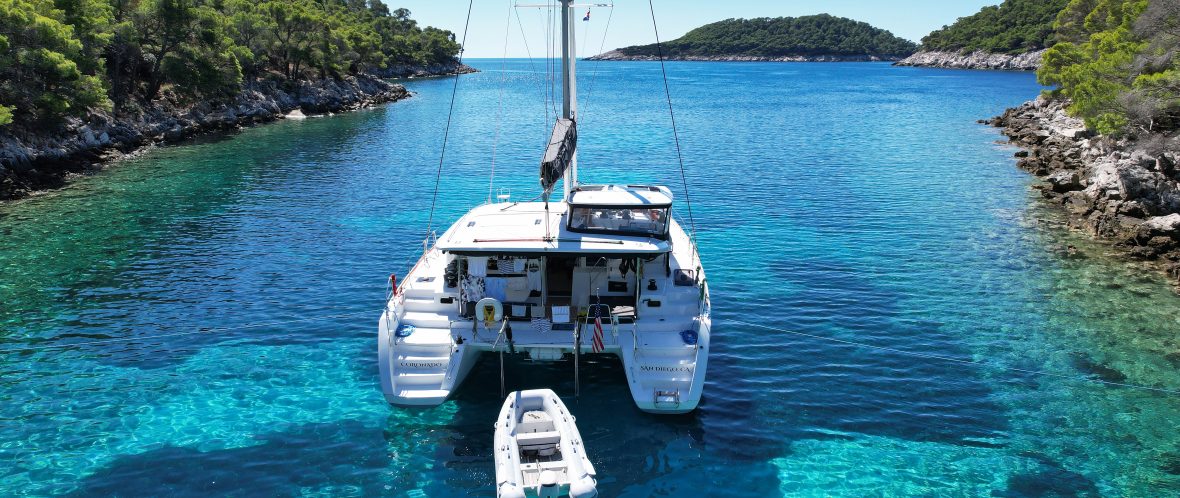


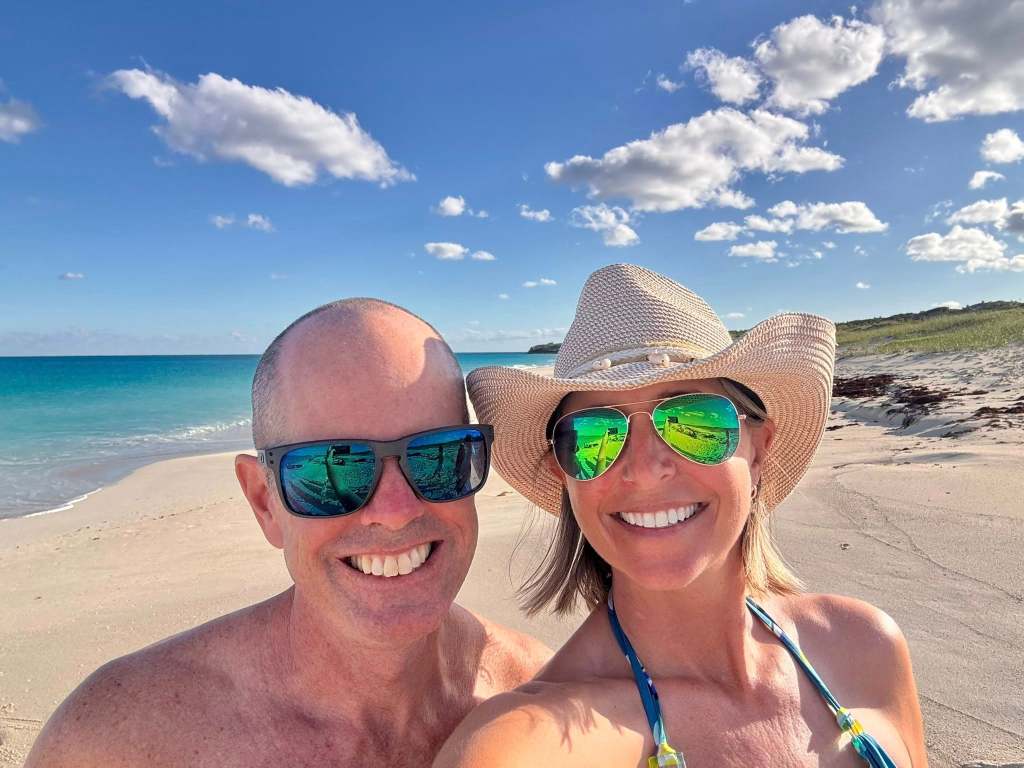
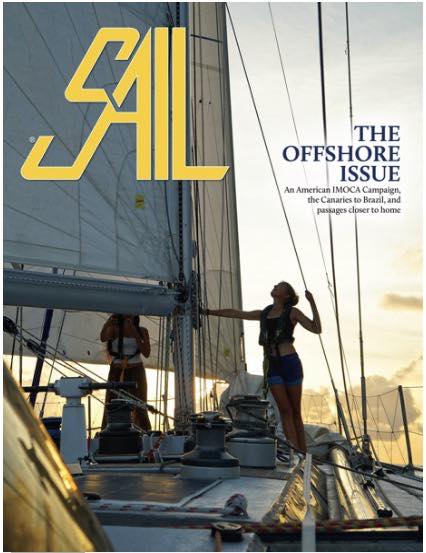
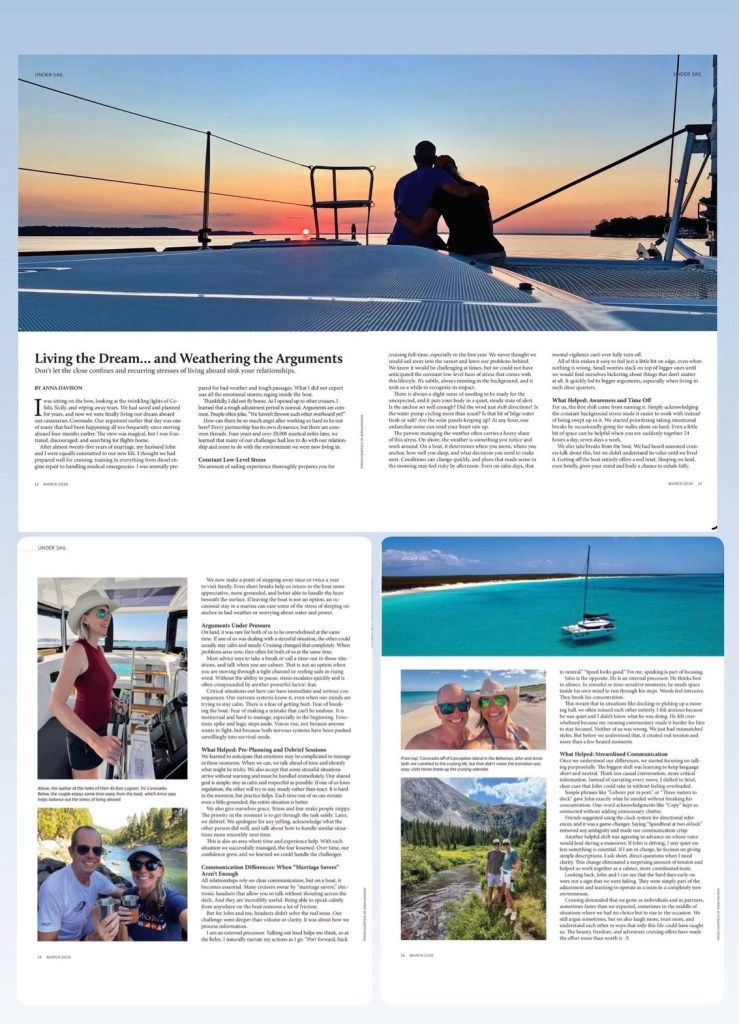
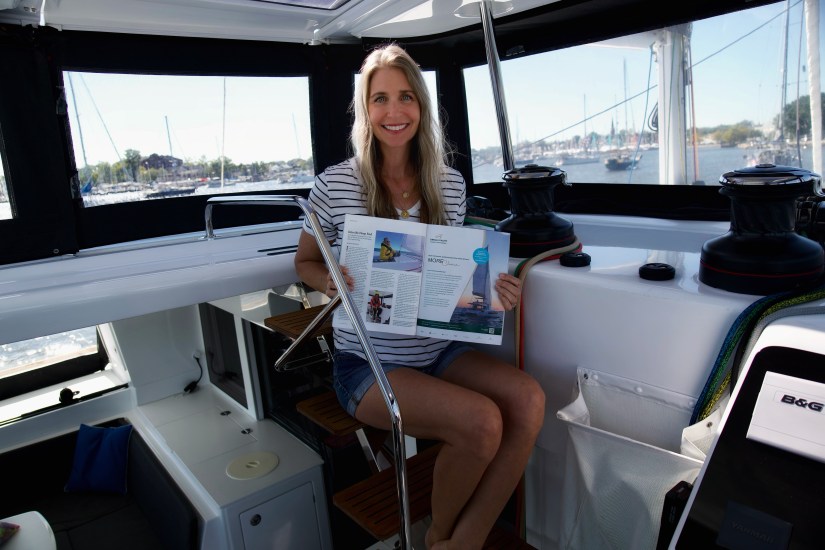
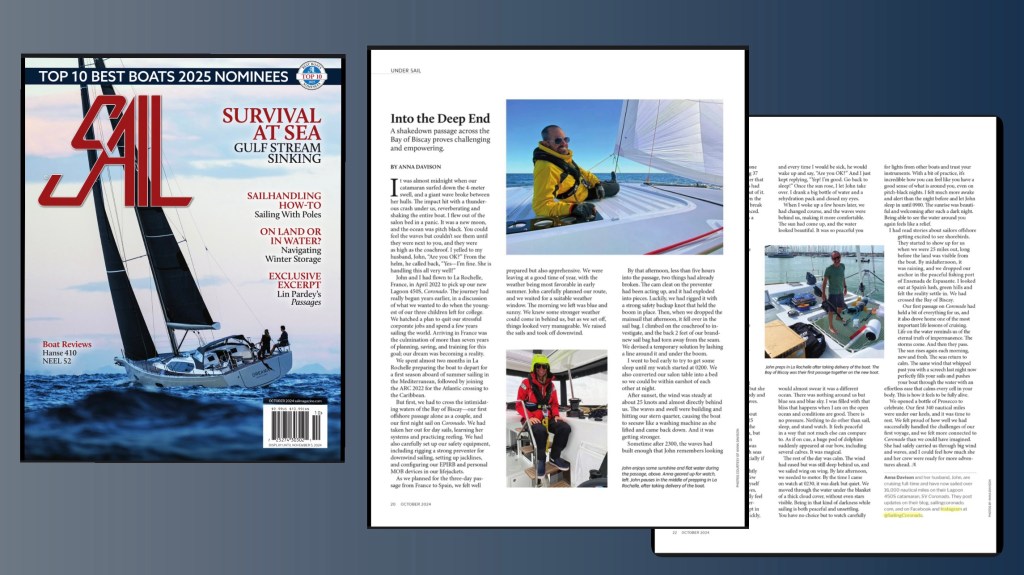
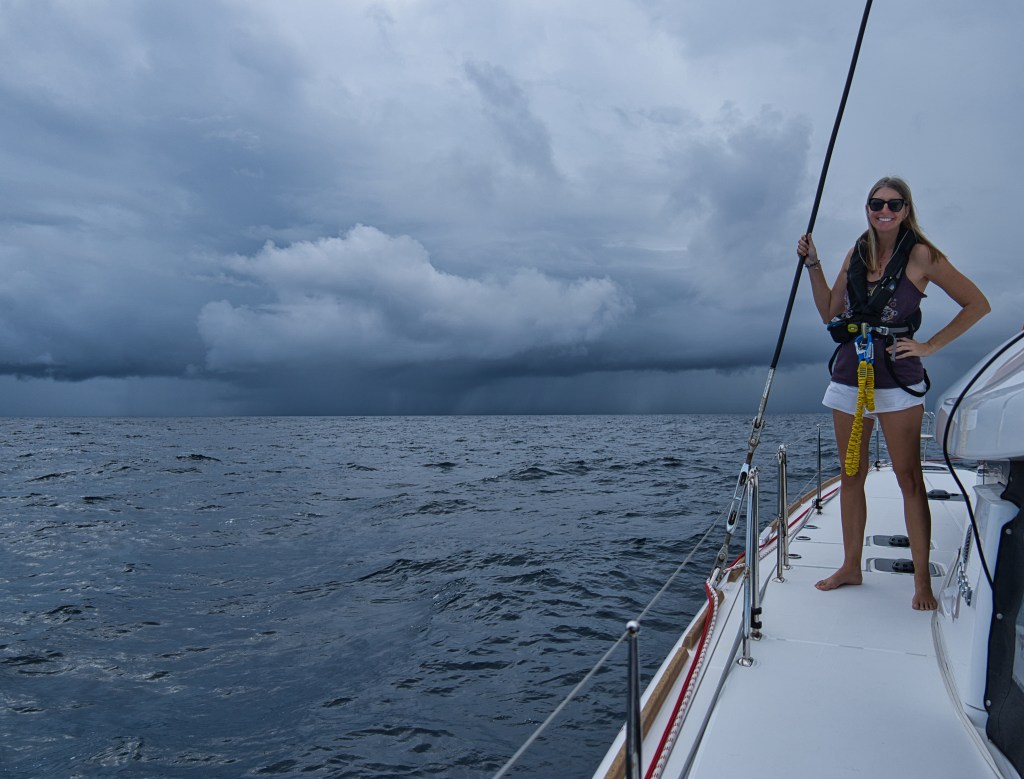
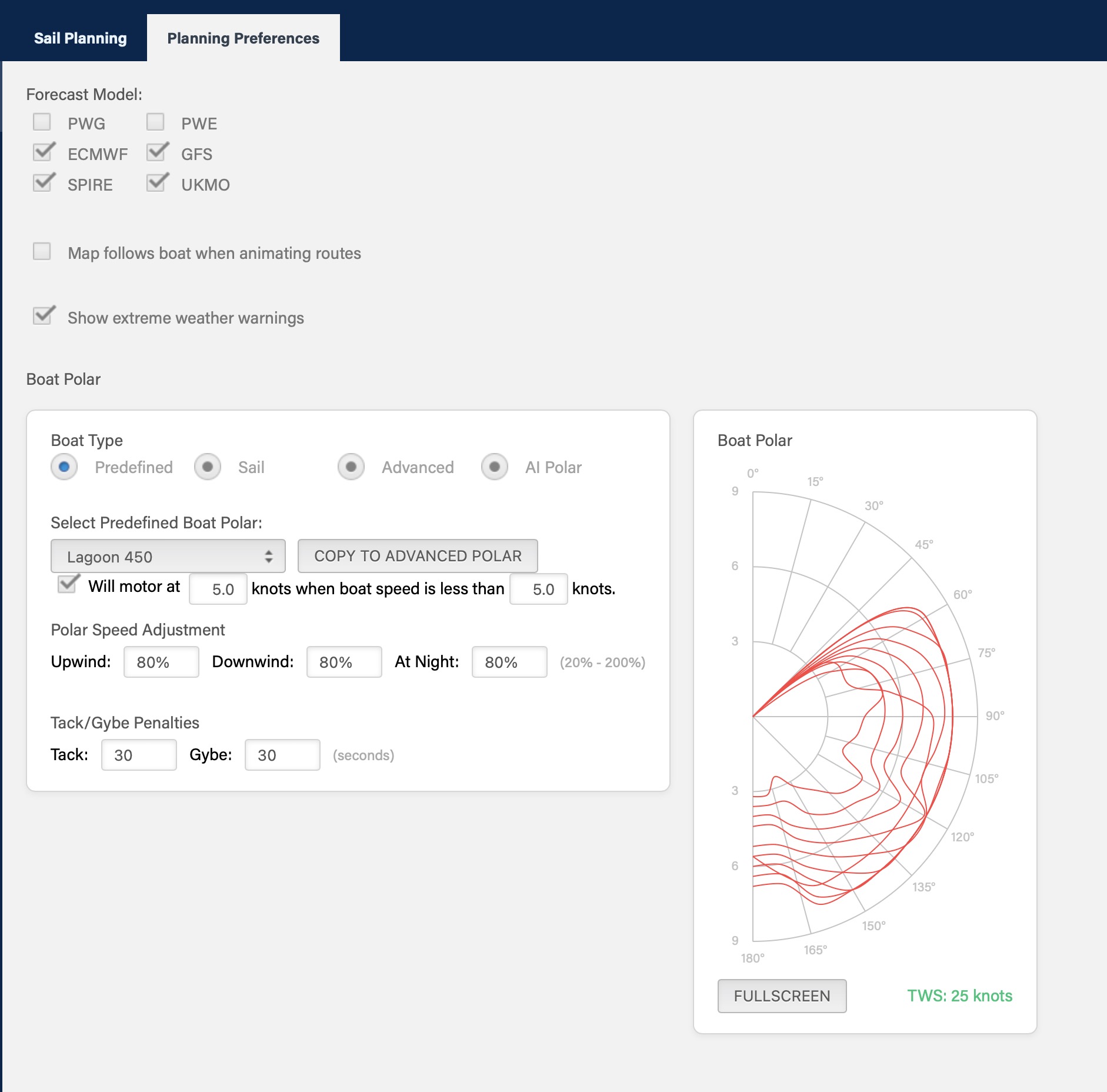
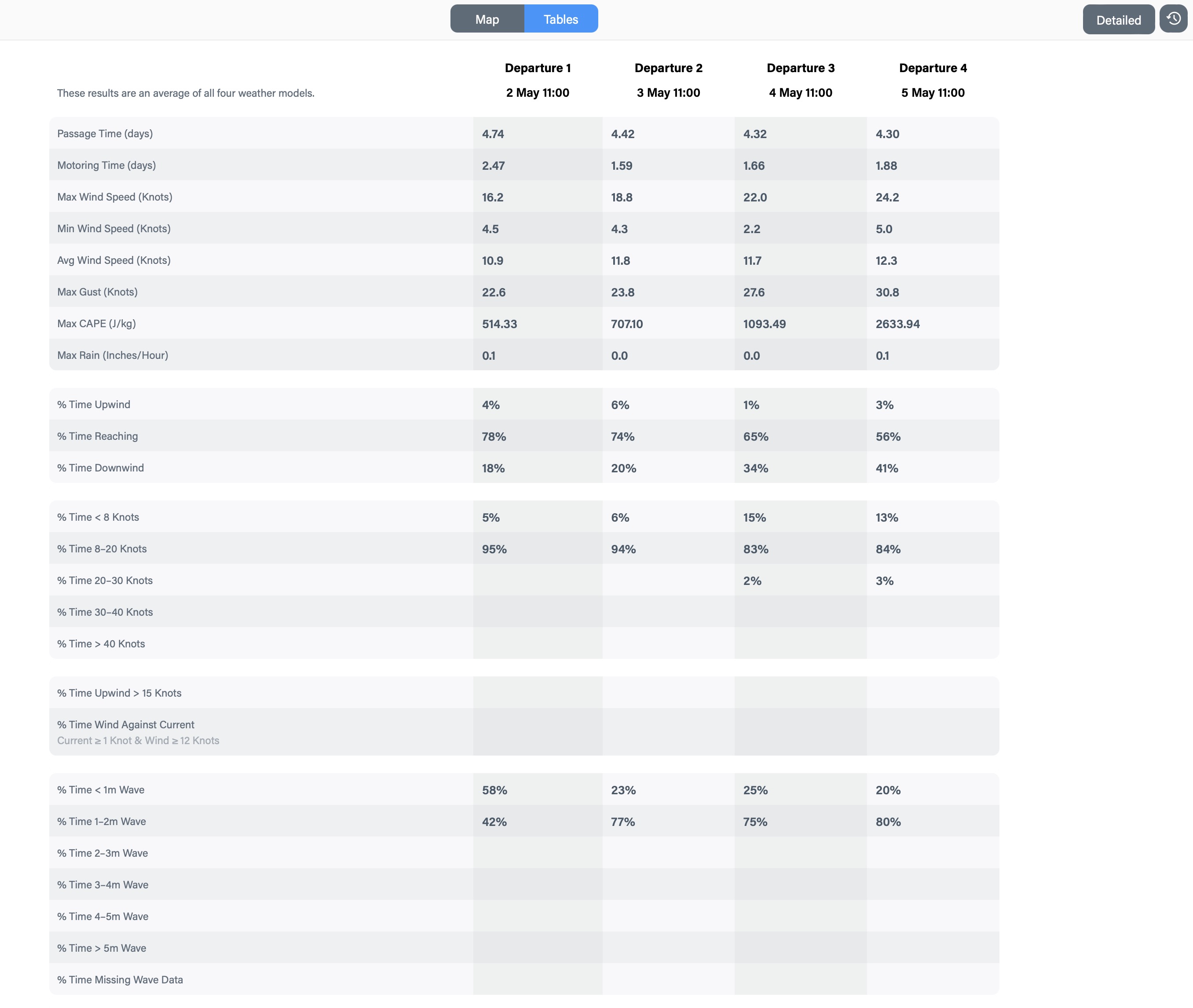
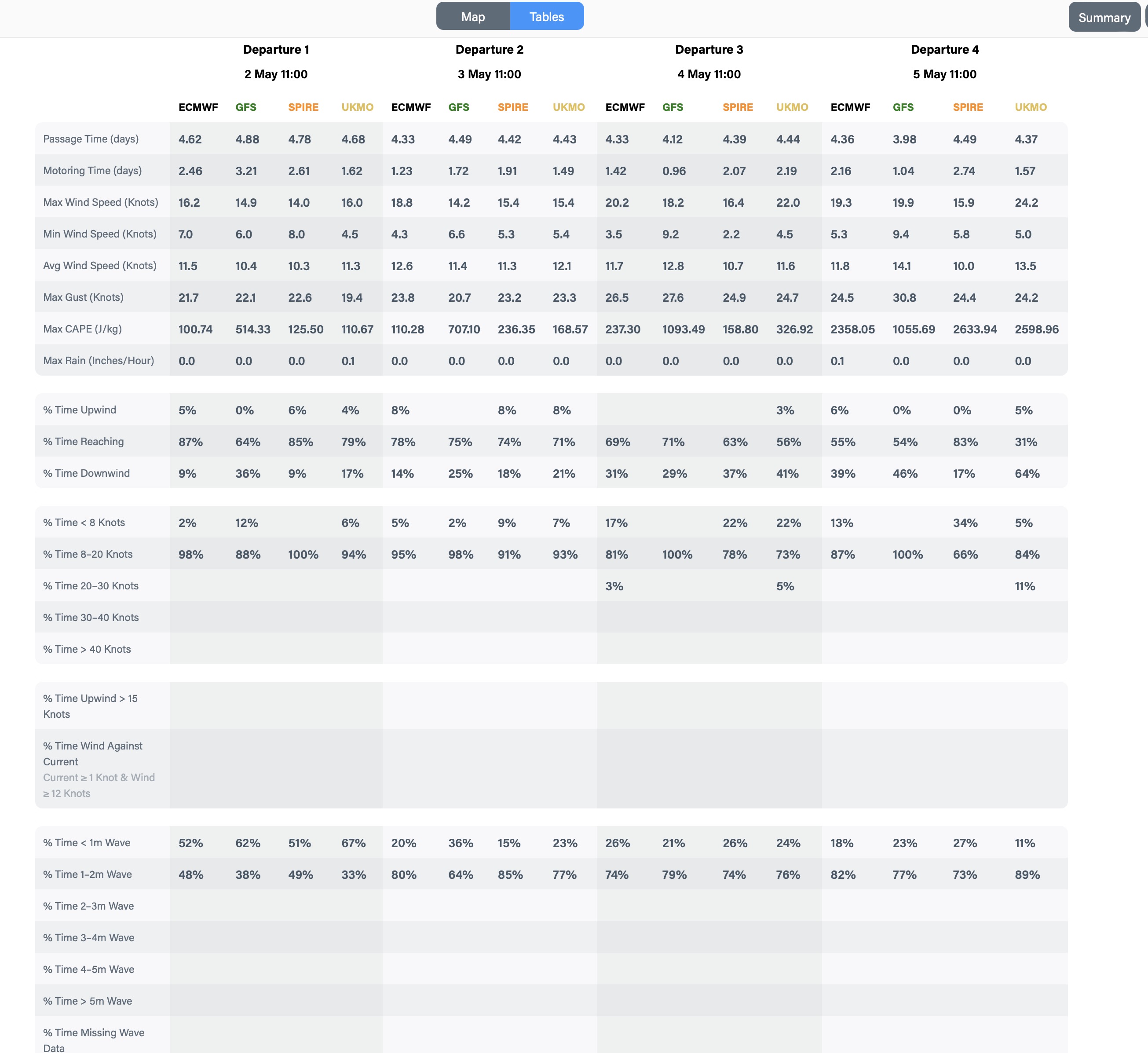
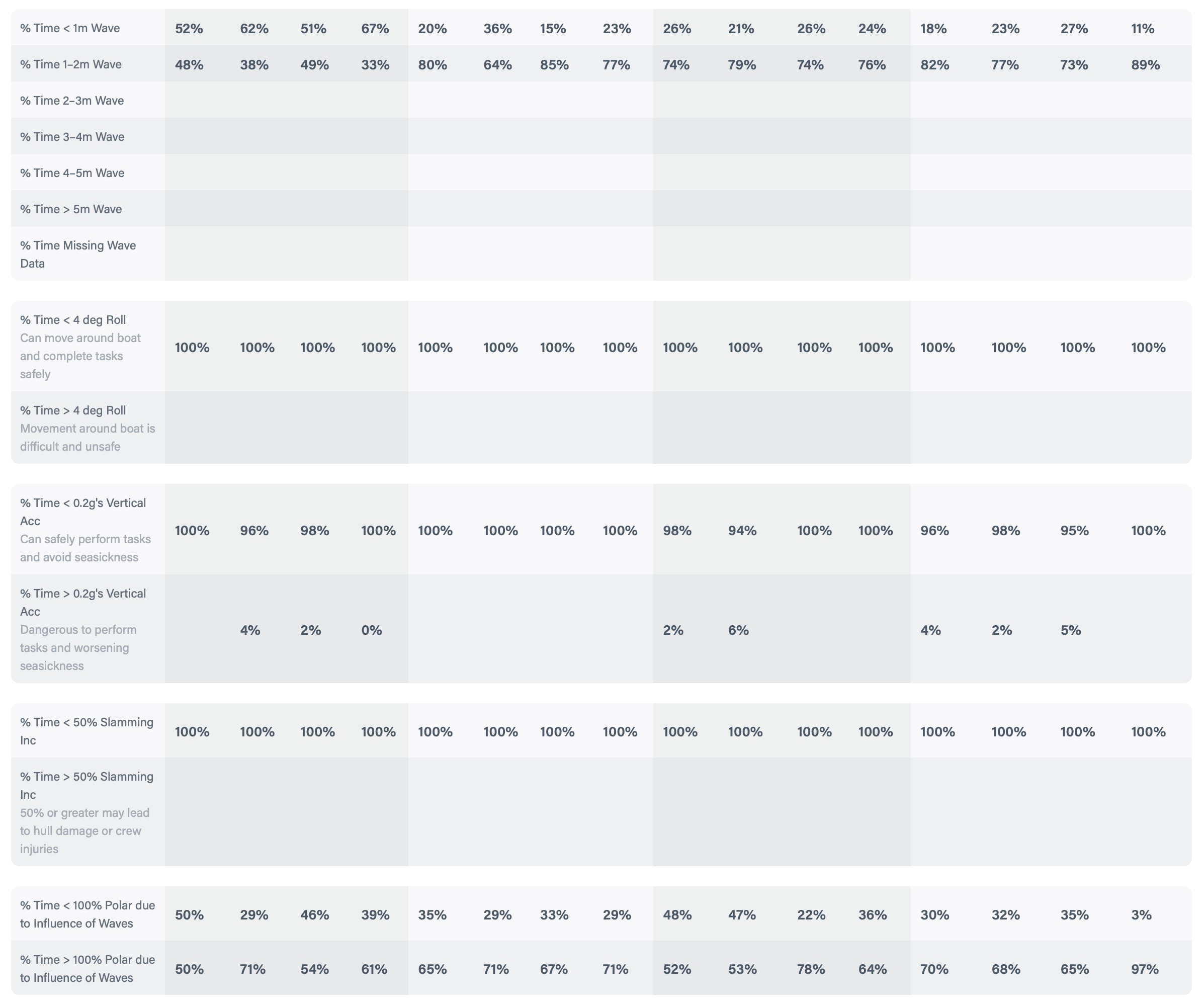
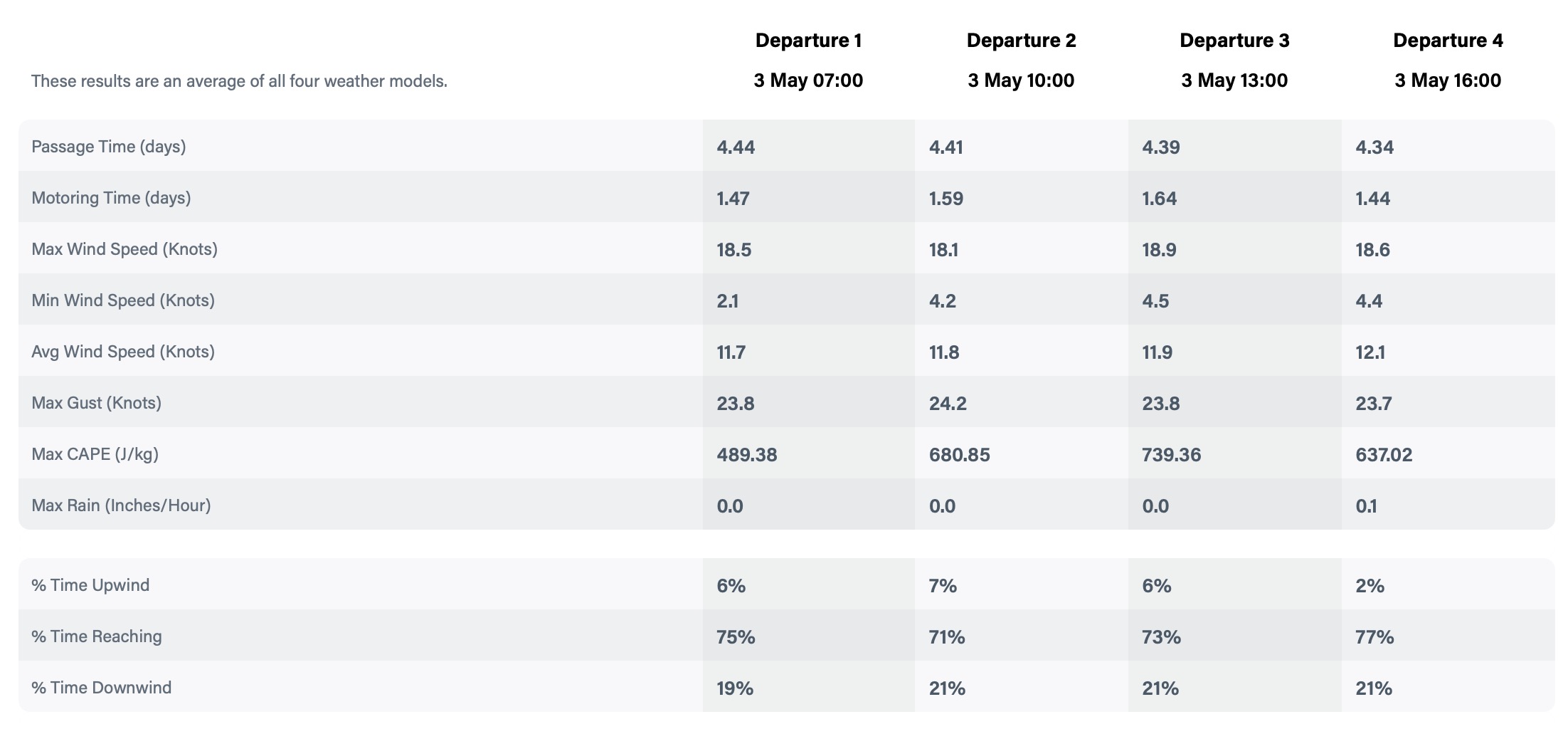
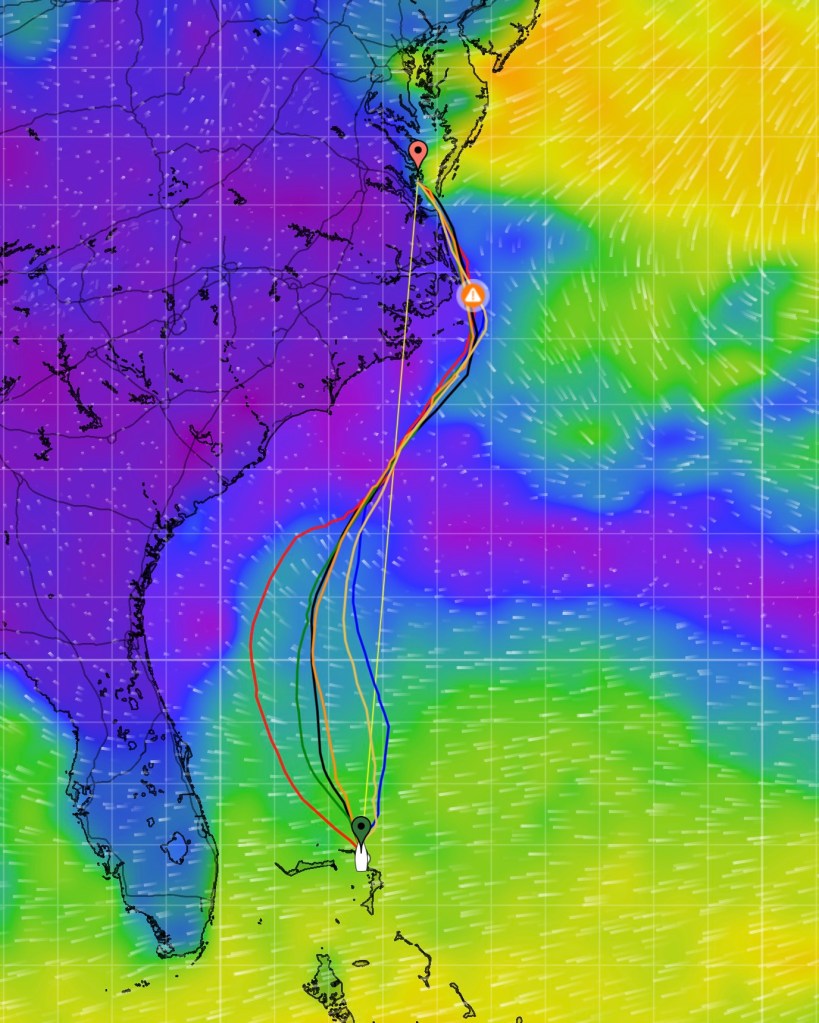
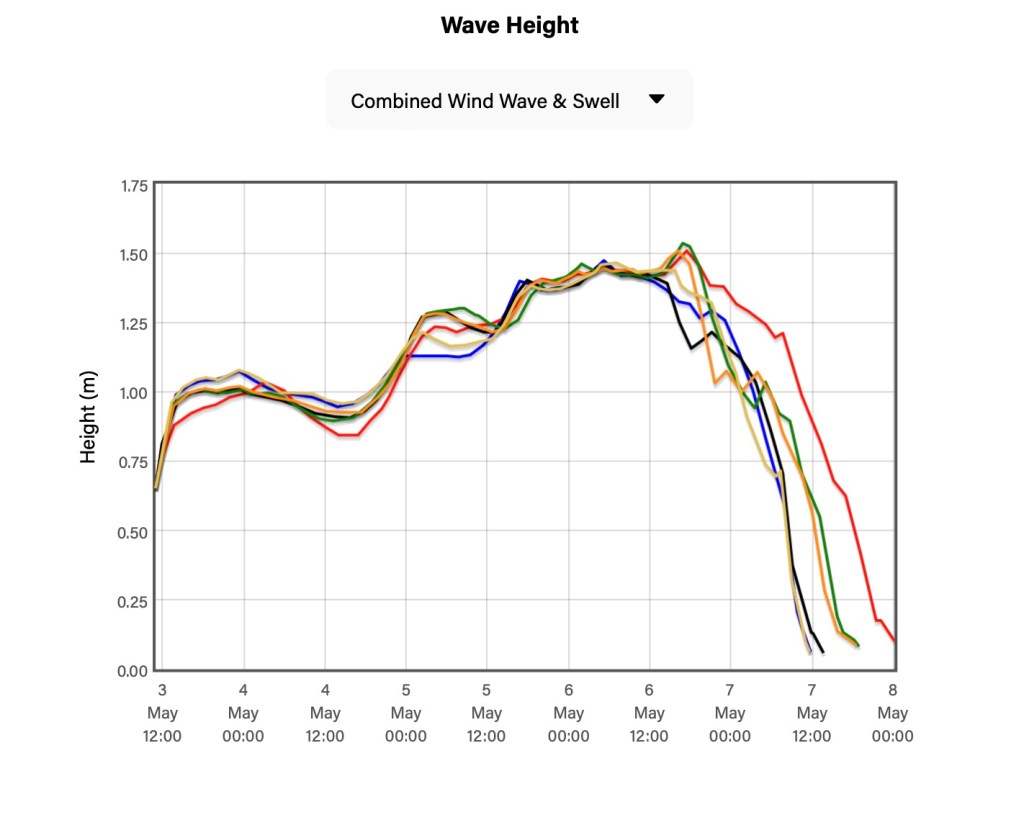
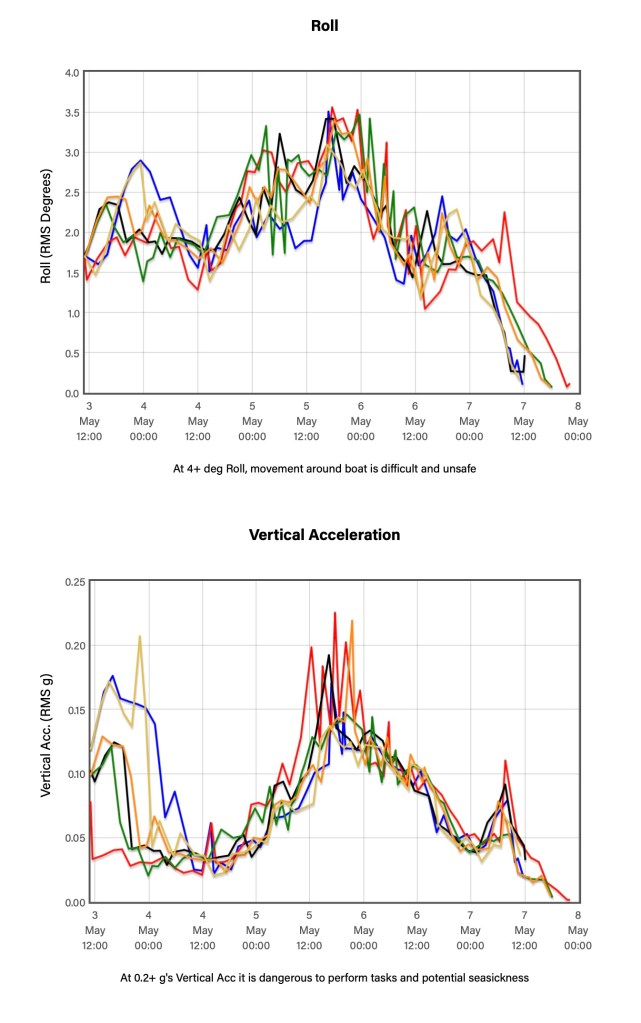
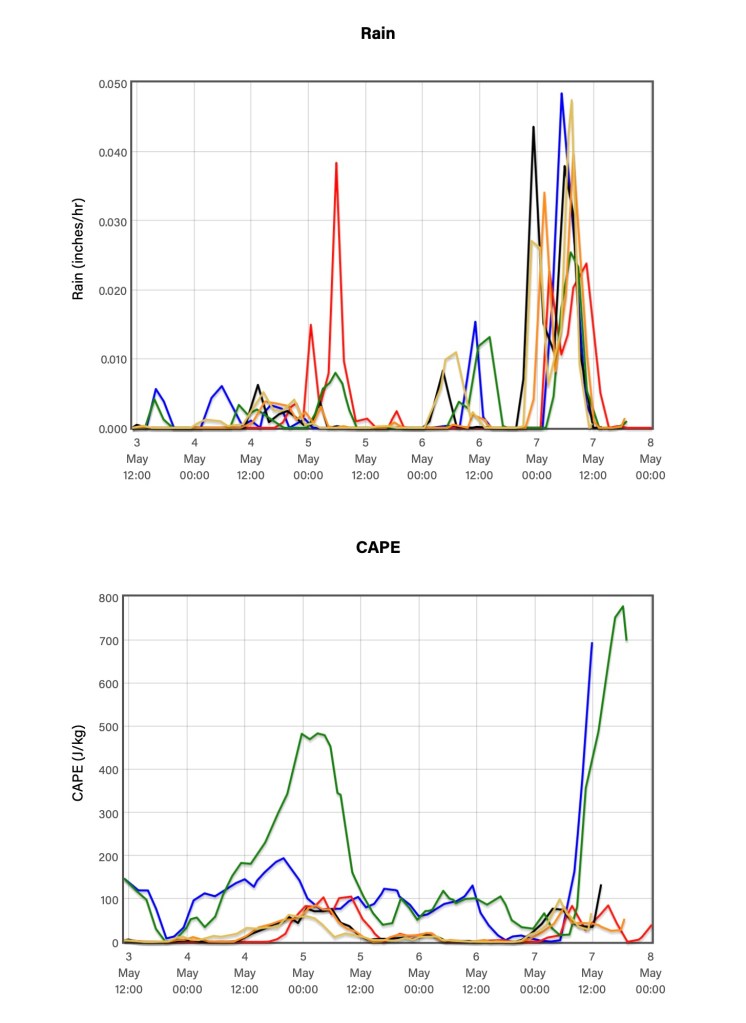
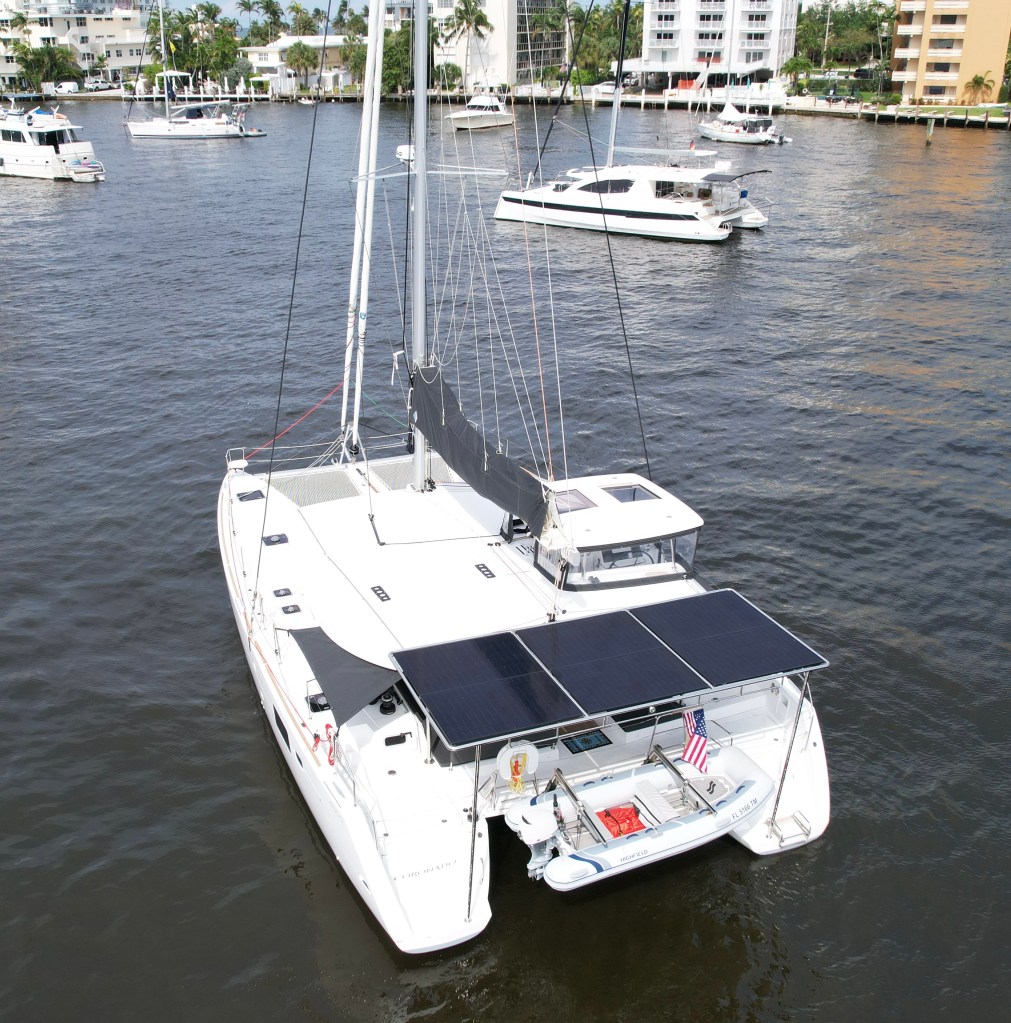
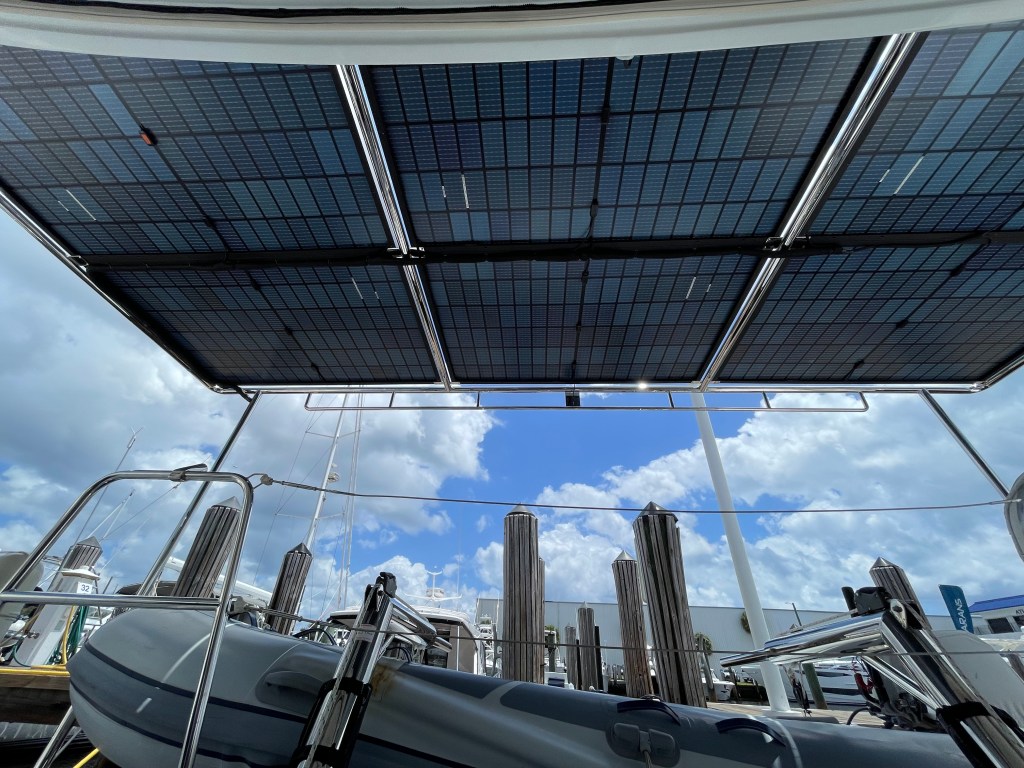
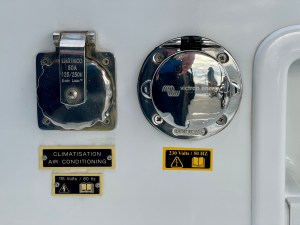
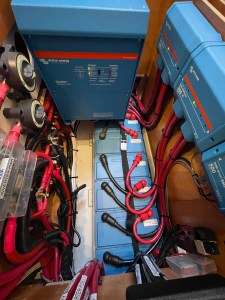
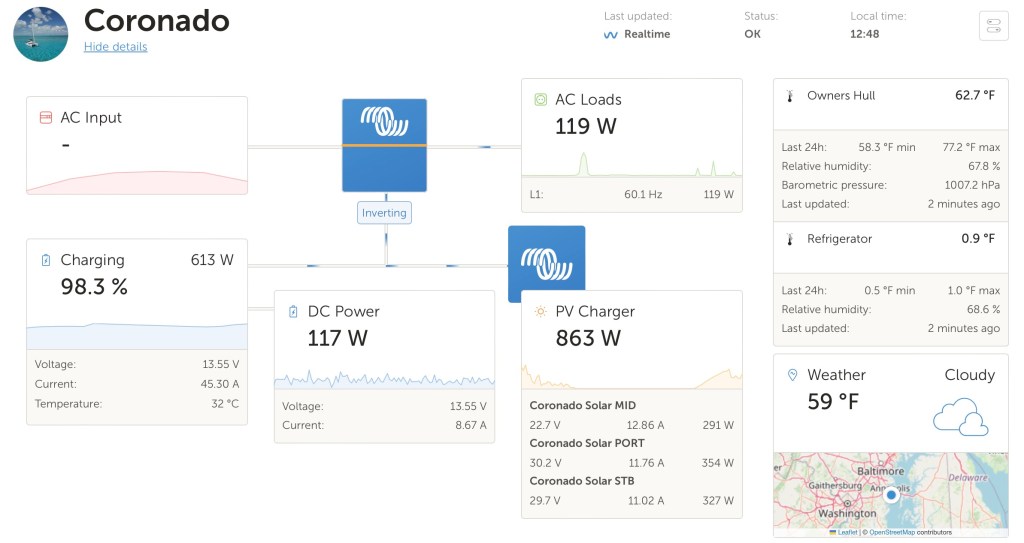
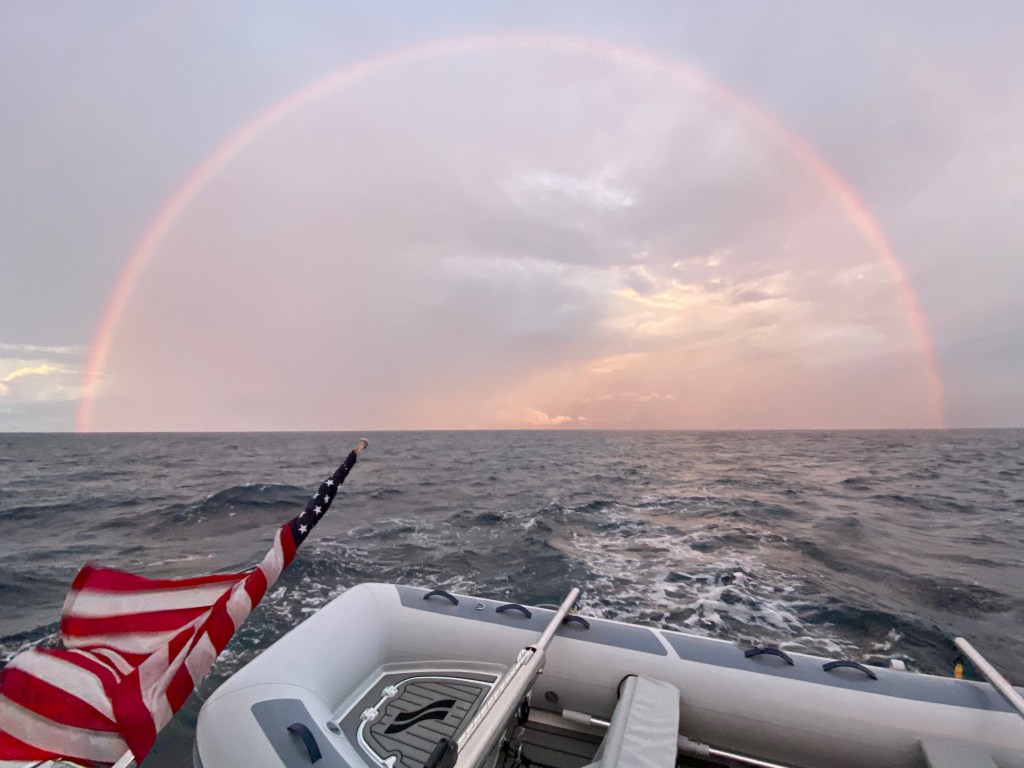
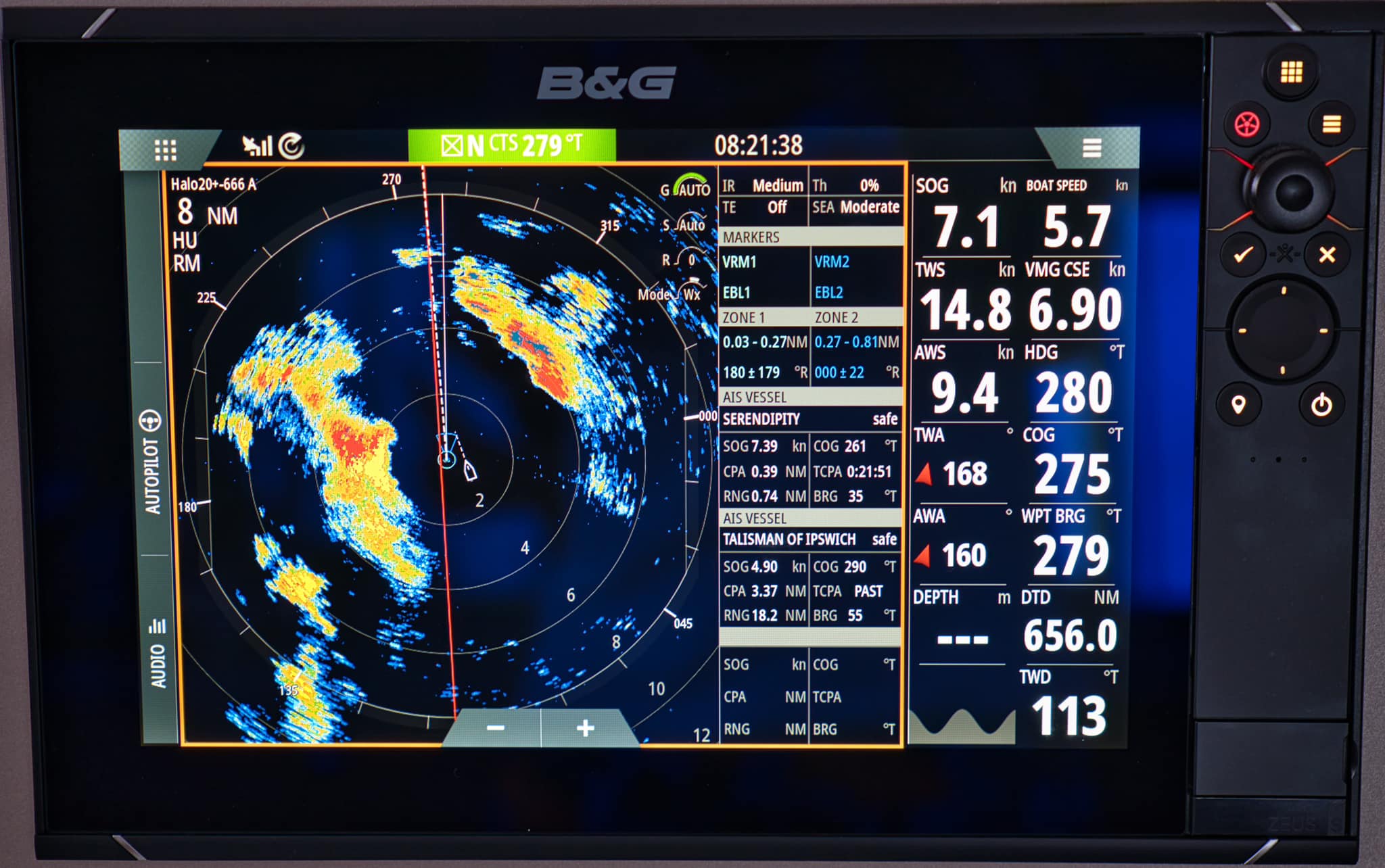
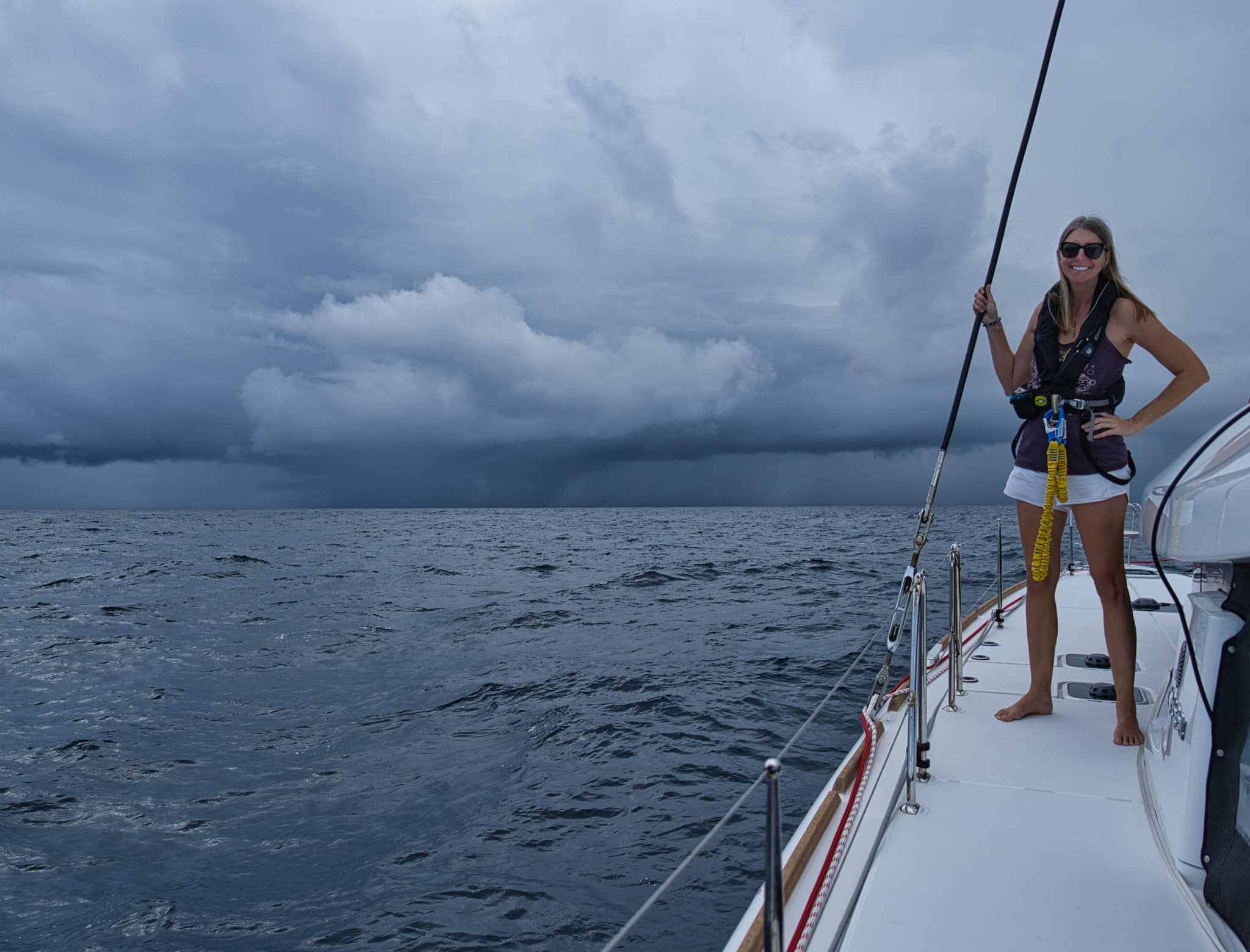
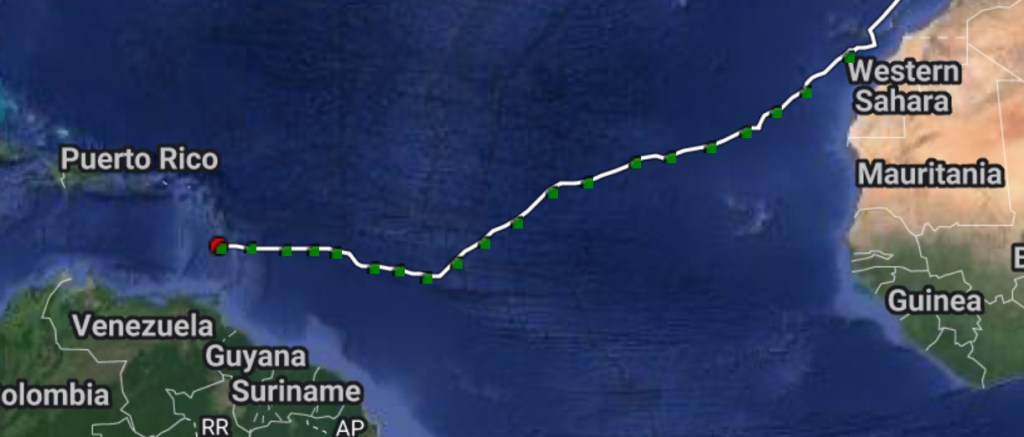
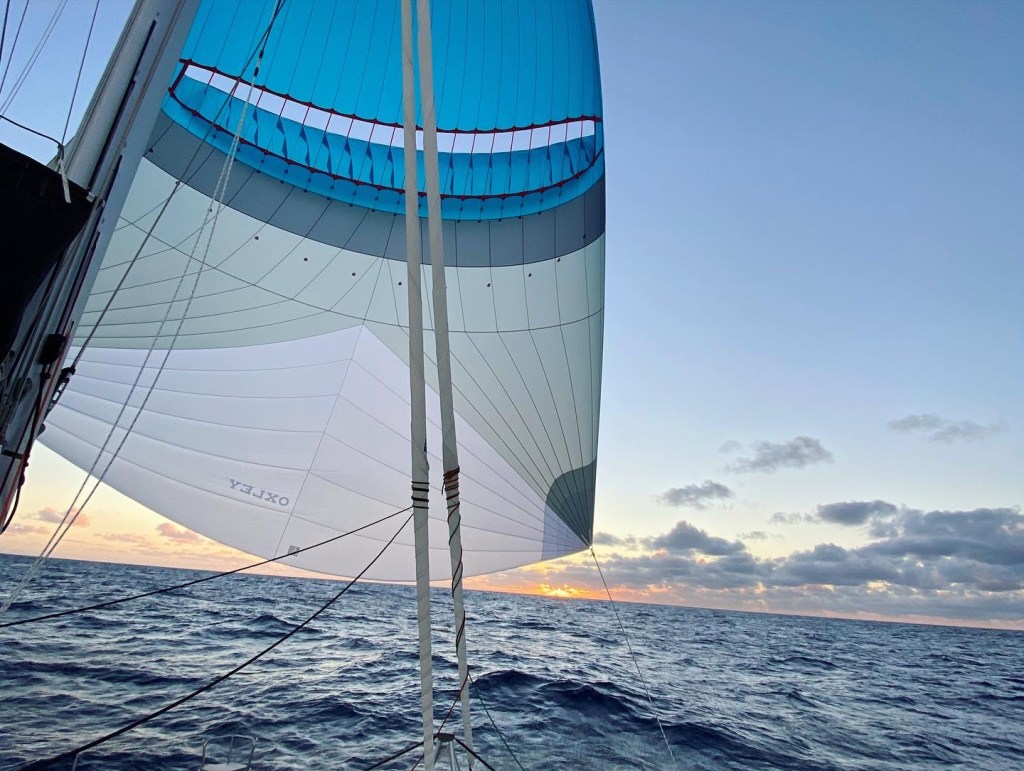
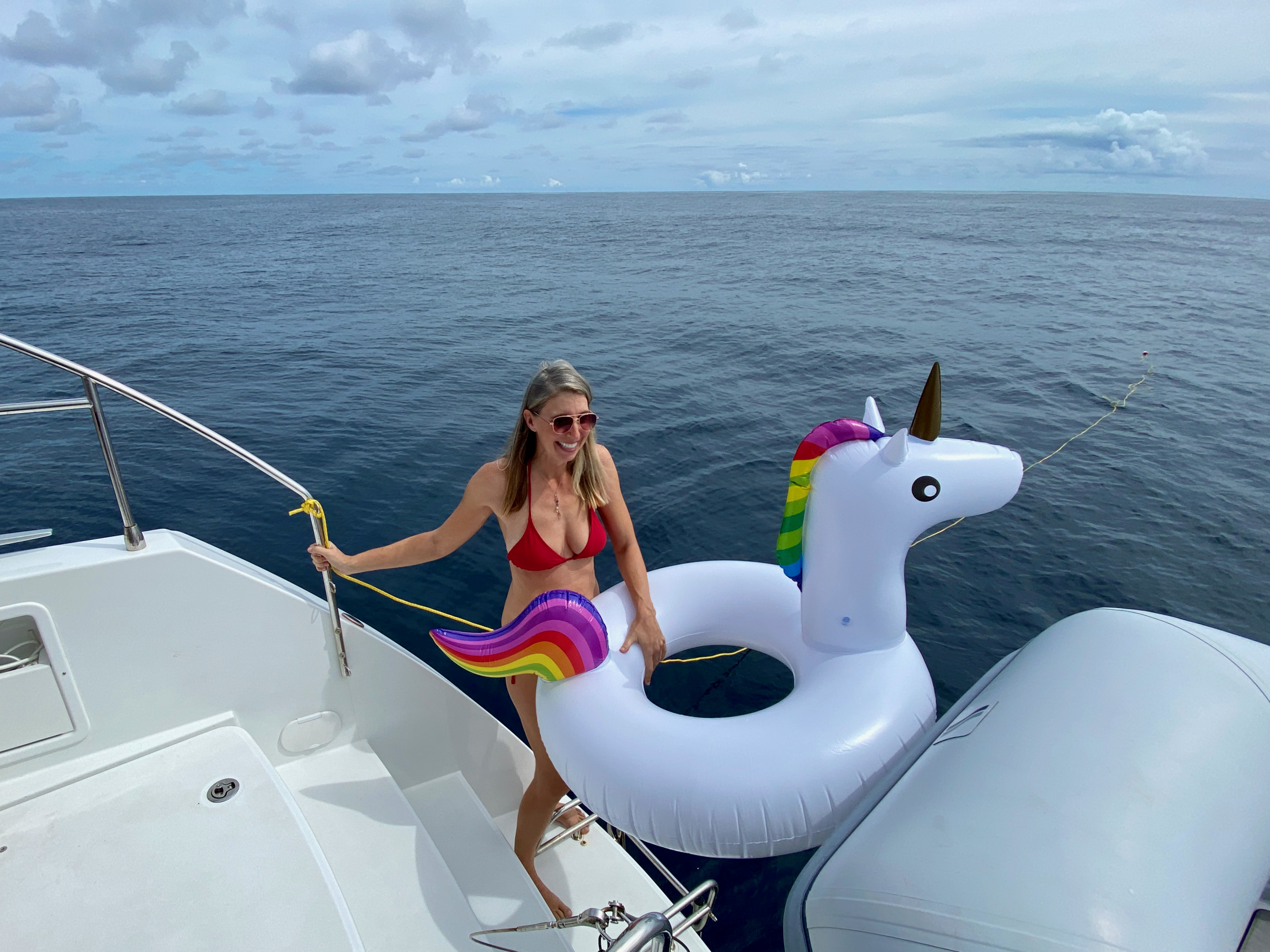
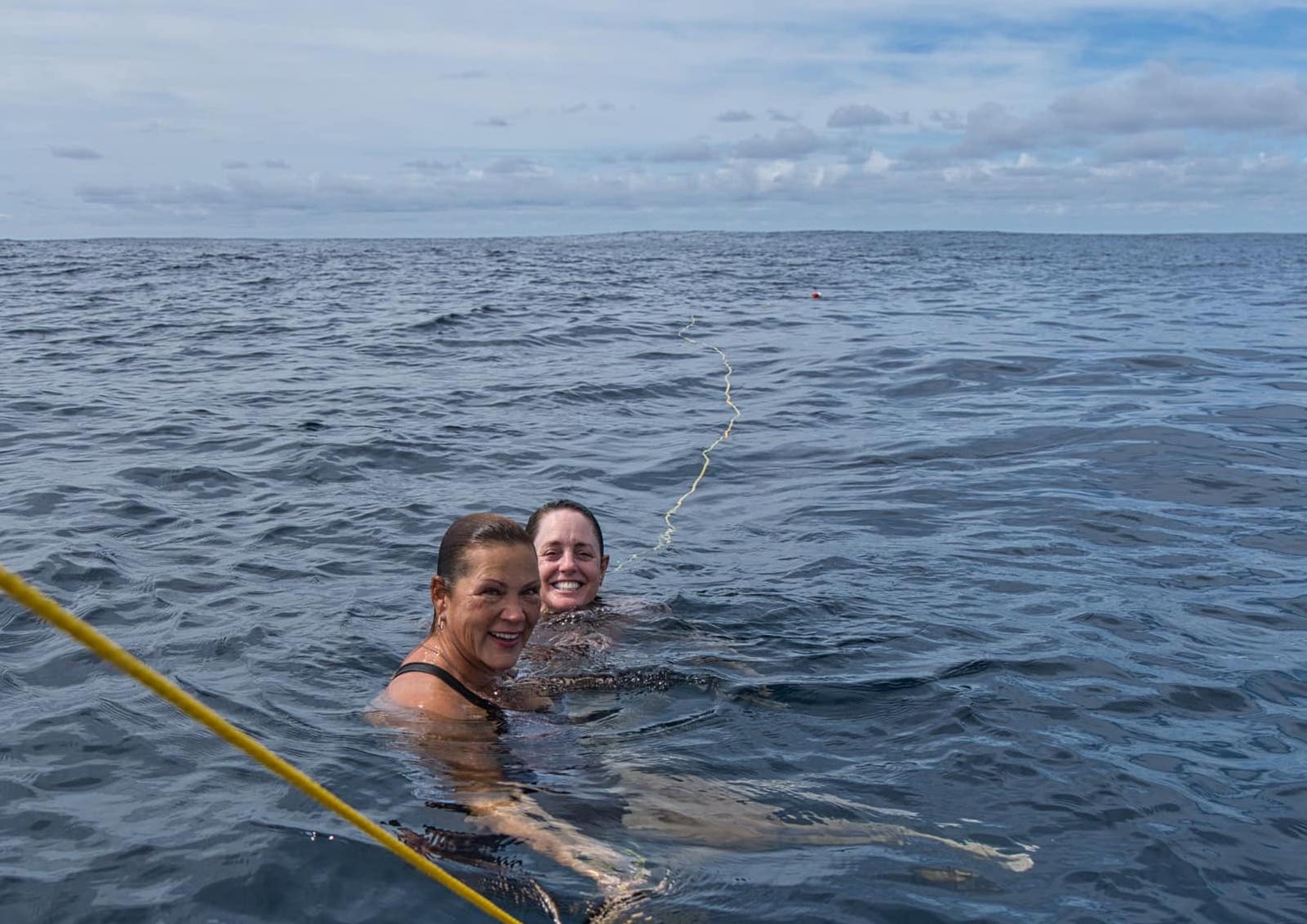
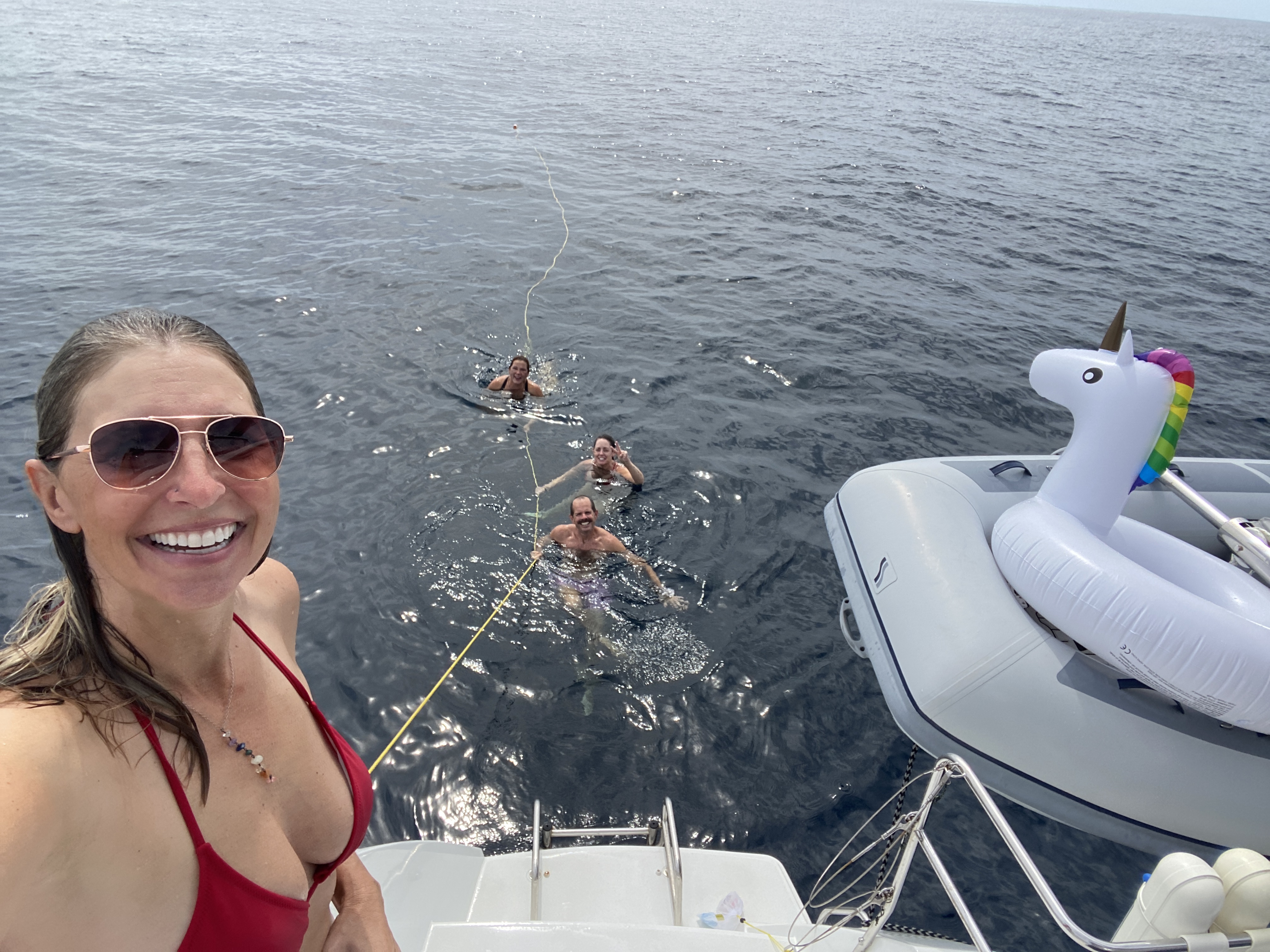
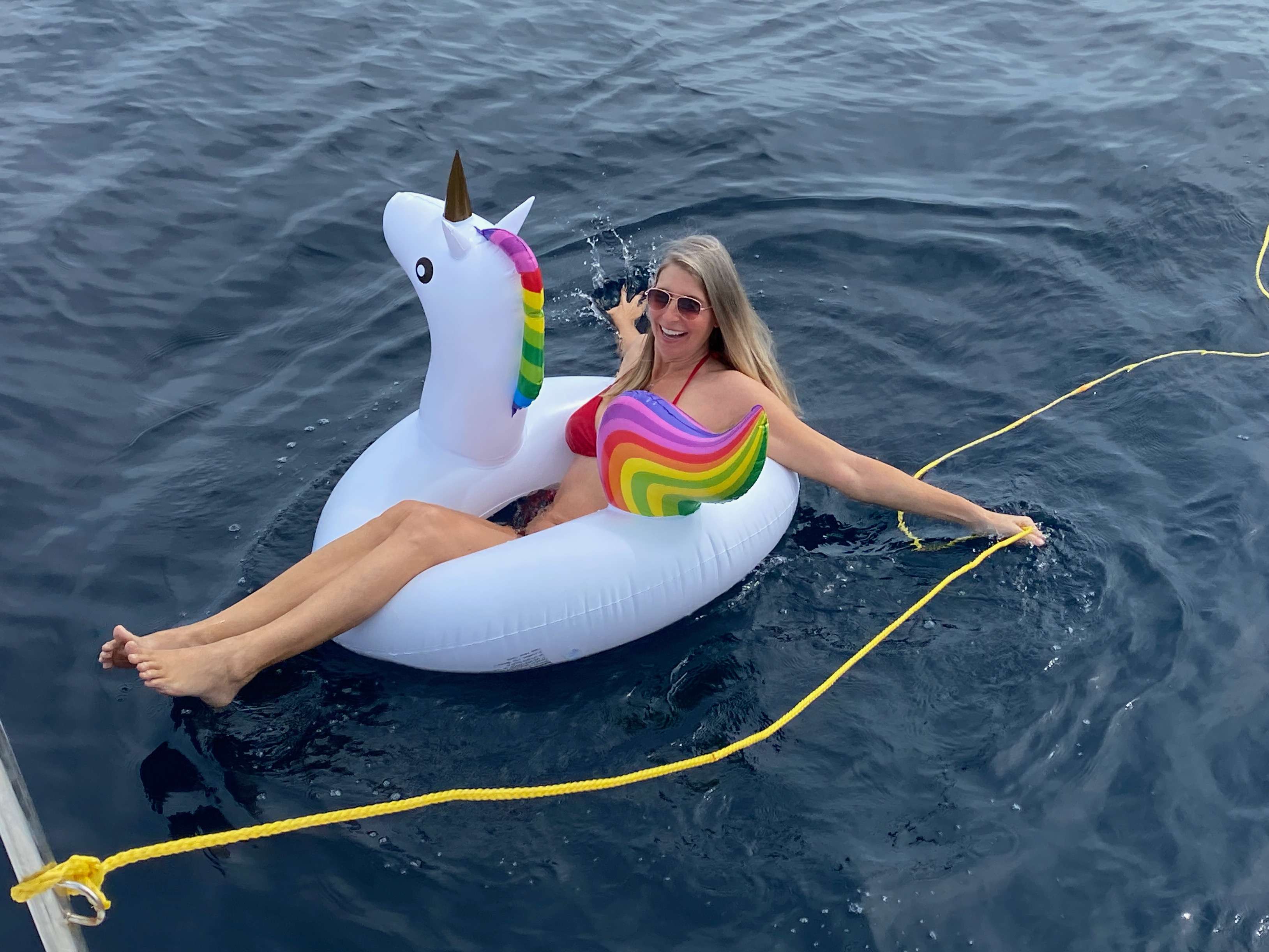
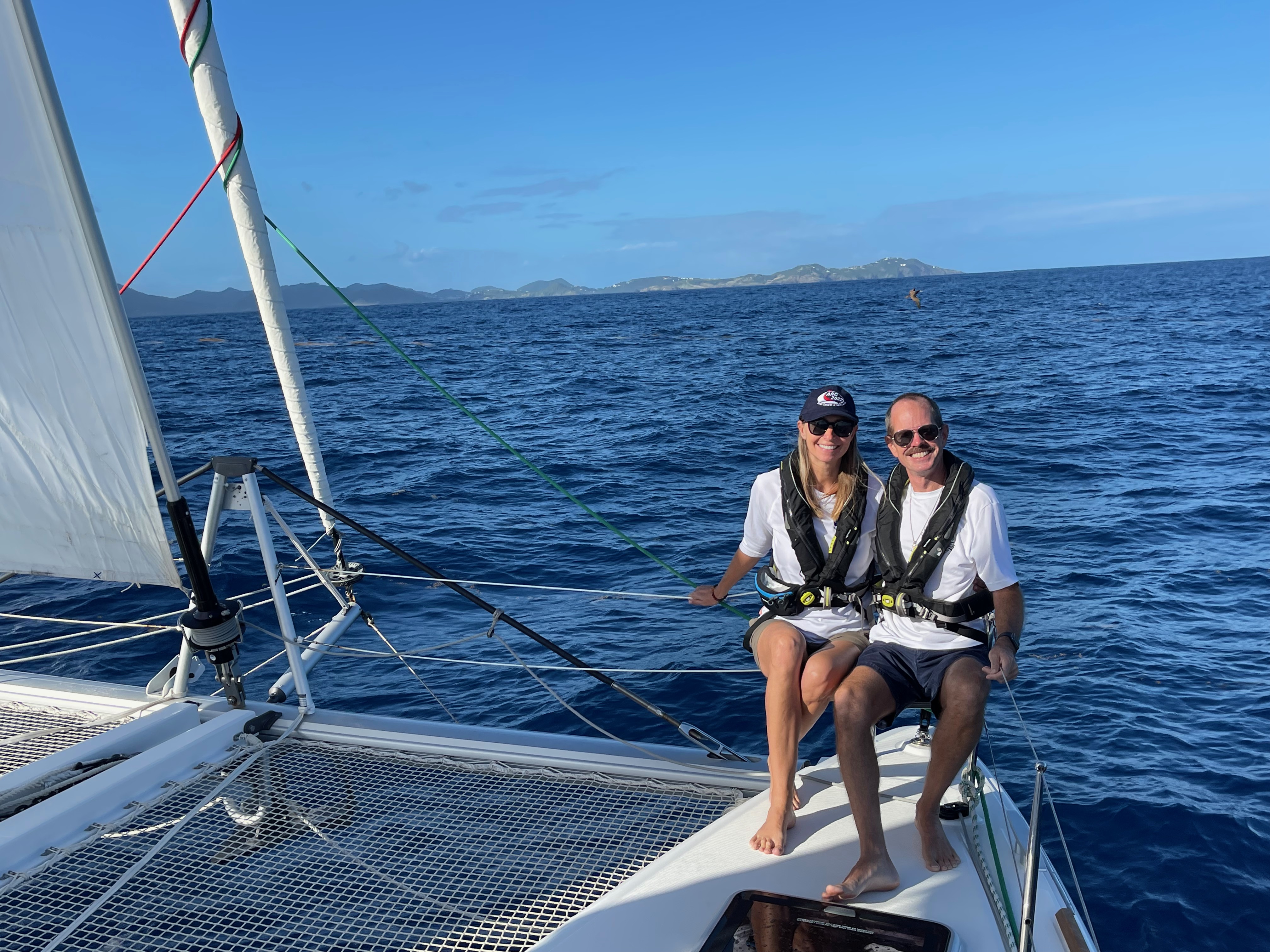
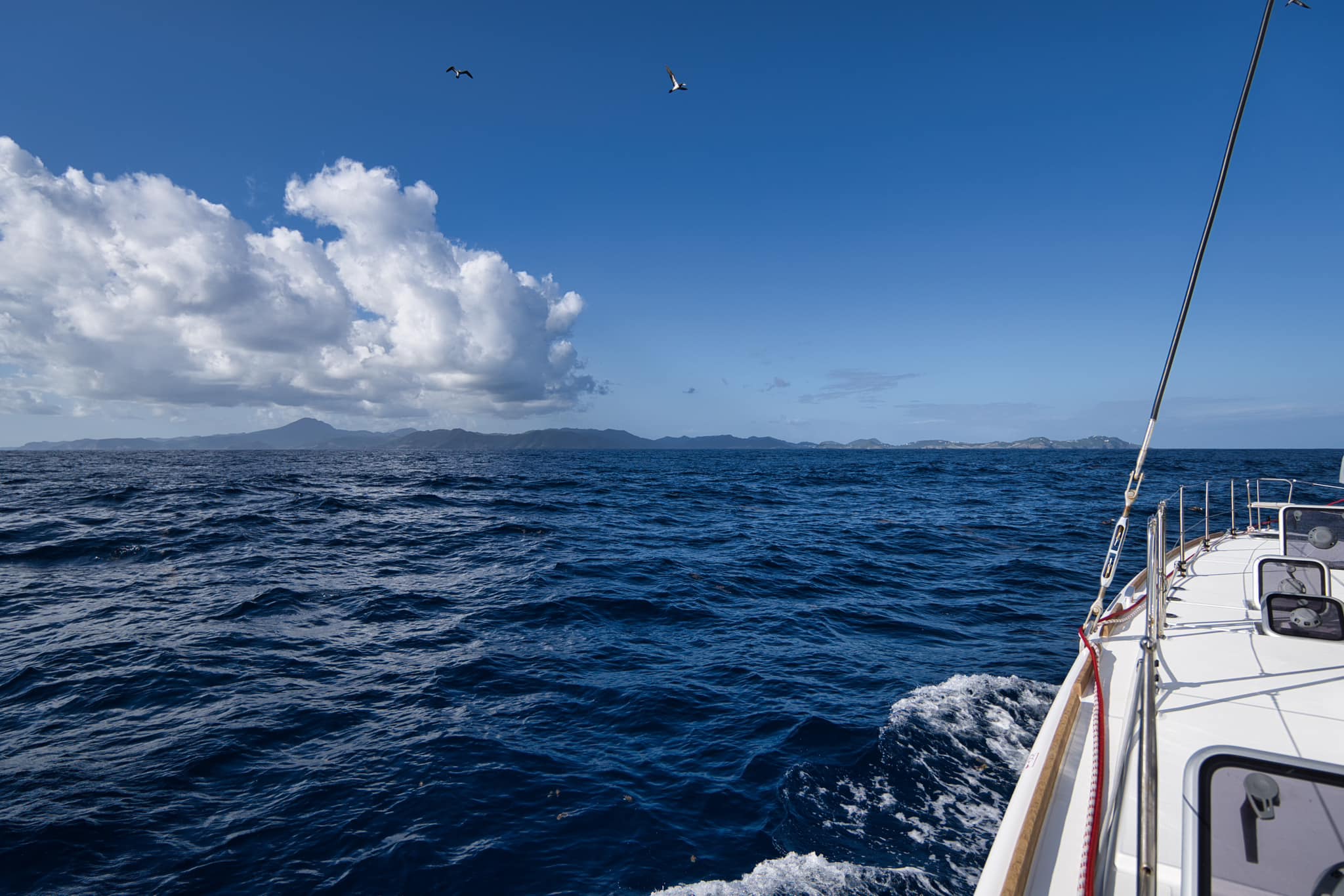
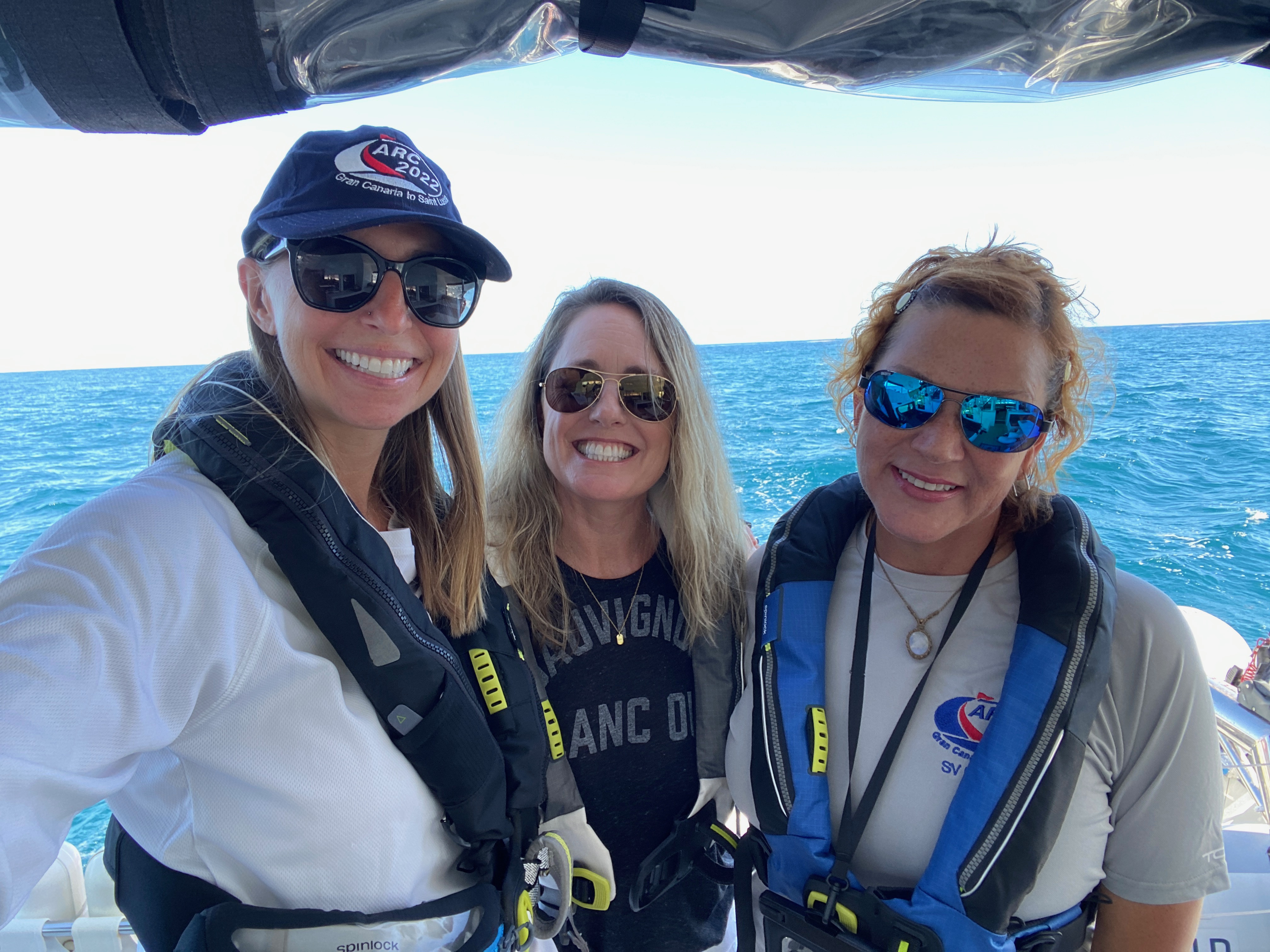
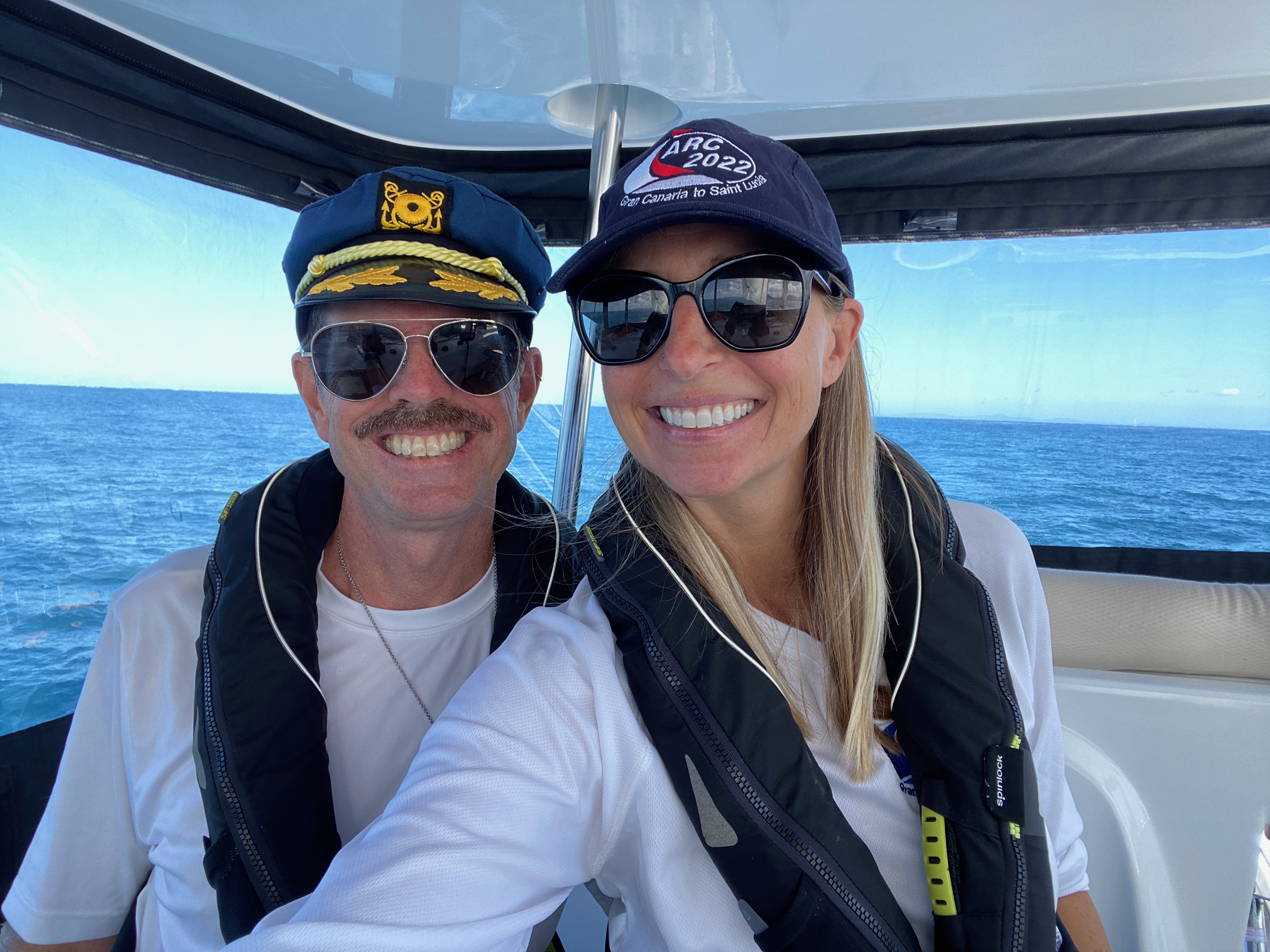
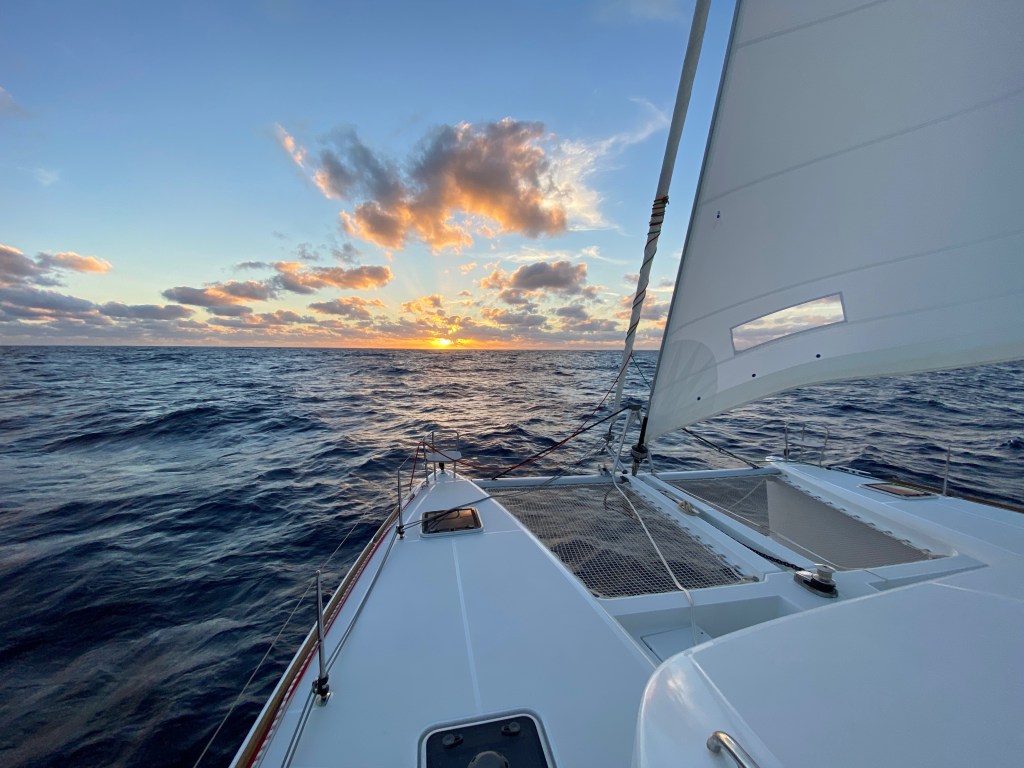
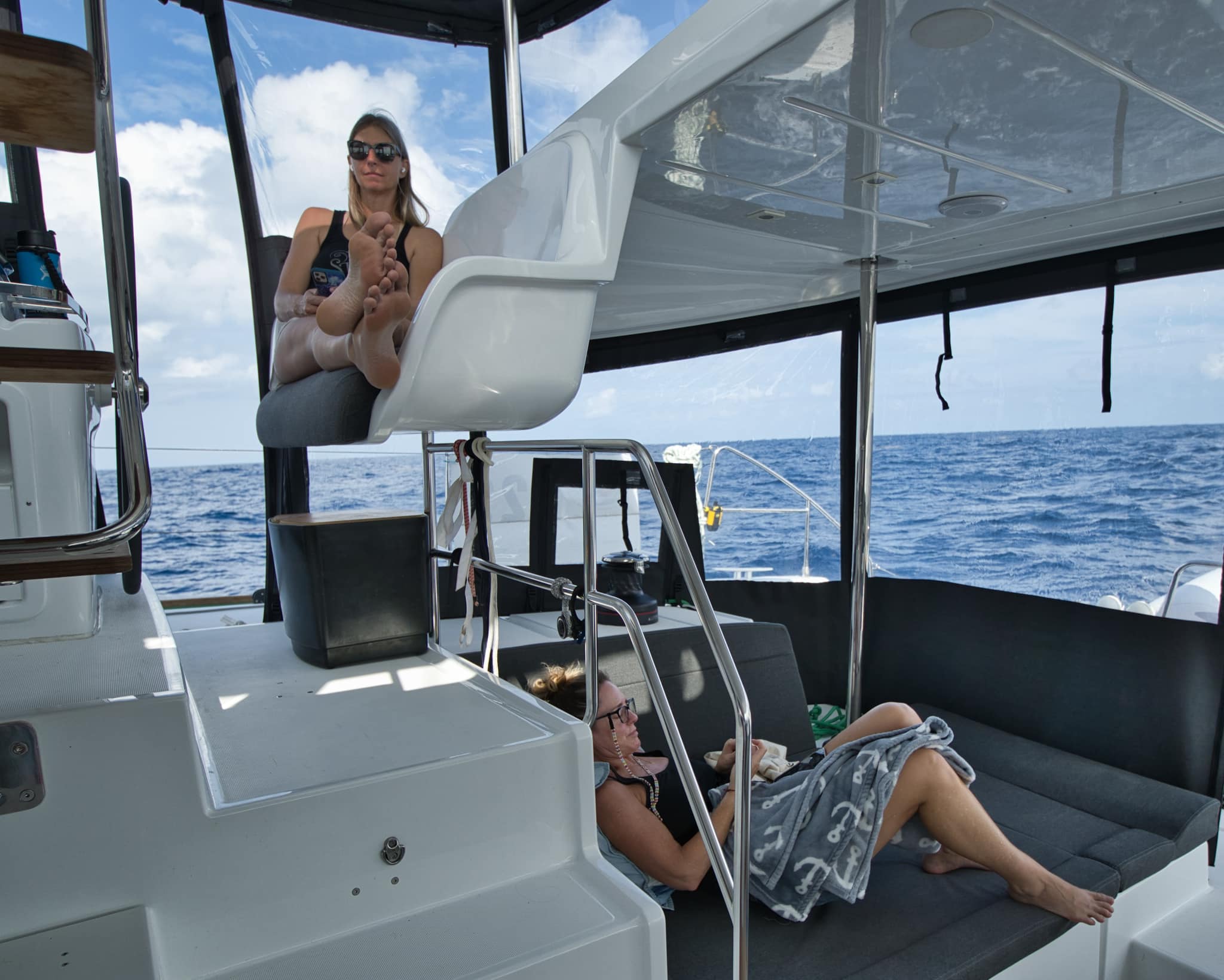
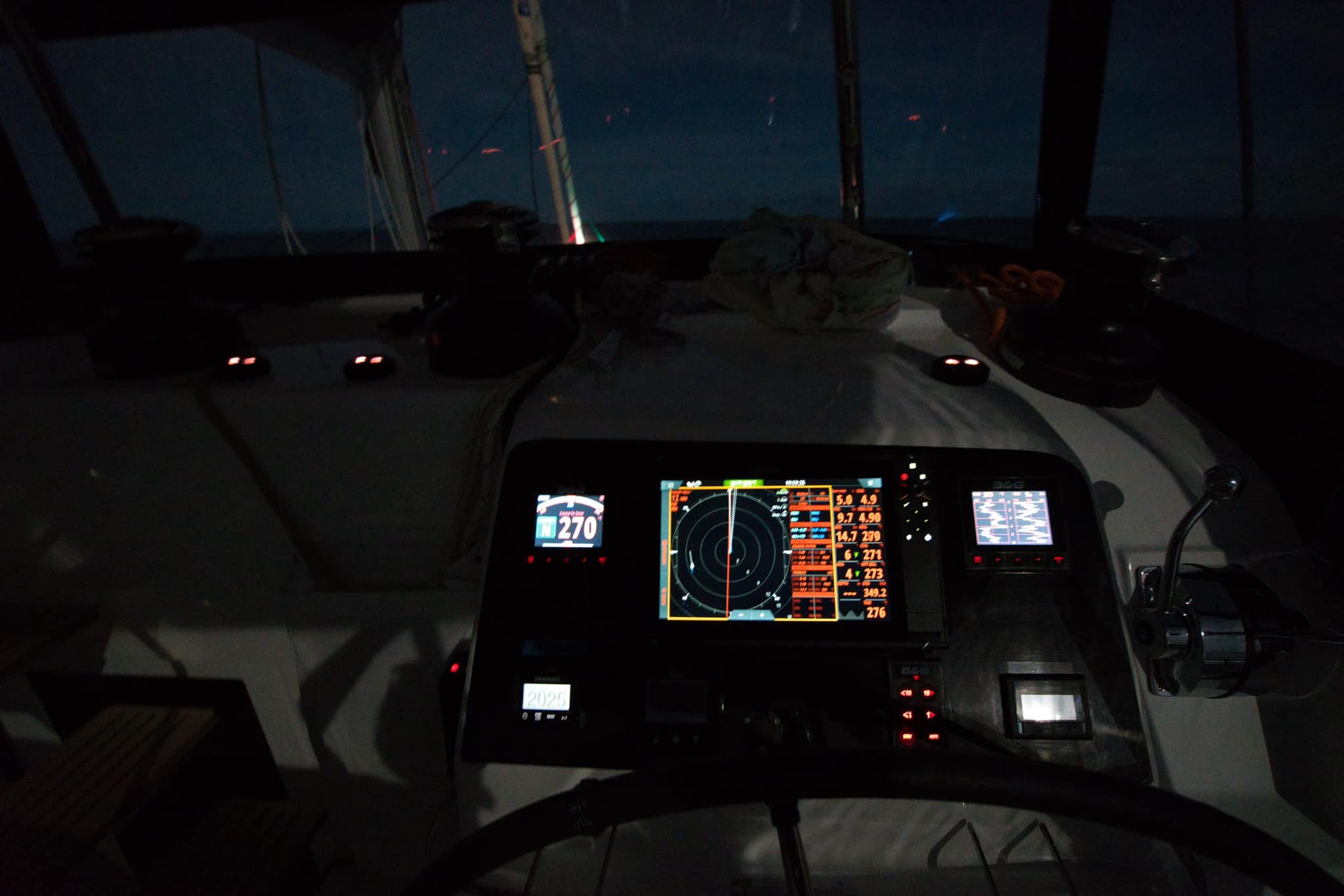
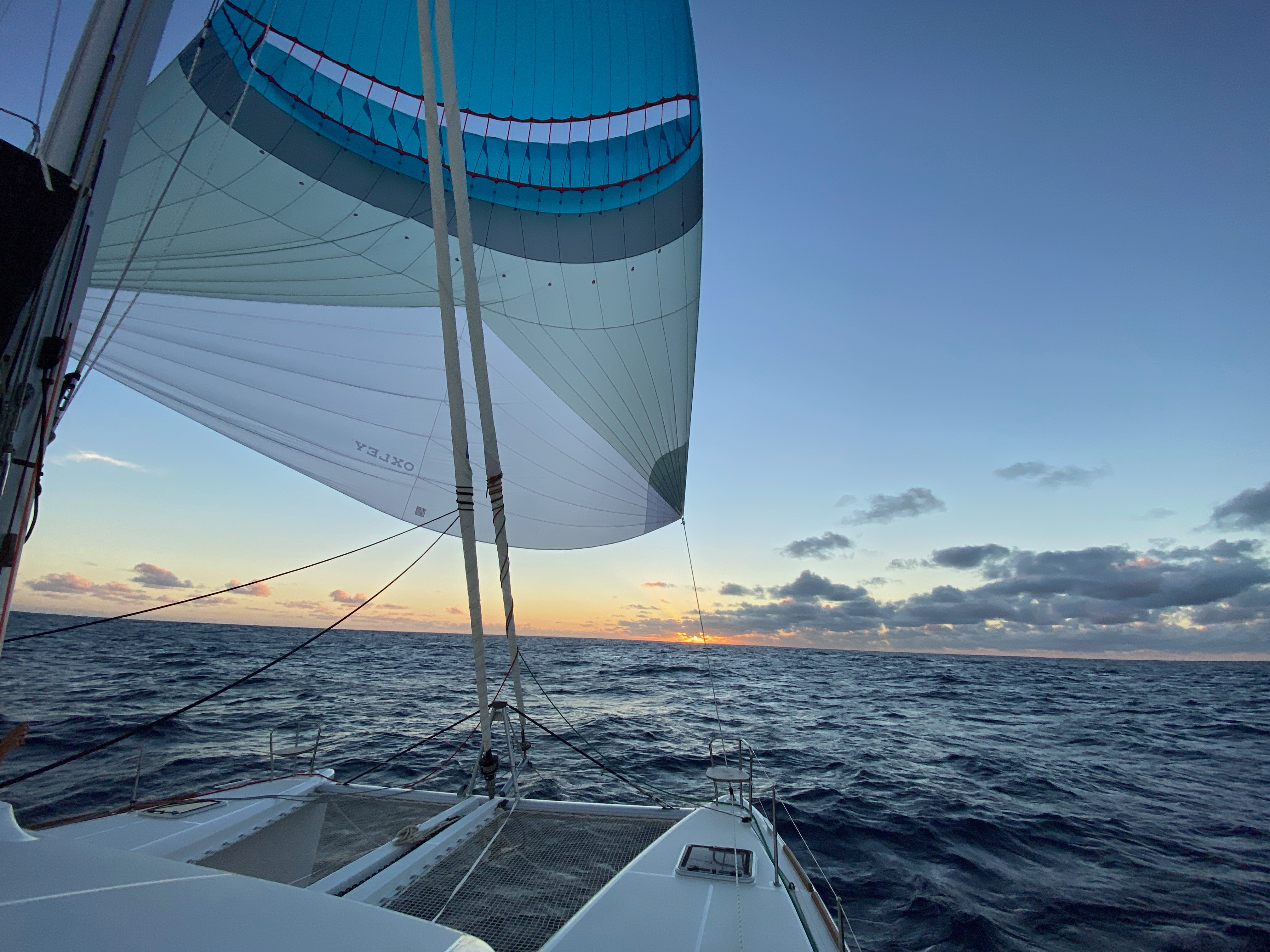
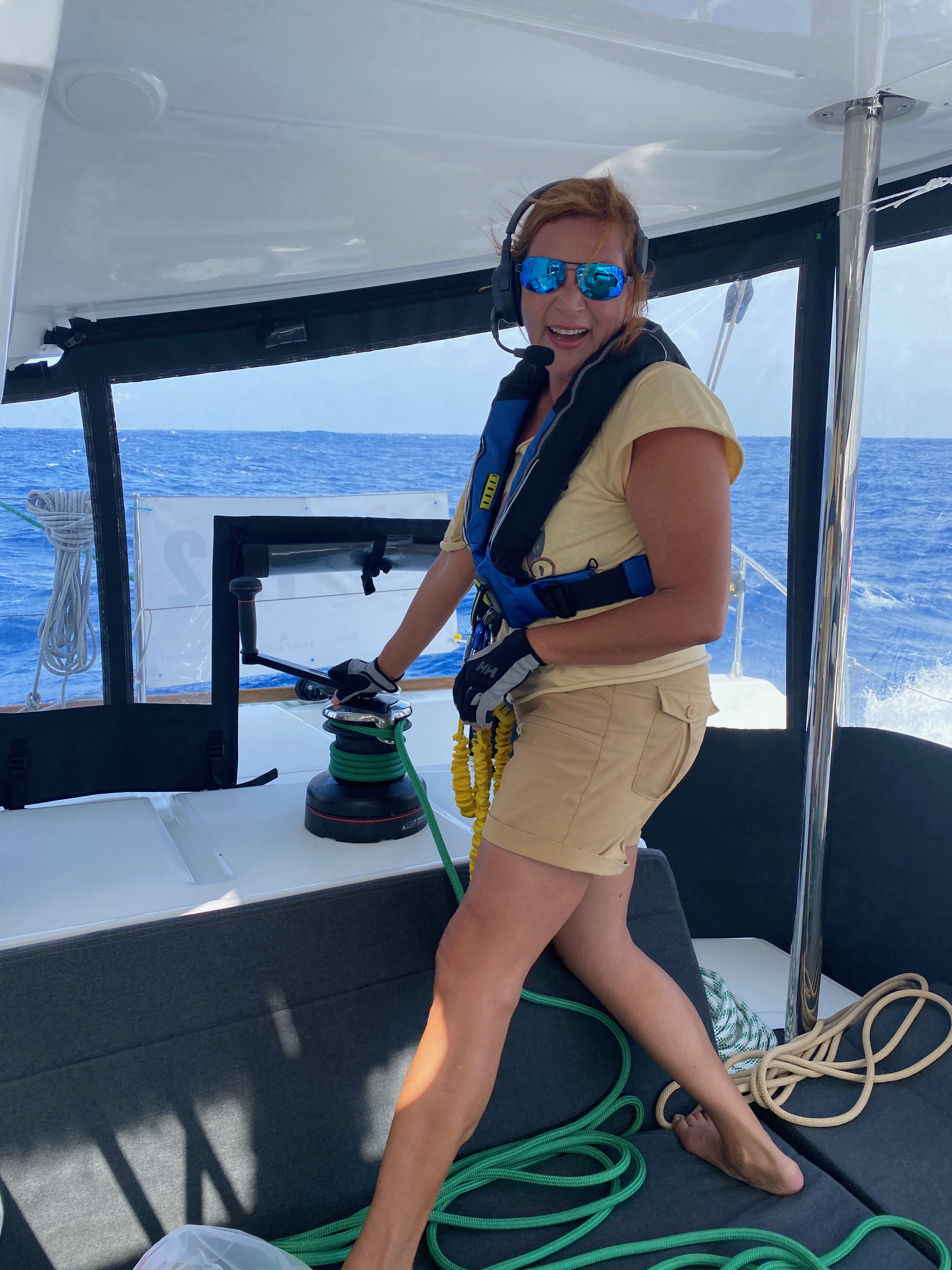
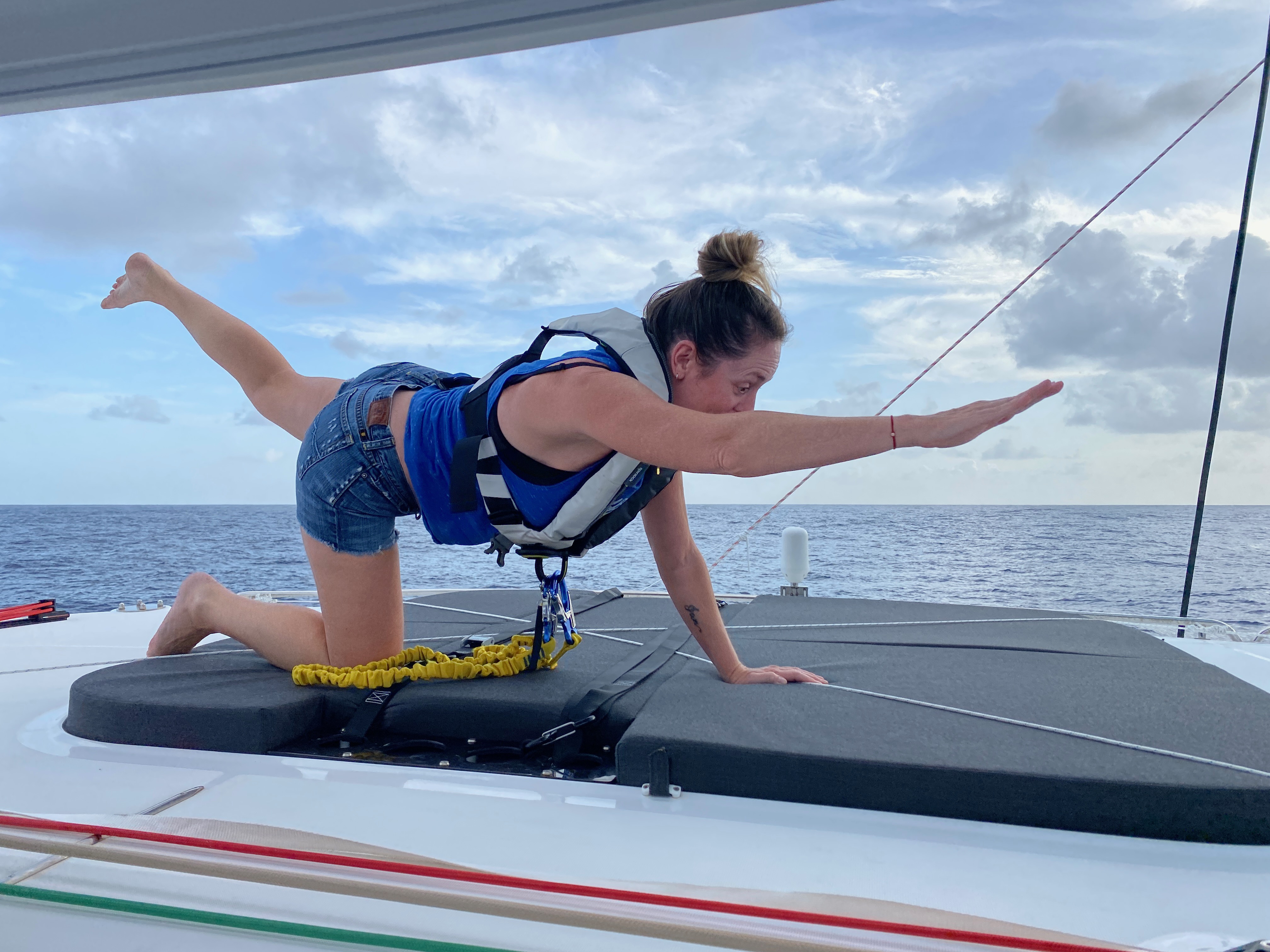
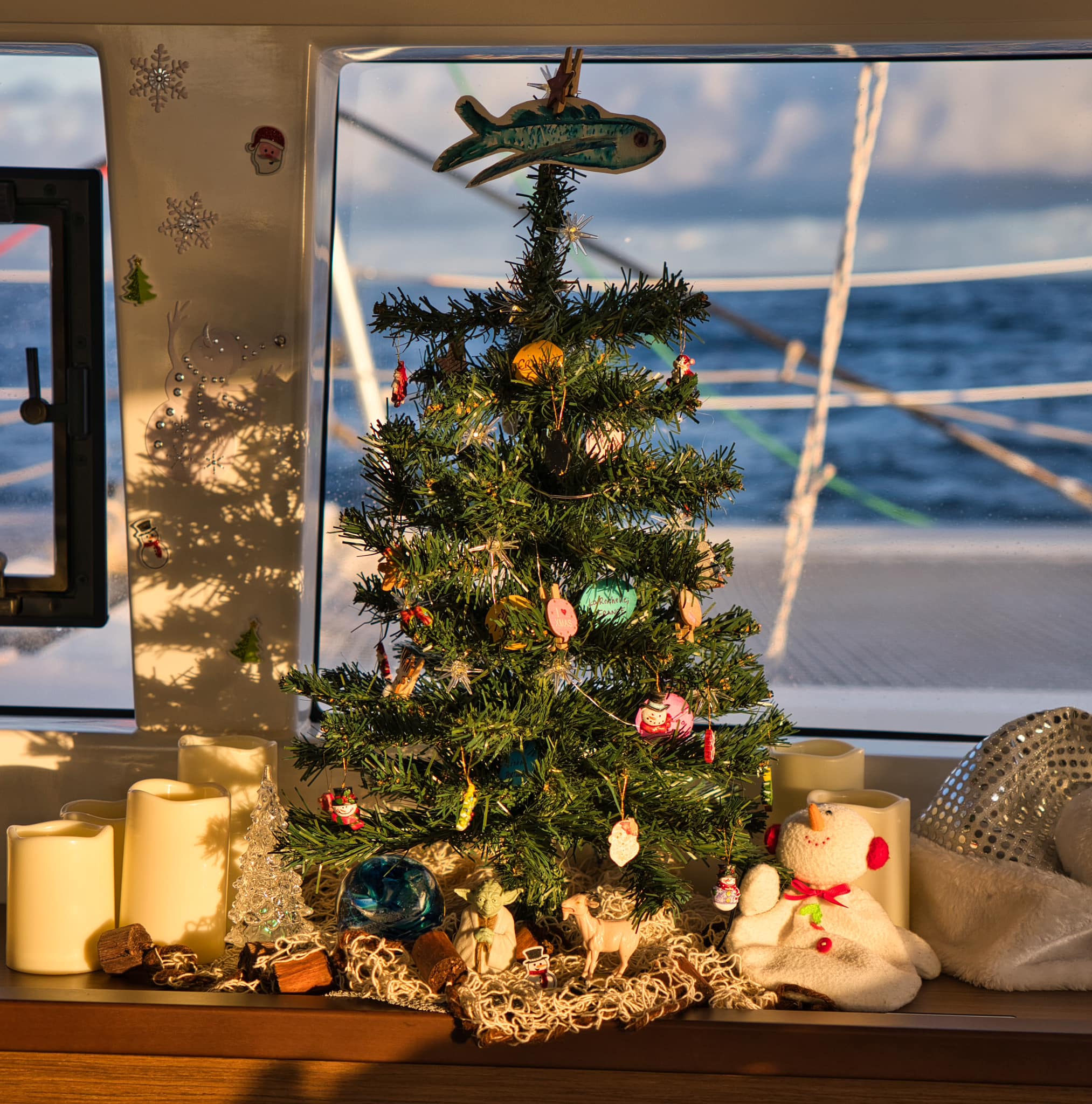
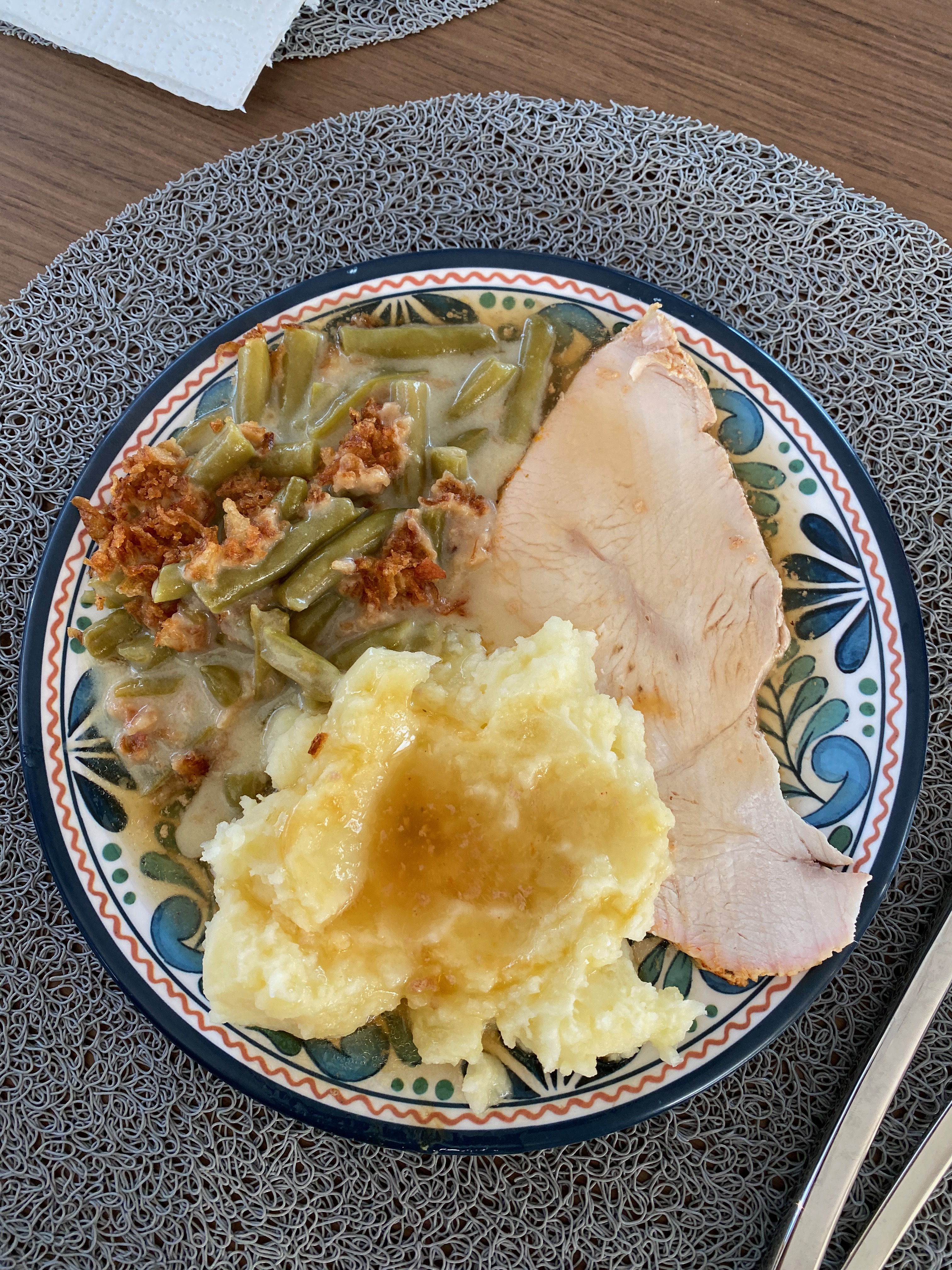
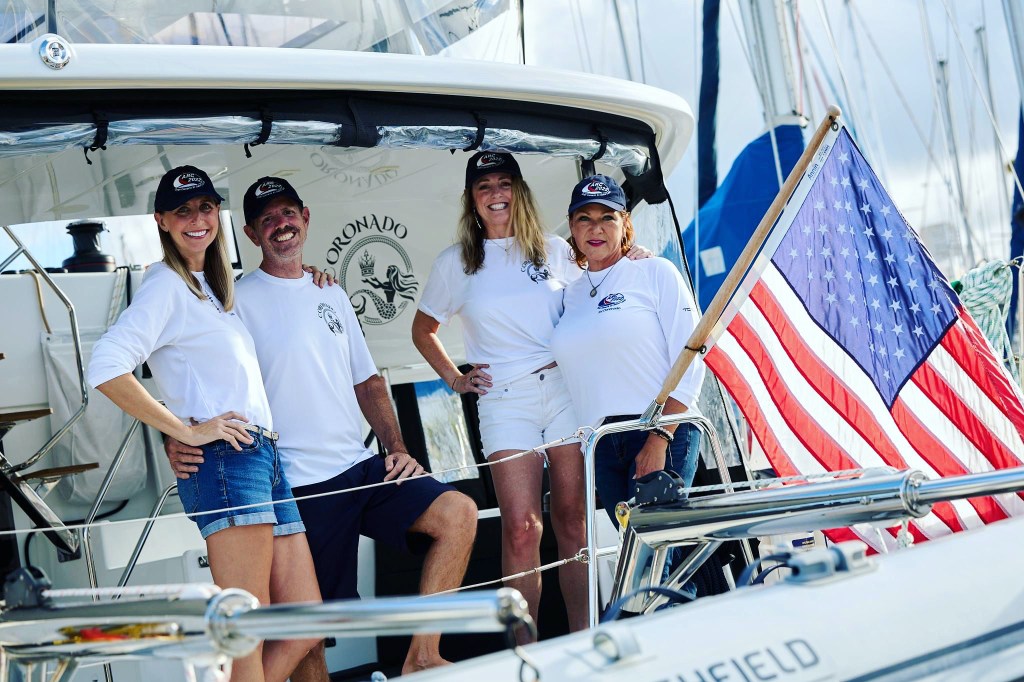
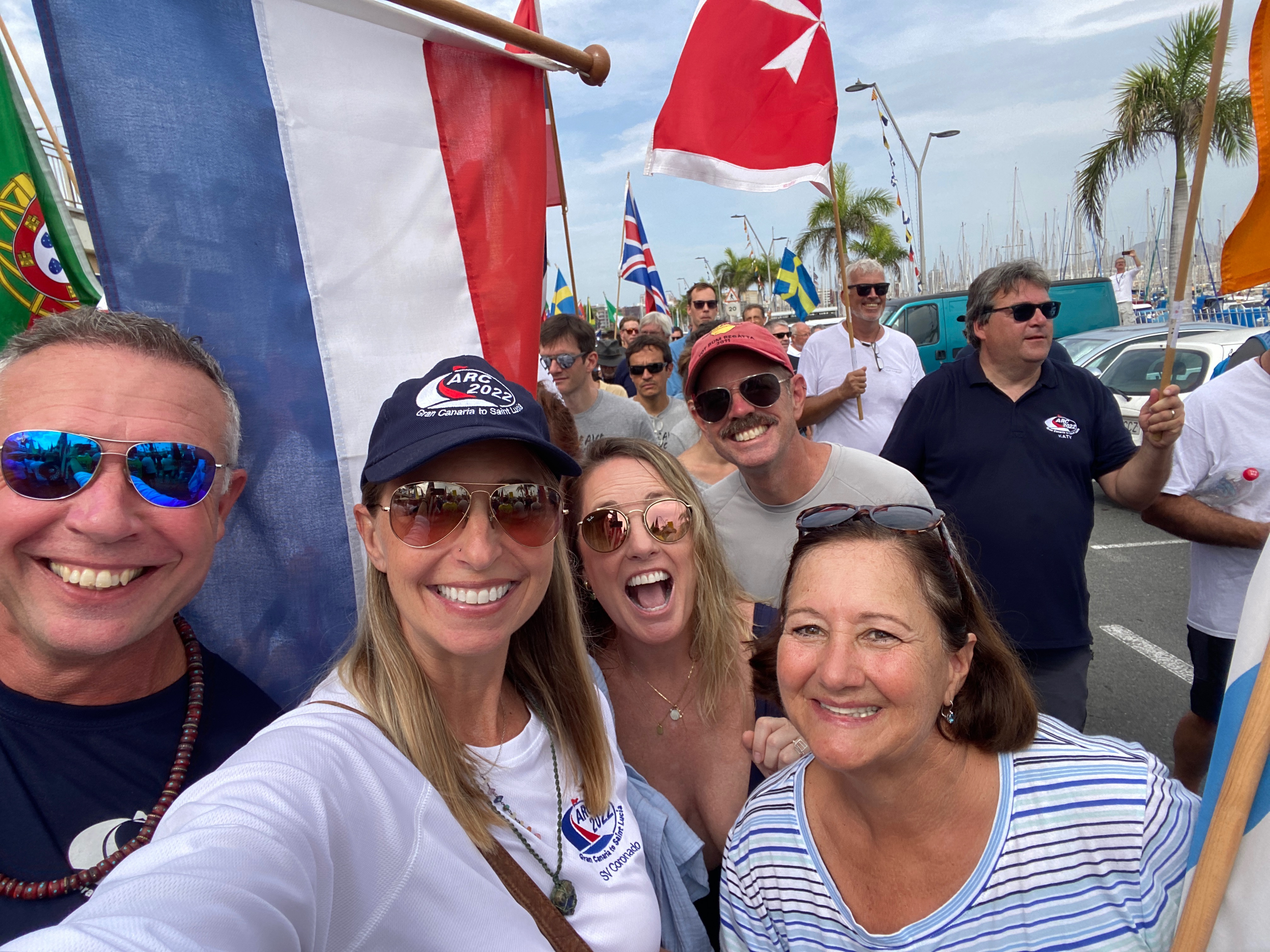
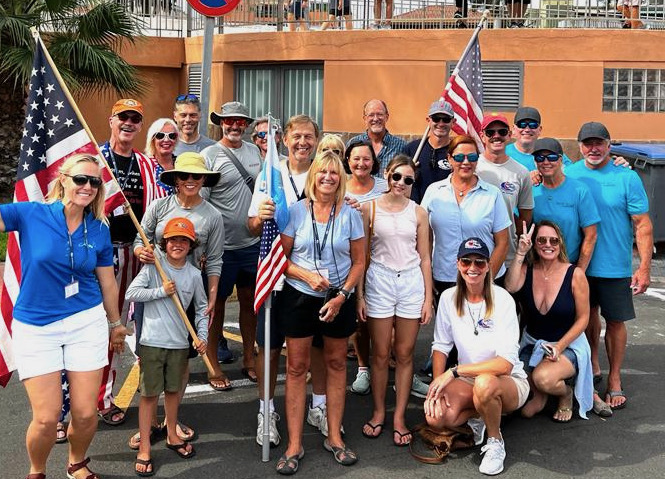
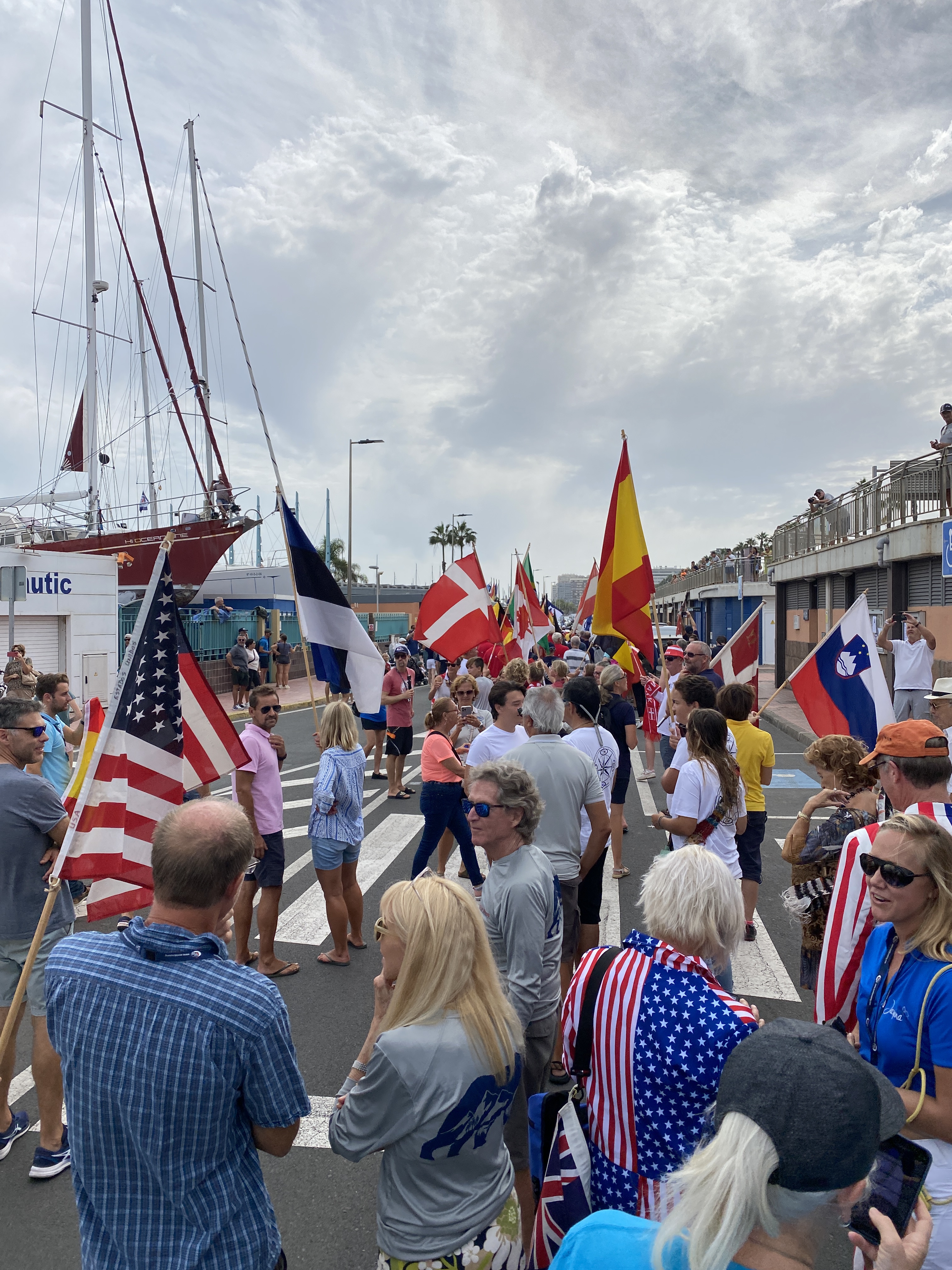
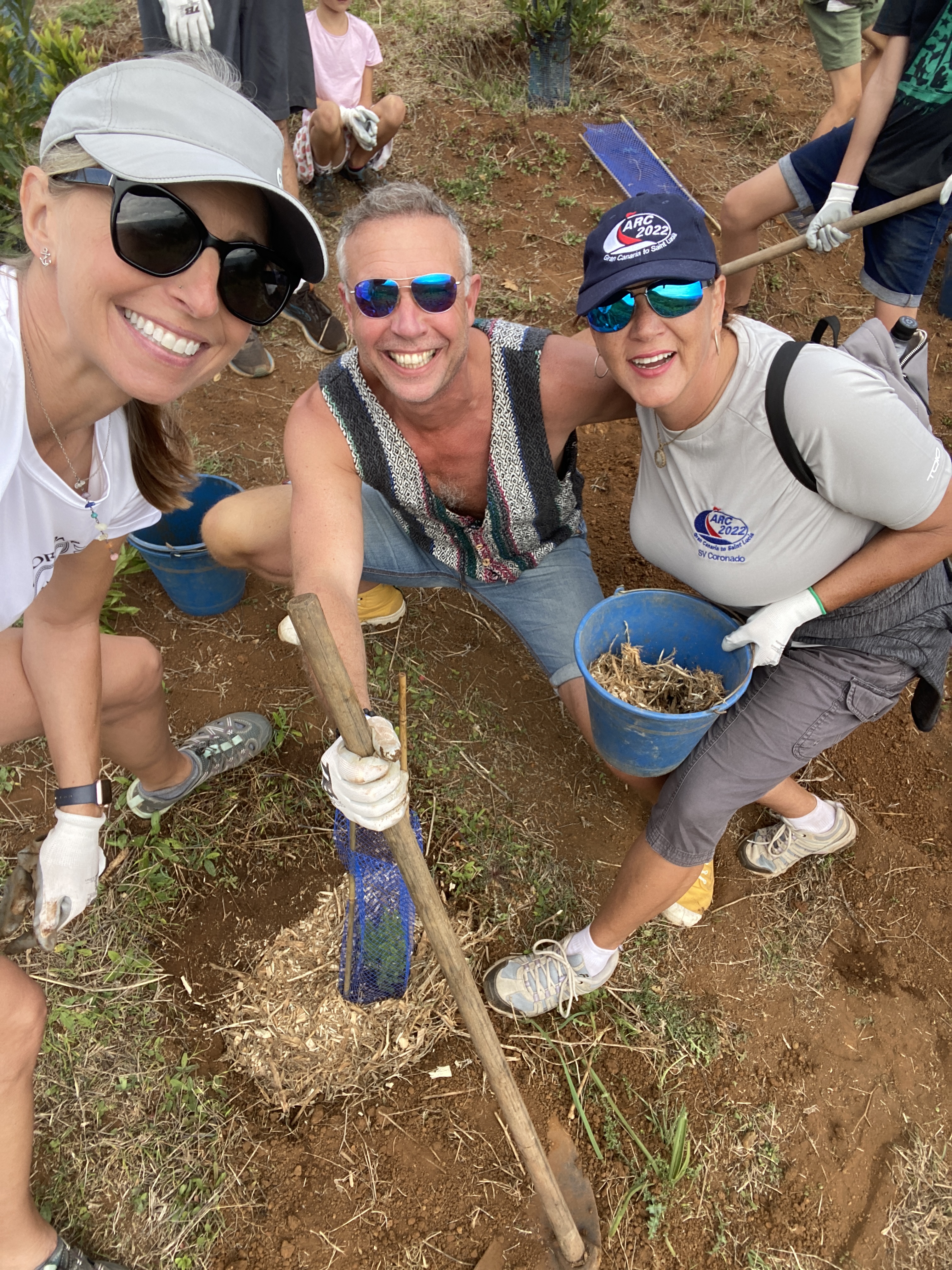
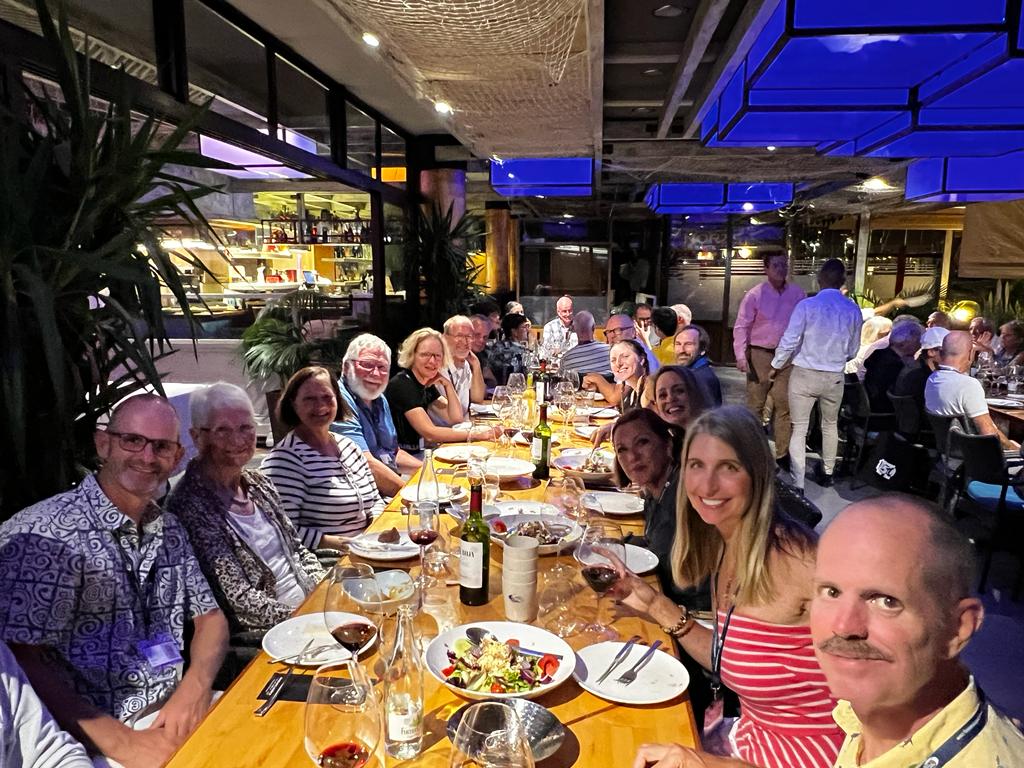
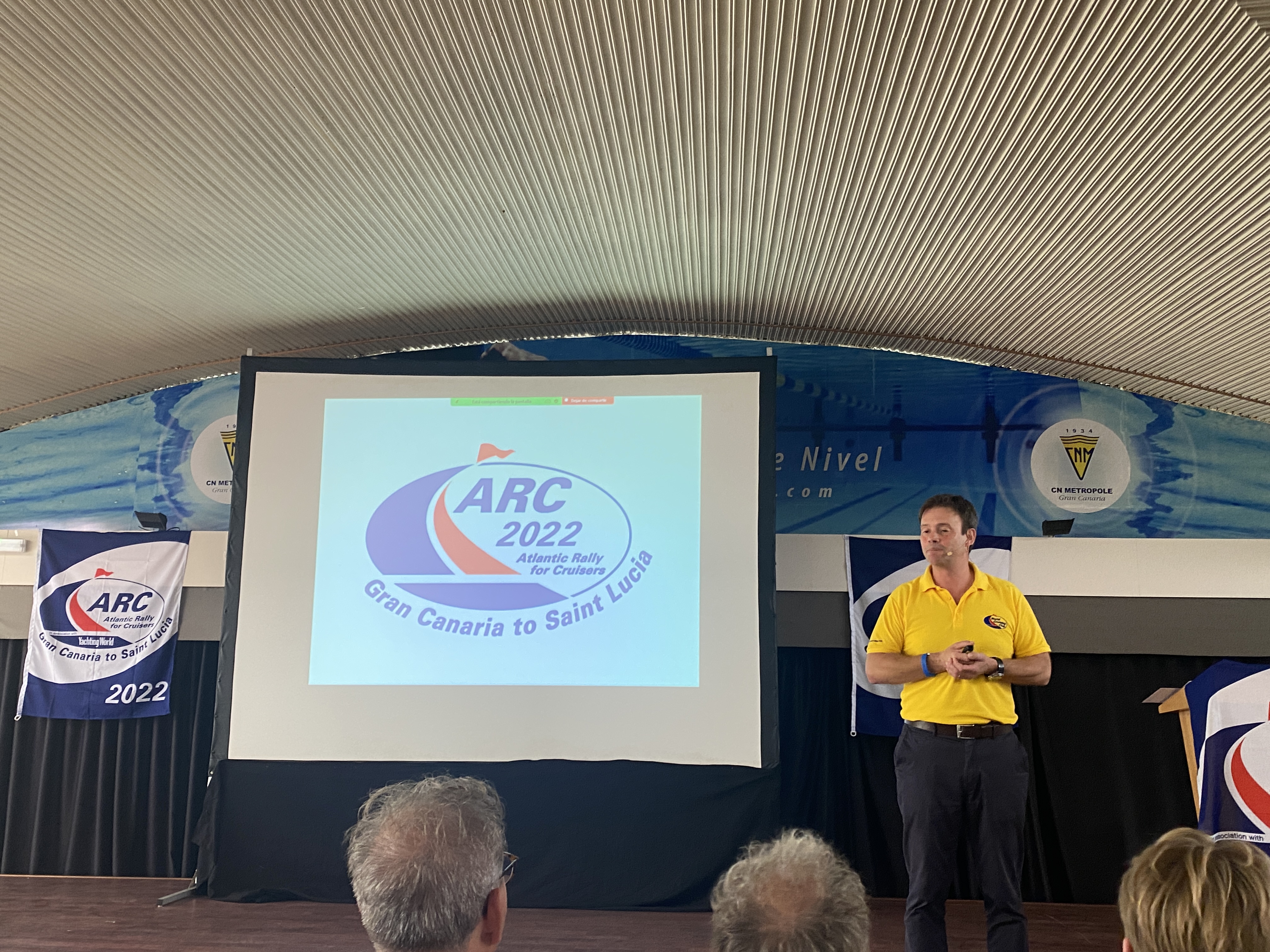
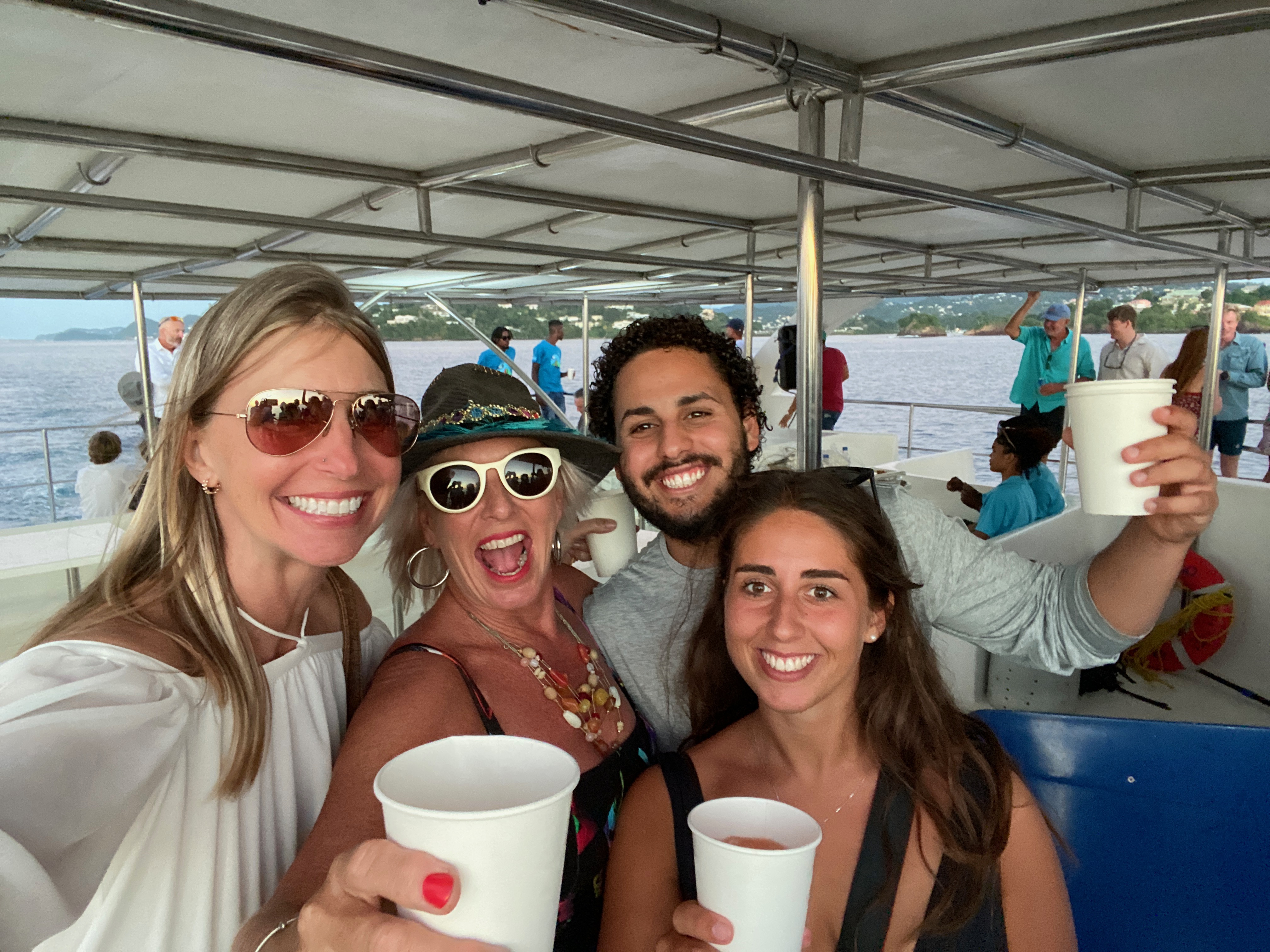
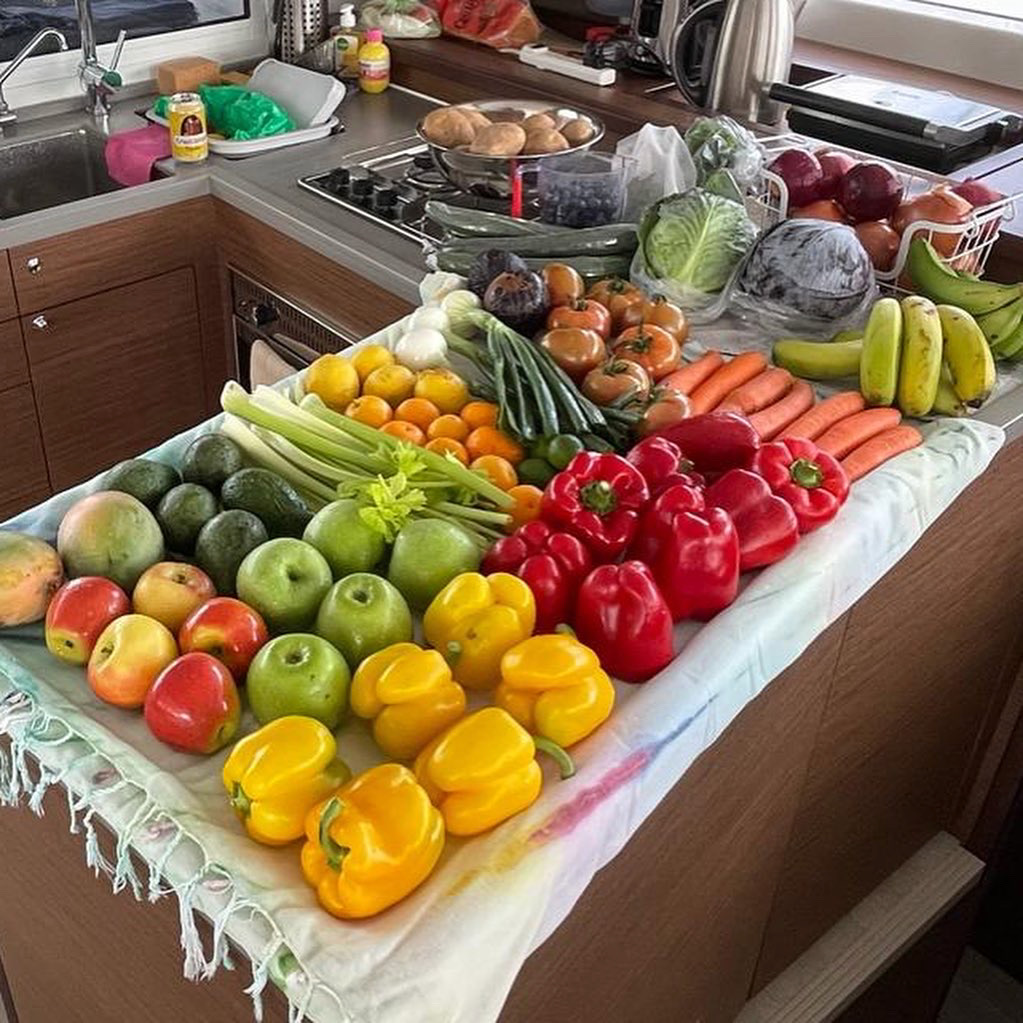
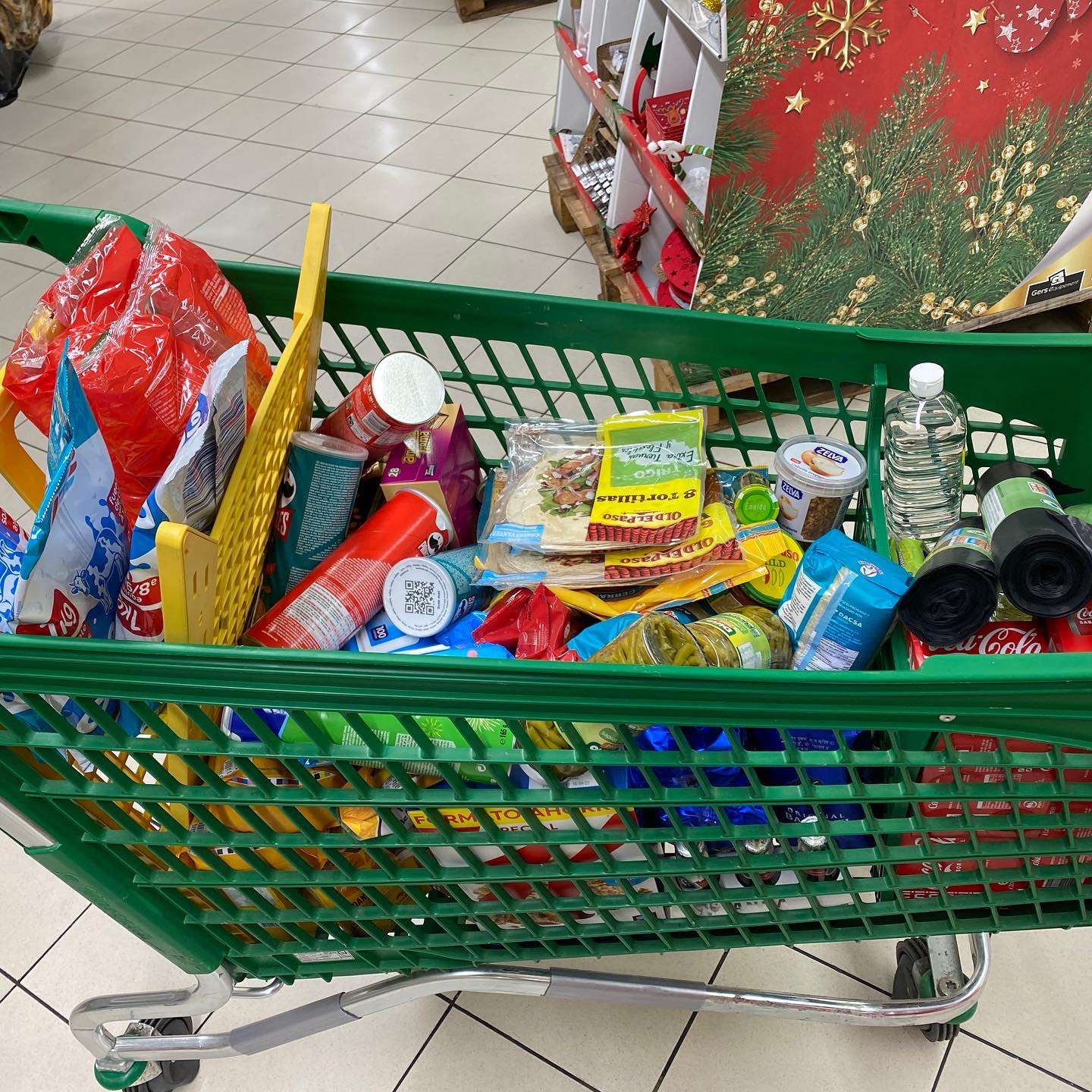
 I’m bandaged up and both engines are working. No scratches on Coronado!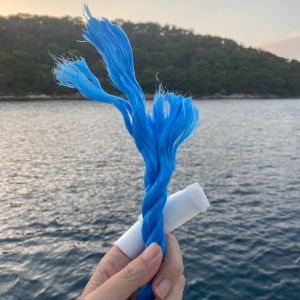


 But yeah, today sucked.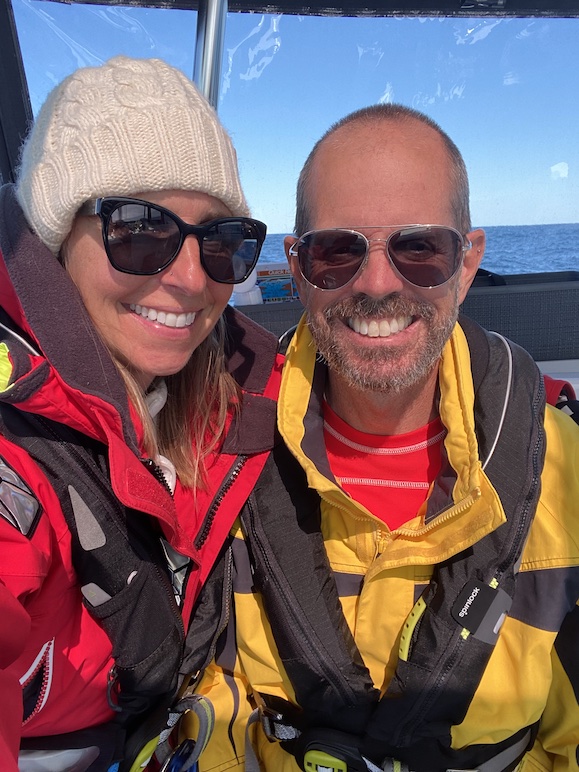
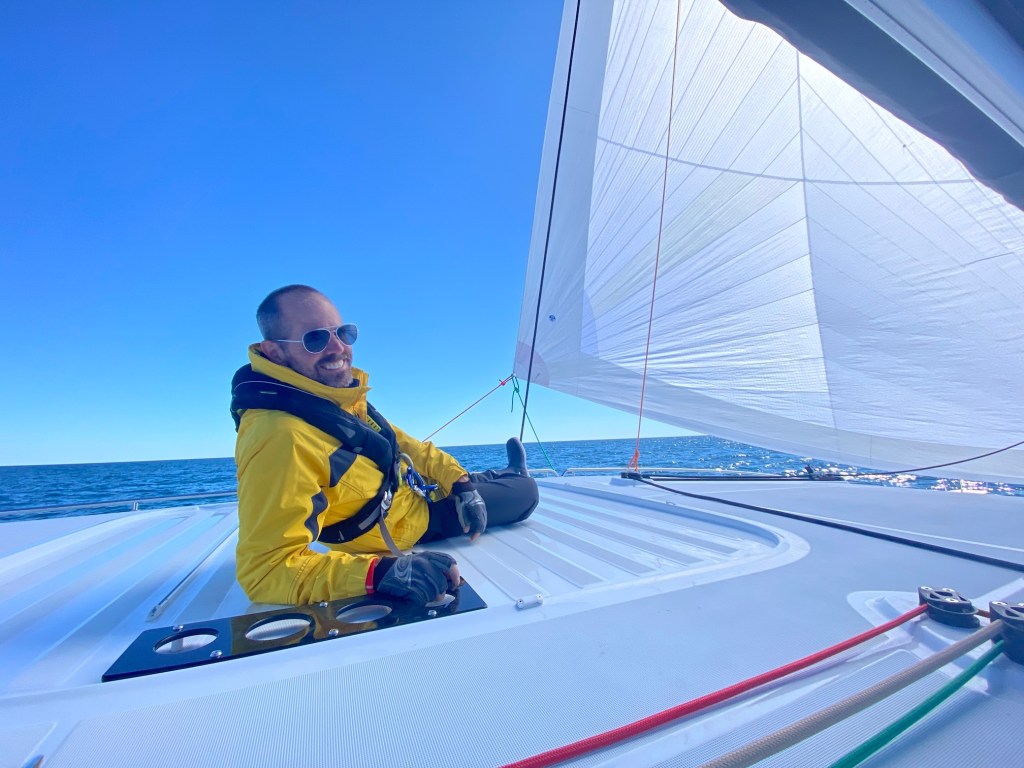
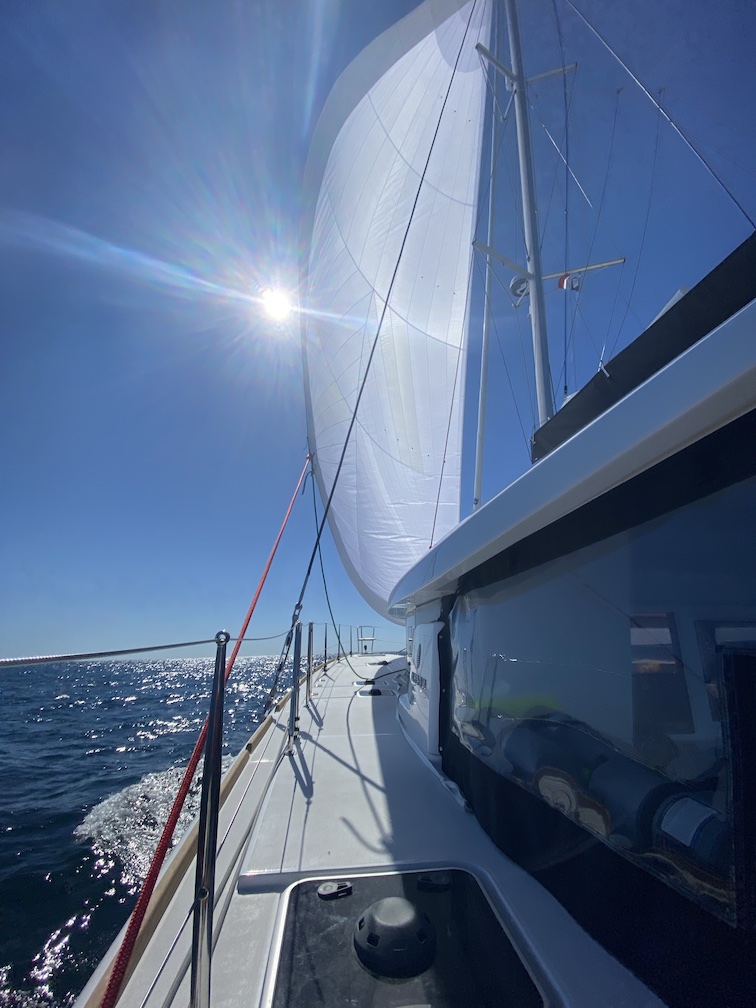
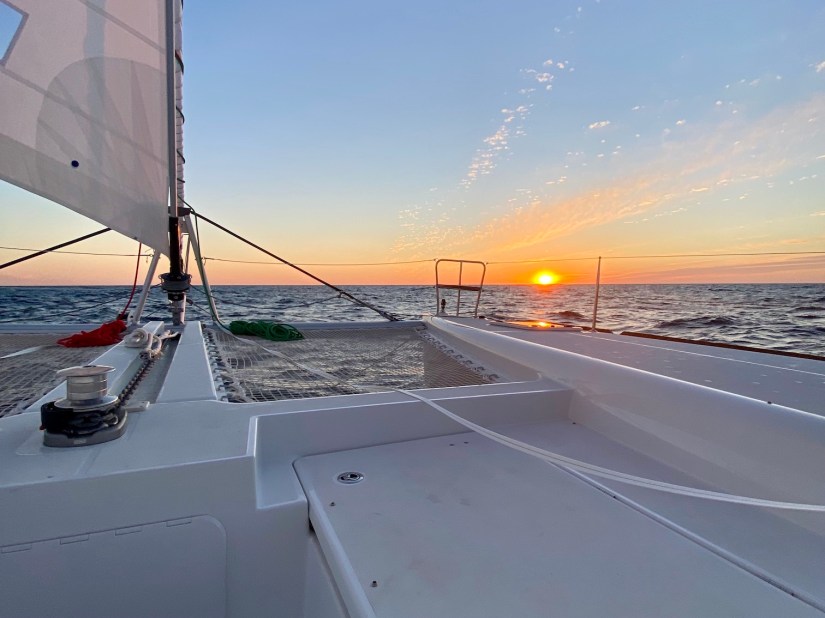
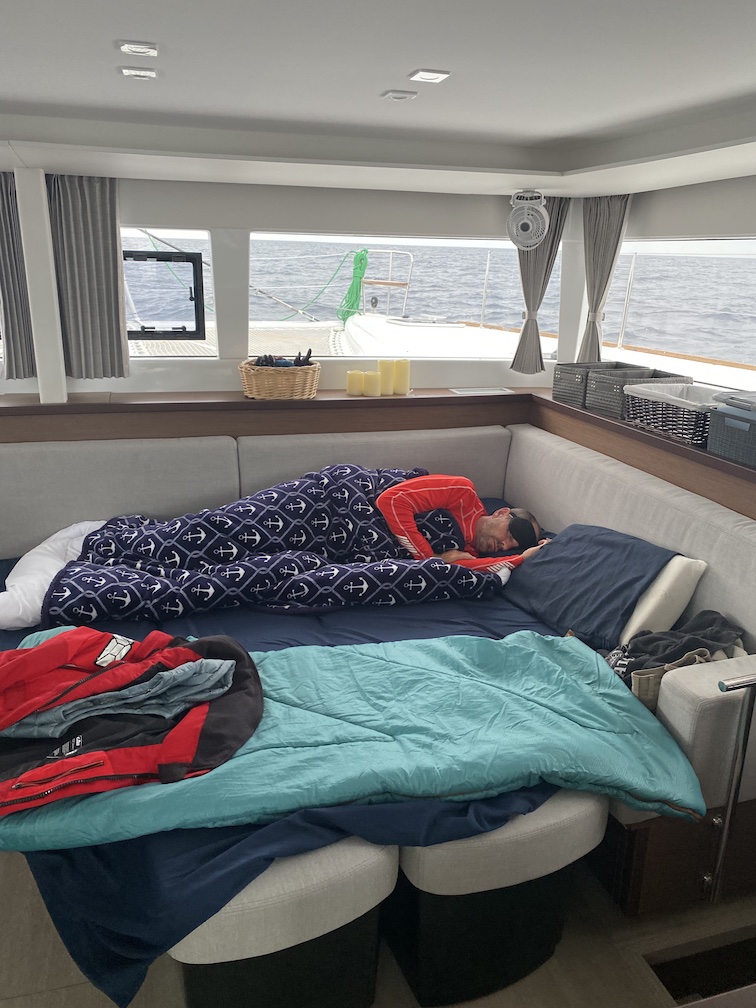
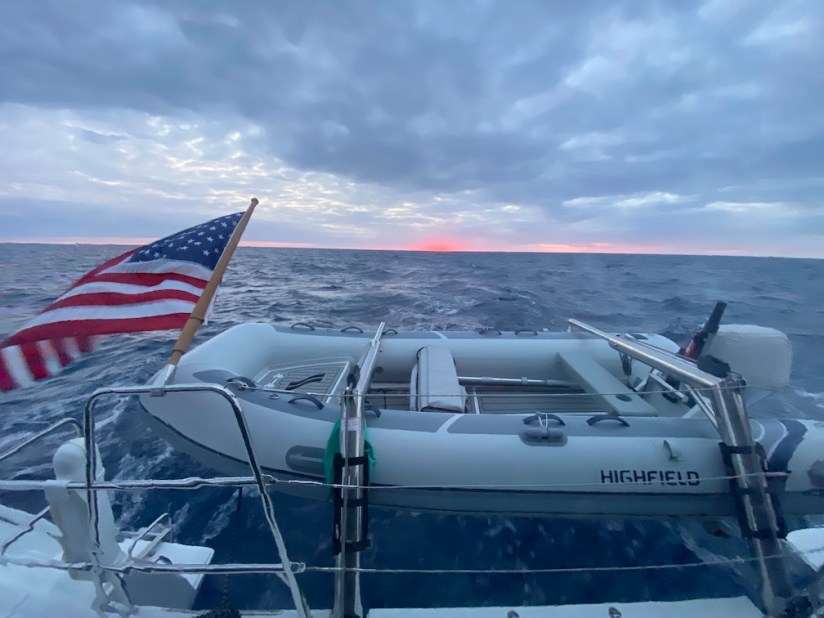
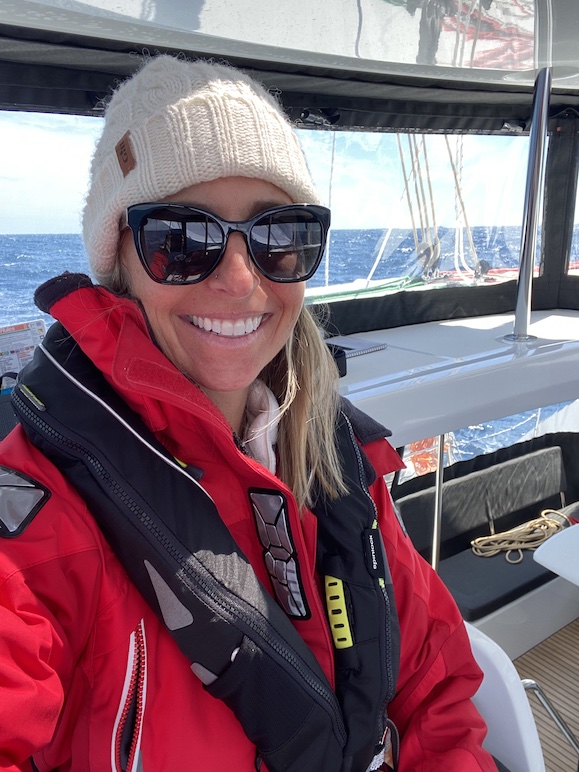
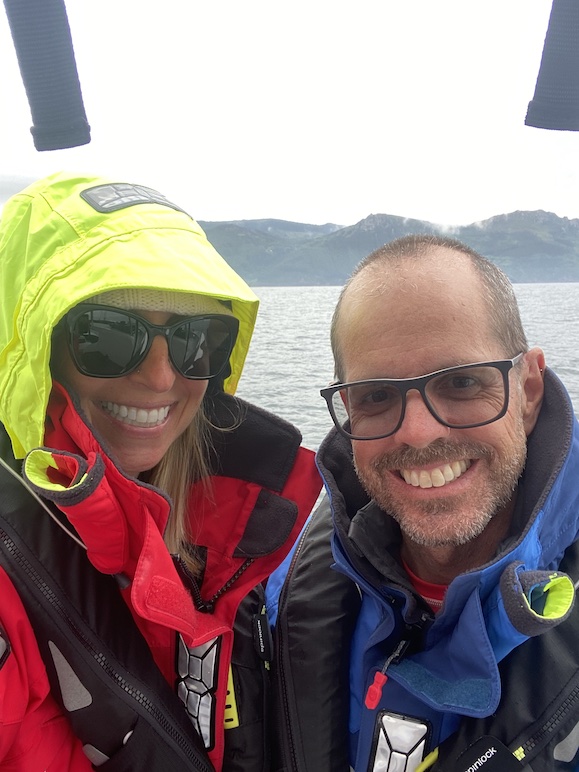
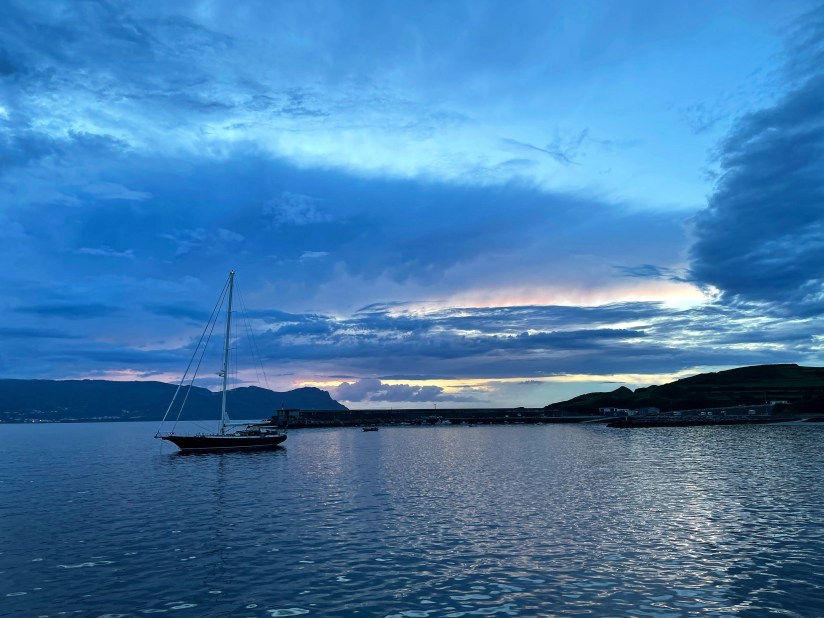
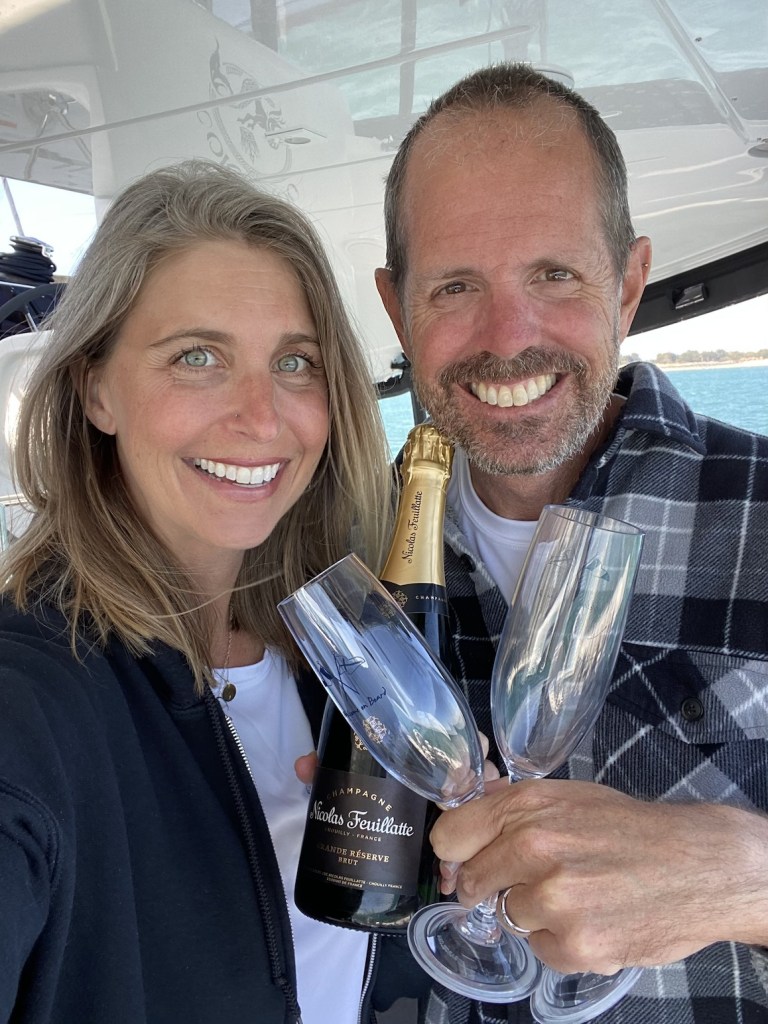
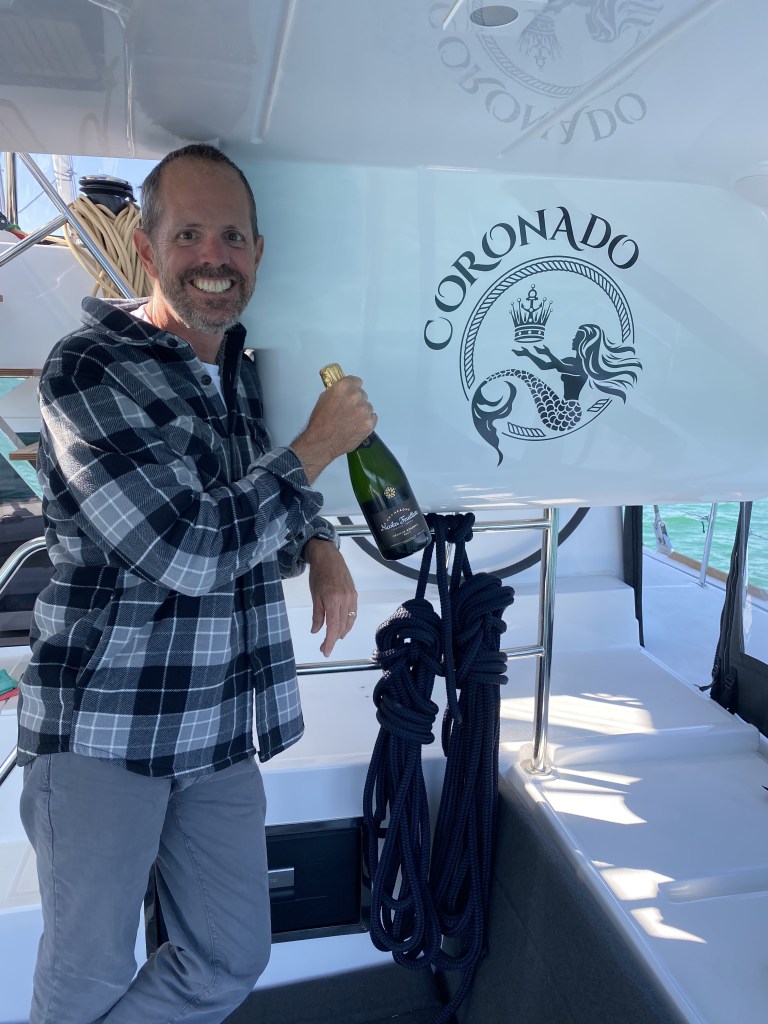
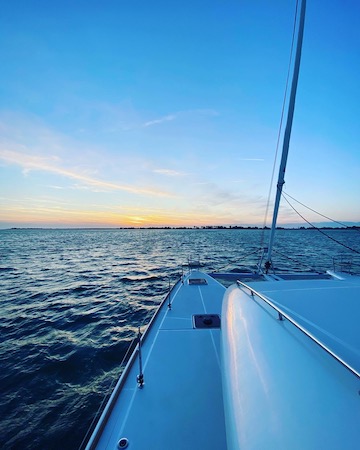
 Sailing Coronado